History is all around the World Cup!
This summer, we're celebrating the World Cup and America's semiquincentennial. That means we're exploring American history in and around U.S. host cities.
We'll take any excuse to explore the hallowed ground and historic figures that shaped our nation.
Wherever you're watching the World Cup, we're ready to help you kick off an unforgettable journey through the battlefields and historic sites that shaped American independence. No offsides here, just Revolutionary stories waiting to be explored.
Revolutionary History Kicks Off Here
The Massacre. The Tea Party. The first major battle. When it comes to the American Revolution, it all kicked off here. It’s where the Sons of Liberty organized the first resistance to the crown, where tea steeped in the harbor, and where General George Washington got an early lead on the British. If you’re visiting Boston for the World Cup, you’re in the center of it all, semiquincentennially speaking.
Plan Your Trip

Where the Founders Played for Keeps
Between matches, you want to be in the rooms where it happened. It all went down during a sweltering summer 250 years ago as delegates to the Second Continental Congress signed the most famous break up letter ever (and hopefully those rooms have been modernized for some A/C).
Old City is a jumping off point to explore the battlefields of the Philadelphia Campaign. You won’t want to miss the hallowed grounds where patriots defending the document that delegates wrote right here. Now all that’s left is picking the right place for a cheesesteak (we can’t help you there).
Plan Your Trip

The Revolution's Most Valuable Pitch
Thinking about how to best spend your off-pitch time in Revolutionary New York and New Jersey might seem like an impossible goal. Between the two, you have battlefields to explore that turned the tide of the Revolution, and sites that saw some of the most iconic moments of the war. The good, the bad, and the ugly occurred within a stone’s throw of just about anywhere you turn. This is where the theater of war really picked up speed in the wake of the Declaration of Independence.
Plan Your Trip

Different Revolution, Same Fighting Spirit
How about a little Texas Revolution to go with your semiquincentennial? It’s still a story of independence afterall. Anglo-American settlers residing in the Mexican state of Texas (Texians), Indigenous nations, Texans of Mexican descent (Tejanos) and the Centralist Mexican government clashed in a complex web of interests and alliances. At the very least, you’ll want to learn about Sam Houston, the city’s namesake. Texas has a lot of Civil War history too, including playing a critical role in what we now commemorate as Juneteenth. And of course, you can head to San Antonio and...remember the Alamo!
Plan Your Trip
Where the Revolution Expanded the Field
250 years ago, much of this region was the frontier of European settlement. The area around what is now Atlanta, Georgia was once home to the Muscogee (sometimes also known as the Creek Confederacy) who navigated complex relationships with encroaching European powers and sought to remain neutral during the American Revolution. And what's now Kansas City was largely fur trade territory. It might not seem like it should be on your Rev War battlefield bucket list, but when you’re done with your BBQ, you’re just a short road trip away from the site of the western-most battle of the American Revolution, the Battle of St. Louis, where on May 26, 1780 a combined force of British soldiers and Native American allies attacked an outnumbered Spanish outpost and lost. In Georgia, many battles fought here were pivotal in the Southern Campaign during the Revolution.
Plan Your Trip
From Gold Rush to Golden Glove
Did you know that one of the men responsible for igniting California’s Gold Rush was from Hopewell, New Jersey, where Washington and the Continental Army fought at the battles of Trenton and Princeton? See, we can make Revolutionary connections anywhere.
Plan Your Trip
Just because you’re on the West Coast doesn’t mean the American Revolution can’t come to you. No matter where you explore off the pitch, you might be close to the American Revolution Experience, the award-winning traveling exhibit that brings you stories of ordinary people affected by the Revolutionary War.
Where the Loyalists Had the Home Field Advantage
Don’t sleep on Florida for Revolutionary War history even though it wasn’t one of the thirteen rebelling colonies. Controlled by Great Britain, after the French and Indian War, Florida remained so loyal to the Crown that it declined to send delegates to the Second Continental Congress.
During the American Revolution, Britain relied on the port at St. Augustine as a link to their colonies in the Caribbean. British-controlled Florida was so vital to the British war effort that George Washington attempted to capture it three times starting in August 1776 with a failed attempted at Saint Augustine. The next year, Thomas Brown’s loyalists and Native American allies attacked the Continental Army outside of Thomas Creek, and the year after that the same loyalist contingent, the East Florida Rangers, repelled the Continentals again. Florida’s Revolutionary history also illustrates how the American Revolution was really a world war, when Bernando de Galvez led Spanish forces as the Siege of Pensacola.
Plan Your Trip
Learn More
The Revolutionary World
France sent money, guns, and soldiers to help the patriots win the war.
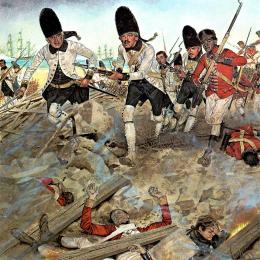
Spain played a critical role in the American Revolution, though often overshadowed by France.
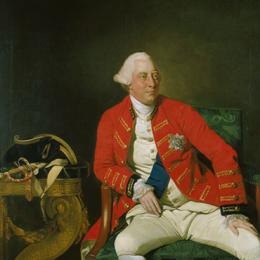
When France and Spain formally allied with the new United States, Great Britain was thrust into a world war.
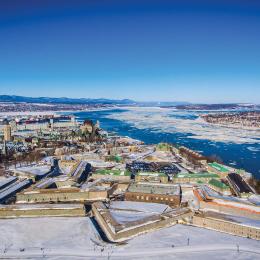
Some Canadian territories, such as Quebec, were the O.G. prime target for American patriots hoping to secure sympathy from French-speaking Canadians in the fight against Great Britain.
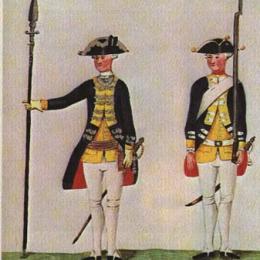
Some 30,000 Hessians from the state of Hesse-Cassel fought in the American Revolution.
The American Revolution was a world war, waged in a context of trade and economies just as much as the question of liberty.
During the 18th century what we know today as Haiti was then Saint Domingue, a wealthy French colony on the Spanish-controlled island of Hispaniola.
The Revolution's Global Lineup: Curious about how some of the other World Cup nations fit into America's 250? We've got you.
Spain played a critical role in the American Revolution, as ally to France. During the war, Spanish governors and soldiers participated in skirmishes and battles in their territories, in places like Louisiana, Florida, and Alabama. So were the Spanish soldiers patriots? Nope. But they did fight with the patriots against a shared enemy--Great Britain.
Bernardo de Galvez is a name you should know. Even before Spain formally declared alliance with the rebelling colonies, de Galvez was smuggling supplies to patriot troops from his homebase in Spanish-controlled Louisiana. In 1781, he led Spanish forces at the Siege of Pensacola--one of the longest sustained sieges of the war. It was worth it. His victory won Spain control of (west) Florida not just for the war, but for the next 40 years.
Though French and Great Britain had been opposing forces during the Seven Years' War (the French and Indian War in the colonies), France was originally pretty hesitant to formally support the American Revolution. But when they did, the tides definitely started to shift. France sent money, guns, and soldiers to help the patriots win the war. Learning about France in the American Revolution should definitely be on your 250th to do list.
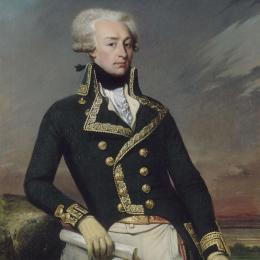
No excuses for not knowing about "everyone's favorite fighting Frenchman"--Gilbert du Motier, the Marquis de Lafayette. He arrived on the scene at the Battle of Brandywine, receiving his very first war wound on his very first day on the ground floor of the American Revolution. What he lacked in experience he made up for in enthusiasm, and by 1778, he had convinced France to officially support the American cause. You can thank Lafayette for ensuring one of the greatest military alliances of all time--the combined French and American forces finally beat the British at the Siege of Yorktown in 1781, where another Frenchman, the Comte de Rochambeau, made an important appearance.
No shade from us if you're rooting for England in the World Cup. The American Revolution was a whole 250 years ago after all. But back then, Great Britain was the OG adversary with the G.O.A.T. professional army. But what started as a pesky little rebellion in New England at Lexington and Concord soon became a much larger conflict. And when France and Spain formally allied with the new United States, Great Britain was thrust into a world war.
And King George III wasn't shy about sending to North America seasoned military pros to quell America's fight for independence--Henry Clinton, John Burgoyne, William Howe, and of course, Charles Cornwallis just to name a few. And as the 1707 Act of Union united England, Scotland, and Wales as Great Britain, King George had a hefty cache of fighting troops from across the British empire. And while in this summer's World Cup England and Scotland might be opposing teams, Scots and people of Scottish descent fought on both sides of the American Revolution. Some Scottish Highlanders fought against patriots at the Battle of Moores Creek Bridge, while Scottish-born Hugh Mercer gave his life fighting with fellow patriots at Princeton.
You may already know that Canada was kinda a big deal during the French and Indian War (it actually became a British colony as a result). Did you know that our northern neighbor was also part of the American Revolution? Actually, some Canadian territories, such as Quebec, were the O.G. prime target for American patriots hoping to secure sympathy from French-speaking Canadians in the fight against Great Britain. It’s a big reason why Benedict Arnold, Ethan Allen, and the Green Mountain Boys needed to take control over Fort Ticonderoga in 1775--the first offensive victory for American forces in the war ensured a passageway north to Canada.
The Canadian expedition didn’t go so well as the Green Mountain Boys challenged British General Guy Carleton’s control of the heavily fortified city of Quebec. On December 31, 1775, the patriots lost the Battle of Quebec. But Canada has an interesting post-war story, too. In 1783, some of the formerly enslaved African Americans who sought freedom with the British Army settled in Canada, in places like Birchtown, Nova Scotia.
Germany wasn’t a unified country at the time of the American Revolution, so when you think of Germans in the Rev, you’re probably thinking about Hessians—those famed soldiers from the German state of Hesse-Cassel that the British Army hired to fight against the patriots. Some 30,000 Hessians fought in the American Revolution. One of the most famous might be Johann Ewald, who saw service in the early northern theater at the Battle of White Plains in 1776, and saw the effective end of the war at the Siege of Yorktown in 1781.
As POWs after Yorktown some Hessians were sent to prison camps like that in Lancaster, Pennsylvania. Some liked the region so much—and the opportunities afforded by the United States—that they stayed put and contributed to the cultural melting pot of the new nation. The legend of ferocious Hessians looms large in American memory, though. Washington Irving’s Headless Horseman? A Hessian!
Now is a good time to remember that the American Revolution was a world war, waged in a context of trade and economies just as much as the question of liberty. The Dutch Republic, with its merchants and maritime prowess, had long been on the world stage with the Dutch East India Company and the West India Company controlling trade around the globe. On an official scale, the Dutch Republic tried to remain neutral in the conflict as long as possible, though private Dutch merchants supplied the patriots throughout the war. In 1780 the Dutch joined the League of Armed Neutrality, a coalition of powerful European countries aimed at preserving trade and resisting British blockades during the Revolution. The very next year on February 3, 1781 British forces attacked the Dutch Caribbean colony at Saint Eustatius, part of the Fourth Anglo-Dutch War, which waged until 1784—a whole year after the Revolution.
During the 18th century what we know today as Haiti was then Saint Domingue, a wealthy French colony on the Spanish-controlled island of Hispaniola. In 1779, a regiment of 500 free Black soldiers, called the Chasseurs Volontaires de Saint-Domingue, joined the Revolution in support of the patriots—one of a handful of regiments of predominately Black soldiers during the Revolution.
The men from the Chasseurs Volontaires played a crucial role in the Siege of Savannah in 1779. Though it was ultimately a British victory, it may have proved to be a training ground for a future leader of the Haitian Revolution, Henri Christophe, whom some historians place at the Siege as a young drummer boy.