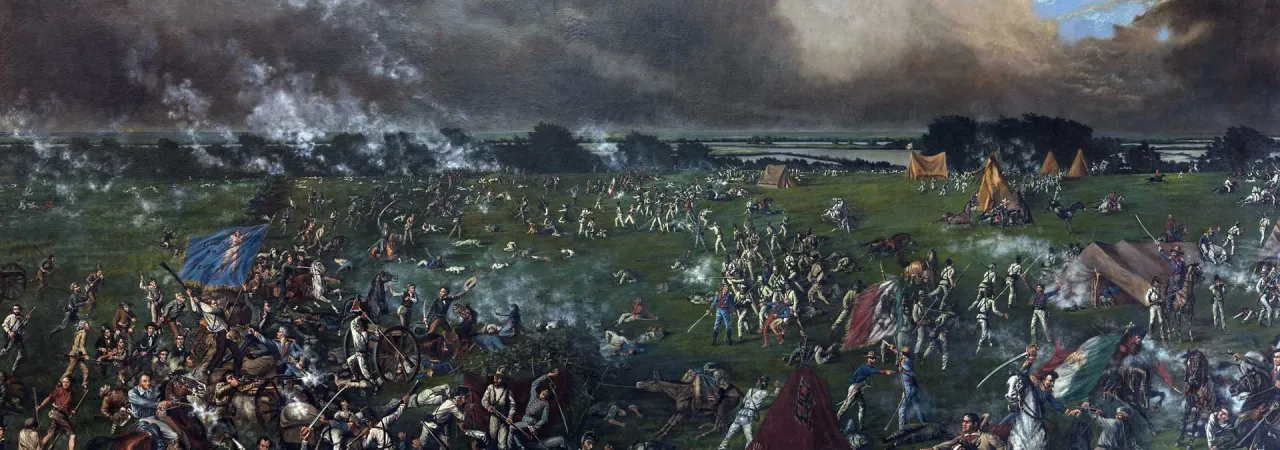
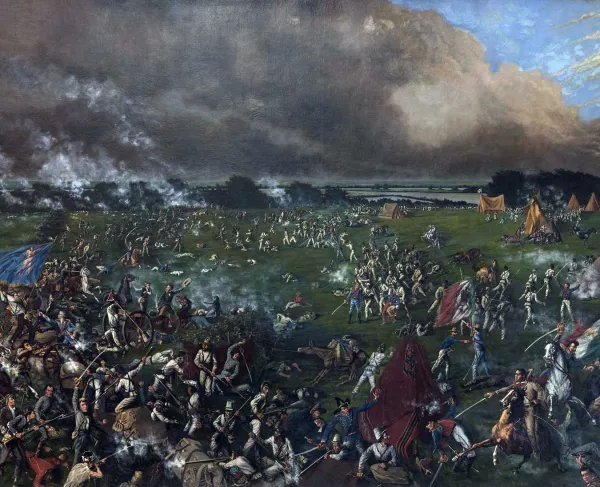
The Battle of San Jacinto, oil on canvas by Henry McArdle, 1895
“Remember the Alamo” and “Remember Goliad” was the battle cry of the Texian Army as they stormed the positions of Santa Anna’s army on the banks of the San Jacinto River. When the struggle for Texas Independence was won at San Jacinto, the conflict had lasted little more than seven months. However, the story of Texas Independence began long before this final confrontation.
Moses Austin, a pioneering businessman, had desired to bring American settlers into Spanish Texas, and he negogiated with the Spanish government to establish a trading post and settlement. Before he could carry out those plans, Moses Austin died, leaving the colonial task for his son, Stephen F. Austin. Following the Mexican victory in their own revolution for independence from Spain in 1821, Austin secured rights to establish a colony as an empresario and led 300 families to settle along the banks of the Brazos, Colorado, and San Bernard Rivers in Mexican Texas in 1824.
Austin proved to be a trailblazer, and tens of thousands of Americans migrated to Texas in next decade. Many came for the possibility of gaining thousands of acres of land and saw the possibility of growing cotton and other cash crops in East Texas. Initially, relations between the Texas settlers and the Mexican government were friendly. Texas settlers benefited from a tariff exemption, while the Mexican government benefited with a colony in Texas to serve as a buffer zone from attacks by the indigenous tribes of the region on Northern Mexican towns. Even when Texas families brought slaves within them into East Texas, the Mexican government–which had abolished slavery–initially turned a blind eye on this illegal practice. However, relations quickly soured as the Mexican government grew increasingly suspicious of the American settlers.
On April 6, 1830, the Mexican government passed a decree that ended the tarriff exemption for settlers and closed off Texas from further settlement. Over the next half decade, tensions continued to mount between the Texas settlers and Mexican authorities as some clashes turned violent. In Texas, delegates held conventions in 1832 and 1833, unsuccessfully demanding separate statehood from Coahuilla.
By 1835, a new government under Antonio López de Santa Anna took power in Mexico City, throwing out the constitutional government under the Mexican Constitution of 1824. Santa Anna ordered the Texians (as they now called themselves) to disarm. This eventually led to the violent confrontation in the small Texas settlement of Gonzales on October 2, 1835.
When Mexican authorities in San Antonio attempted to recall a cannon that had been gifted to the people of Gonzales, they were met with a singular flag that stated “Come and Take It”. This initial clash between Mexican troops and the Texians was only a minor skirmish, yet it marked the start of a revolt in Texas. In the days that followed, Texian forces captured strategically important Mexican posts at places like La Bahia (Goliad). This left Mexican troops under General Martín Perfecto de Cos in San Antonio exposed. By the end of October, a Texian army numbering in the hundreds began to amass outside of San Antonio. Under the command of Stephen F. Austin, the Texians laid siege to the town and on December 9, successfully ousted Cos and his troops. Many Texians expressed hope that their revolt would inspire an overthrow of the Mexican government, but this proved to be false.
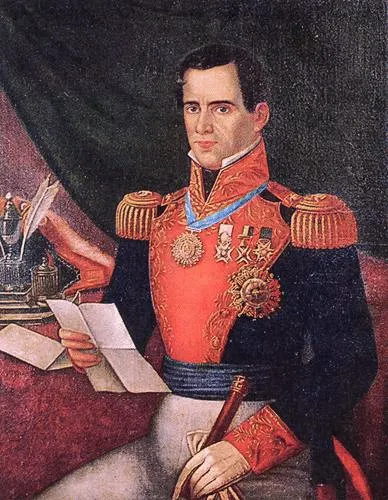
Antonio López de Santa Anna in his military uniform
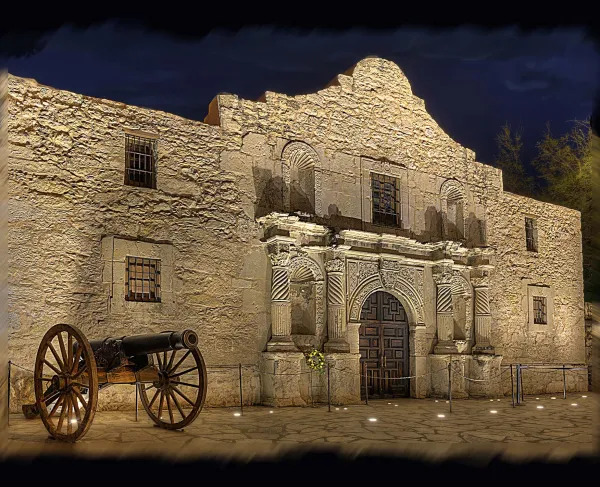
Wikimedia CommonsBy 1836, dictator and president Antonio López de Santa Anna marched northward into Texas with an army numbering approximately 6,000 troops. Some of these soldados were combat veterans of previous campaigns under Santa Anna, but many of the troops in his army were conscripts, taken from their homes on his march to Texas. Treating the norteamericanos (Texians)as “land pirates”, Santa Anna brutally pursued his campaign into into Texas. On February 23, Santa Anna’s army arrived outside of San Antonio and laid siege to an old Spanish mission turned fort called the Alamo. For the next thirteen days, roughly 180 Texian troops under the command of Colonel Jim Bowie and Lt. Colonel William B. Travis withstood nightly bombardments from the Mexican artillery. Famed frontiersman from Tennessee Davy Crockett fought alongside the Texians. Famously, Travis sent out requests for support but also declared that if no reinforcements arrived, the outcome would be either “victory or death”.
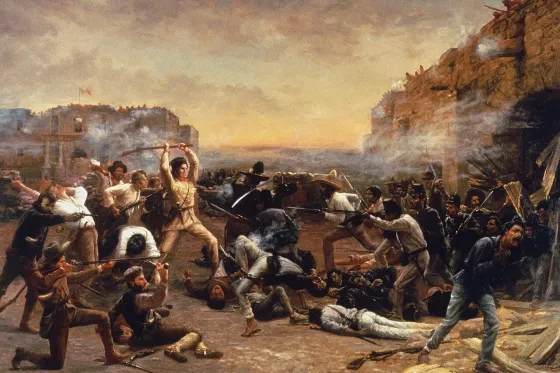
The Fall of the Alamo (Crockett's Last Stand), by Robert Jenkins Onderdonk, c. 1903. The painting depicts Davy Crockett and other Texian defenders making their final stand during the Battle of the Alamo on March 6, 1836.
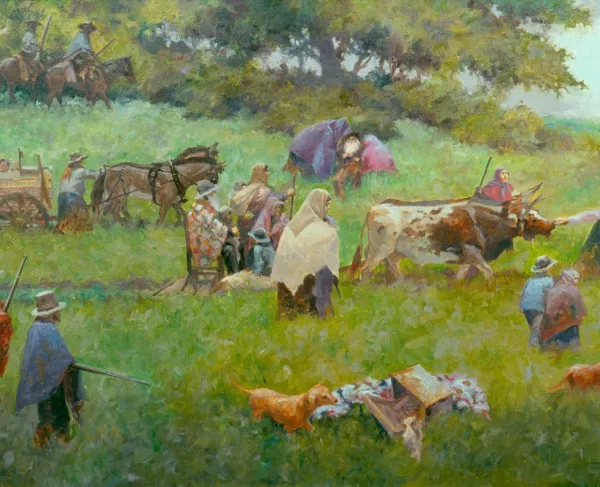
Public DomainWhile the Alamo lay under siege, at Washington-on-the-Brazos, the Texians declared their independence from Mexico on March 2, 1836. Just as they had established a new government, word arrived from San Antonio that the Alamo had fallen on March 6, and all 180 defenders had been killed. In the weeks that followed, an event known as the Runaway Scrape took place as Texians attempted to flee across the Sabine River into the United States in the wake of the Mexican advance.
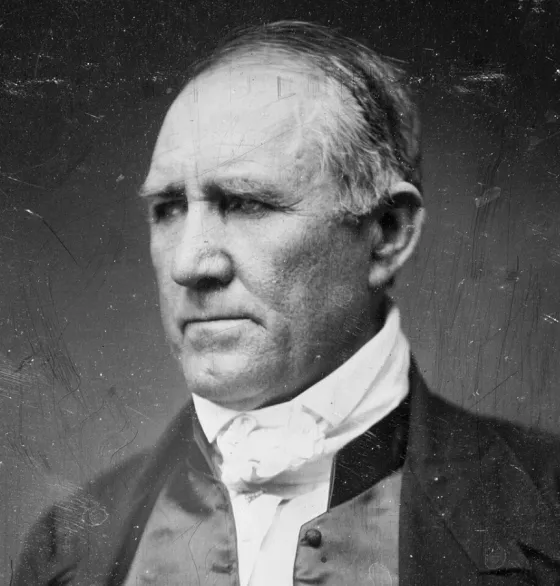
In the meantime, the only force standing between Santa Anna and the Texas settlements was Sam Houston's ragtag army. Rather than engage with Santa Anna in a pitched battle, Houston decided to retreat and wait for better opportunities. As Houston retreated, the Texian troops heard more distressing news. Southeast of San Antonio, a force of over 400 Texian troops under Colonel James Fannin at Goliad surrendered to Mexican troops under General Jose de Urrea; Santa Anna ordered these them to be executed on March 27.
News of the executions infuriated the Texians with Sam Houston. Their rallying cries were “Remember the Alamo” and “Remember Goliad”, and they wanted revenge. After retreating east for over a month, the Texian forces under Houston finally got their opportunity to face Santa Anna on the banks of the San Jacinto River on April 21, 1836. There, the Texian troops quickly defeated the Mexican army in less than an hour; however, the killing continued after the battle ended, and nearly 600 Mexican troops died.
As Texians organized their prisoners, Santa Anna–disguised as a private–was recognized by one of his officers. He was taken to Sam Houston. On May 14, 1836, Santa Anna agreed to sign the Treaty of Velasco, ordering the Mexican army out of Texas and promising to convince the Mexican government to grant Texas independence. However, by the time Santa Anna returned to Mexico City, he found that he had been removed from power, and the Mexican government unwilling to recognize Texas independence. Despite this, Texas functioned as an independent nation and received recognition from the United States, France and Great Britain in the years that followed.
Americans' interest in annexing Texas and making it part of the United States along with Mexico's refusal to acknowledge Texas independence set the stage for the U.S.-Mexico War nearly a decade later.
Further Reading:
- Texian Iliad: A Military History of the Texas Revolutionby Stephen L. Hardin
- Sea of Mud: The Retreat of the Mexican Army after San Jacinto, An Archeological Investigation, by Gregg J. Dimmick
- Sam Houston by James L. Haley
- The Texas Revolutionary Experience: A Political and Social History, 1835-1836 by Paul Lack
Related Battles
400
189