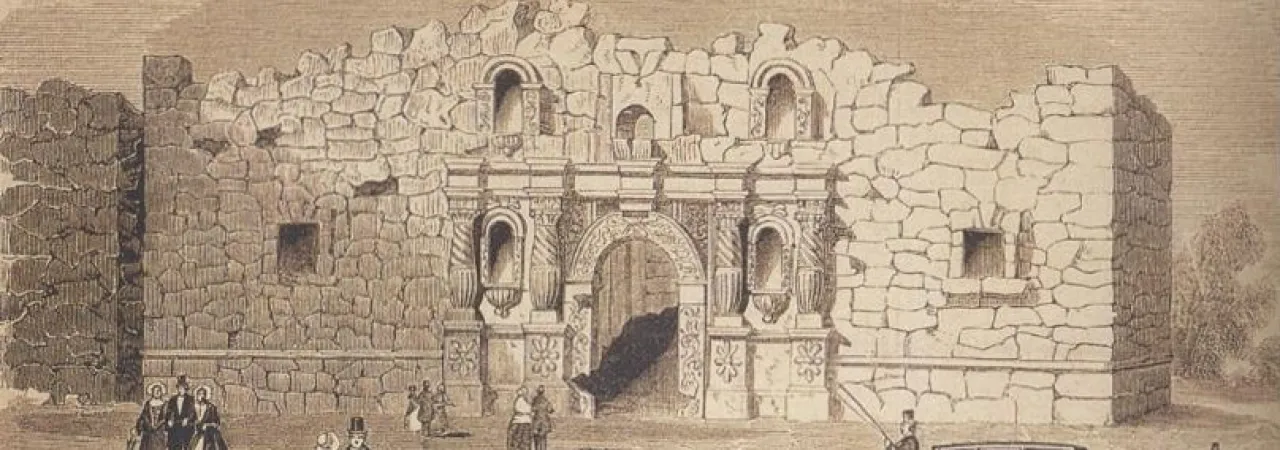
The Alamo Mission, San Antonio, Texas, artist unknown, 1854. Originally published in Gleason's Pictorial Drawing-Room Companion, the illustration depicts the historic mission nearly two decades after the Battle of the Alamo.
The Texas Revolution was a series of events that led to independence from Mexican rule for the Lone Star state. The war for independence pitted the Anglo-American settlers residing in the Mexican state of Texas (Texians) and the Texans of indigenous and Mexican descent (Tejanos) against the Mexican government.
Before achieving independence, Mexico and Texas were subject to Spanish colonial rule. After a bloody war for self-determination, Mexico finally achieved independence in 1821. Now the Mexican Empire, the Treaty of Córdoba created a constitutional monarchy led by Agustín de Iturbide. However, a year and a half later, Antonio López de Santa Anna and Guadalupe Victoria ousted Iturbide and established a republican government in Mexico.
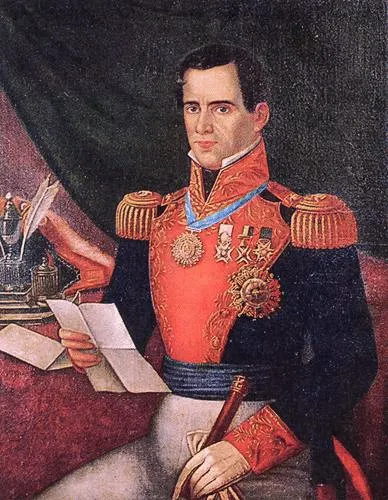
Antonio López de Santa Anna in his military uniform
Wikimedia CommonsIn the newly independent Mexico, the northern frontier had become essential to Mexican defense as they sought to limit expansion from the surrounding French and British empires. In 1824, the Mexicans placed the northern states of Texas and Coahuila under a federal system. These states were home to various indigenous tribes such as the Apache and Comanche, and by 1820, the Spanish government started to encourage Anglo-Americans to settle there. In 1823, Mexico established an Imperial Colonization Law, which excluded American settlers from a certain set of tariffs and taxes for seven years. Also, despite prohibiting slavery in 1829, Americans were permitted to utilize enslaved labor within Mexican territory.
Despite holding some degree of autonomy, Texans struggled to maintain their rights to self-governance as Mexico City consolidated power. In April 1830, the Mexican government reinstated the tariff residents of Coahuila and Texas were once suspended from and passed legislation to restrict settlement in Coahuila and Texas by Americans, and this caused much conflict between Texans and the Mexican government. In 1832, Texans rebelled in what would be later known as the Anahuac Disturbance, which led to the Texan victory in the Battle of Velasco. Furthermore, in 1832 and 1833, the people of Texas held several conventions that published resolutions that called for the continuation of the tariff exemption, the reversal of the law that restricted Anglo-American immigration to Texas, as well as instituting administrative separation of Coahuila and Texas, so Texas can be its own autonomous state. These requests were brought to the Mexican capital of Mexico City, and the Mexican government stopped short of meeting each request, for they only reversed the law that restricted Anglo-American immigration.
However, the situation only worsened in 1833 when Antonio López de Santa Anna was elected president of Mexico. Santa Anna had become very popular in the years leading up to the election as he resisted Spain’s attempts to retake Mexico, and it was his bravery that earned him the title of the “Hero of Tampico.” When he launched his campaign for the presidency, he ran on a platform of limiting the powers of the Roman Catholic Church and maintaining the federalist system. In the end, Santa Anna established a centralized government and declared himself dictator, which angered the settlers of Texas as they enjoyed their autonomy. In addition to establishing a centralized government, Santa Anna repealed the 1824 constitution, and he passed the Seven Laws of 1836, which permanently gave power to the aristocracy.
By 1835, tensions between the Texans and the Mexican government reached an all-time high. In September 1835, Santa Anna gave orders to disarm Texas, and as a result this led to Domingo de Ugartechea, a commander of troops in Texas, ordering Francisco de Castañeda in Gonzales to retrieve a cannon in Texas. This cannon has existed in Gonzales since 1831, and it was provided when Green DeWitt voiced his concerns about the safety of the colony. The city of Gonzales had a history of experiencing attacks from indigenous tribes, such as the Comanche peoples. Therefore, De Witt requested a small 6-pound cannon to protect the city from any potential future attacks. By September 1835, De Witt had passed, but even after his death, the town still saw the existence of the cannon as crucial, so the people of Gonzales were not going to let the Mexican forces take the cannon without a fight.
On September 29, 1835, Castañeda arrived at the banks of the Guadalupe River across the way to Gonzales alongside eighteen other militia men (later called the “Old Eighteen”). Castañeda shouted across the river ordered that the people of Gonzales surrender their six-pound cannon, but they were not going to give away the cannon that easily, so they responded, and claimed that their town leader was not available, and they would need to discuss the matter. They asked that the Mexicans remain on the other side of the Guadalupe River, and this excuse allowed the people of the town to buy time and gather reinforcements. On September 30, the Mexicans received a message from a Joseph Clements, which said, "We are weak and few in number, nevertheless we are contending for what we believe to be just principles.” However, even though they claimed to be “weak,” this extra time allowed the people of Gonzales to strategize, and by the beginning of October, the reinforcements arrived. The soldiers of Gonzales placed a banner under the cannon that courageously said, “Come and Take It,” which was an homage to the American Revolution when the British attempted to take Fort Morris. The forces of Gonzales fired the cannon, and Castañeda responded by ordering that his soldiers retreat towards San Antonio de Bexár. Two Mexicans died in what would become known as the Battle of Gonzales, which was the battle that began the Texas Revolution.
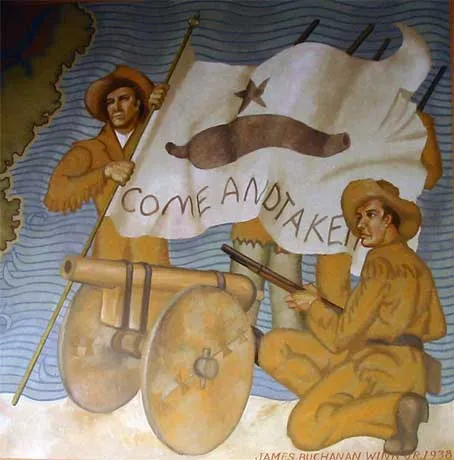
Mural from a museum in Gonzales, Texas depicting the Battle of Gonzales
Wikimedia CommonsTexans mobilized quickly, and by October 10, Stephen F. Austin was elected to be commander-in-chief of the newly established “Army of Texas.” The Texan forces followed the Mexican troops to San Antonio de Bexár and laid siege to the city. By the end of October 1835, the Mexican Army troops led by General Martín Perfecto de Cos admitted defeat. Following the siege, The Mexican Army troops were defeated once at Grass Fight about a month later. However, despite starting off strong, the Texans suffered their biggest defeat at the Alamo.
In February 1836, General Cos and General Santa Anna devised a plan to link up near the Rio Grande and take back San Antonio de Bexár. Once Mexican forces arrived, the Texan Army started to seek refuge in the Alamo, which had one-hundred fifty men and eighteen cannons when the siege began. The Texan forces were commanded by Colonel James Bowie and Colonel William B. Travis, and once the siege began, Travis published a letter asking for support from the people of Texas and Americans: “If this call is neglected, I am determined to sustain myself as long as possible & die like a soldier who never forgets what is due to his own honor & that of his country - Victory or Death.” The Alamo was taken within thirteen days, and all the defenders were killed, including former Tennessee Congressman Davy Crockett. Although a crushing defeat, “Remember the Alamo” became a rallying cry for the remainder of the Texas Revolution, and Texans will always remember the loss at the Alamo on March 6, 1836.
During the siege, Texans held a convention of fifty-nine delegates at Washington-on-the Brazos to discuss independence and issues concerning provisional governor Henry Smith. The first day of the convention was March 1, and on this day, a committee began writing a declaration of independence for Texas. On the following day, the declaration was adopted, and on the day after, delegates started to sign the declaration. By March 17, the delegates had written and approved a constitution, and Sam Houston had been chosen to be commander of the army.
Before the war ended, Texans suffered another crushing defeat at the Battle of Coleto Creek and Goliad on March 19-20, 1836. The Texas Army, led by James Walker Fannin, surrendered to General Jose Urrea’s army near the town of Goliad. The surrender was not peaceful, and it resulted in Urrea executing 300 Texans and Fannin.
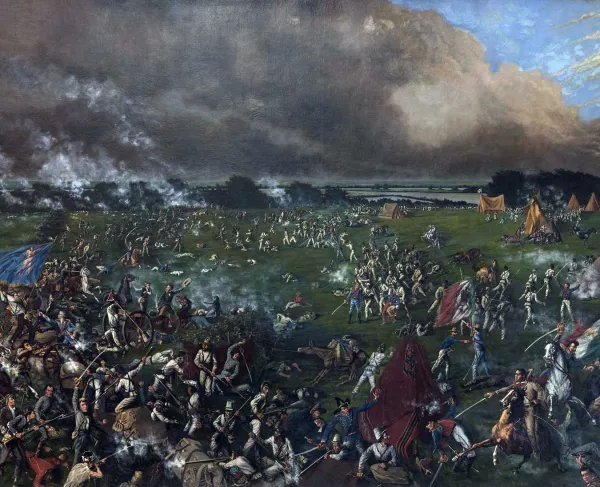
After the Battle of Coleto and Goliad, Texan soldiers escaped towards Louisiana, and as the soldiers were escaping, a Texan army led by Sam Houston marched towards the San Jacinto River. Shouting “Remember the Alamo! Remember Goliad! God and Texas,” the Texan forces fiercely defeated Santa Anna’s army in less than twenty minutes. After what became known as the Battle of San Jacinto, Santa Anna was captured. Santa Anna was brought to Sam Houston, and Santa Anna agreed to lay down his arms leading to the establishment to the Republic of Texas.
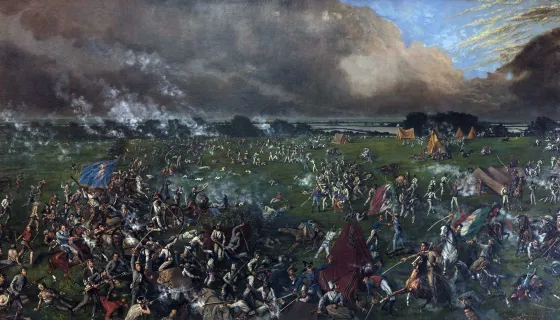
The Battle of San Jacinto, oil on canvas by Henry McArdle, 1895
Texas State Library and Archives CommissionThe Texas Revolution gave birth to a new republic, which subsequently led to the breaking down of the Mexican empire. As the years progressed, the existence of Texas began to present a tremendous controversy as the United States sought to expand slavery into new southern territories. Less than a decade later, the United States would annex Texas and fight in the Mexican American War, which led to the further decline of the Mexican Empire.
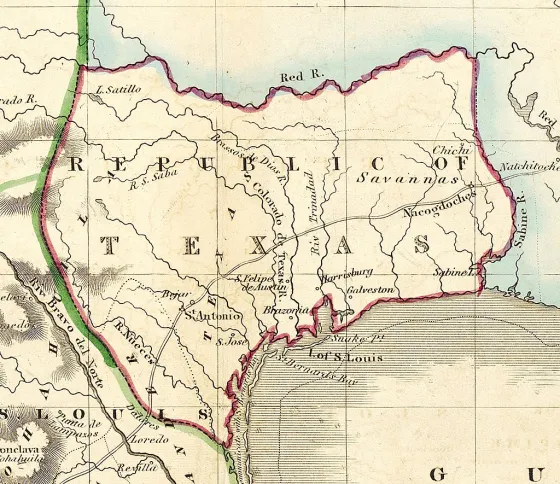
1836 map by William Howe Lizars of the Republic of Texas
Wikimedia Commons




.jpg)