Edwin C. Bearss
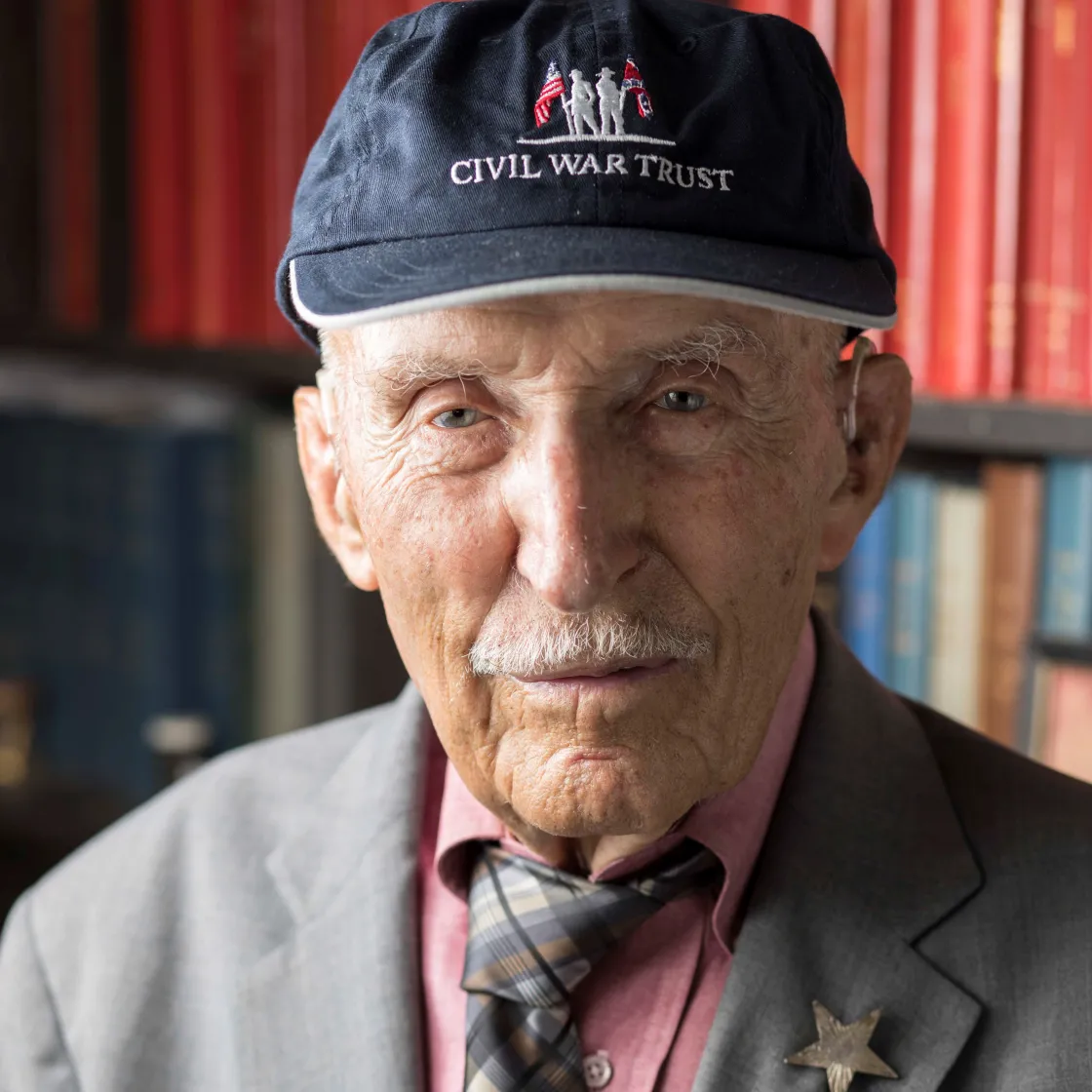
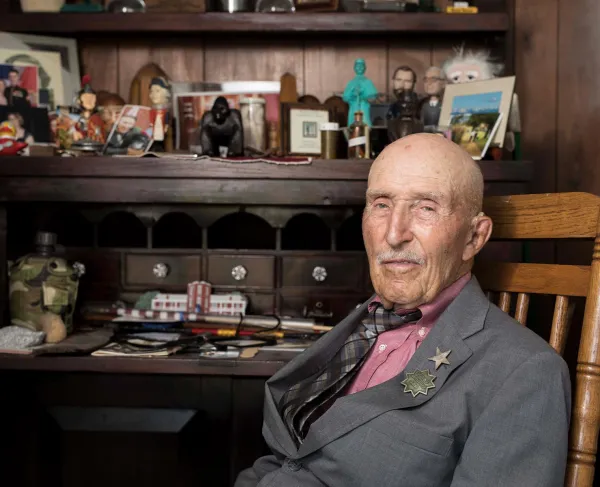
Edwin Cole Bearss (1923-2020) was born in Billings, Montana, on June 26, 1923. He grew up on his grandfather's ranch near Hardin, Montana, in the shadow of the Rosebud Mountains and within a bike ride of the Little Bighorn Battlefield. On the ranch, the E Bar S (E-S), he named the cattle for Civil War generals and battles. His favorite milk cow was Antietam.
Bearss attended a one-room school at Sarpy, Montana, until he went to St. John's Military Academy in Delafield, Wisconsin, in 1937. After graduating from Hardin High School in 1941, he spent the summer hitchhiking across the country to visit battlefields. Bearss returned home and, after the Japanese attack on Pearl Harbor, followed in the footsteps of his father and Medal of Honor–recipient older cousin to enlist in the U.S. Marine Corps. During World War II, he served with the 3rd Marine Raider Battalion and 1st Marine Division in the campaigns on Guadalcanal and New Britain. Badly wounded by machine gun fire during the 1944 Battle of Suicide Creek, he spent 26 months in various hospitals. His injuries limited his dexterity for the remainder of his life.
Bearss studied at Georgetown University and received a B.S. degree in Foreign Service in 1949. He worked for three years in the Navy Hydrographic Office in Suitland, Maryland. Later, at Indiana University, he received an M.A. in history, writing his thesis on Confederate Maj. Gen. Patrick Cleburne.
His National Park Service career began in 1955 at Vicksburg, Mississippi, where he served as park historian. While there, his research led him and two friends to the long-lost resting place of the Union gunboat Cairo. He also located two forgotten forts at Grand Gulf, Mississippi, and helped transform Grand Gulf into a Mississippi State Military Monument. He founded the Mississippi Civil War Round Table in 1956, which later consolidated with the Jackson Civil War Round Table.
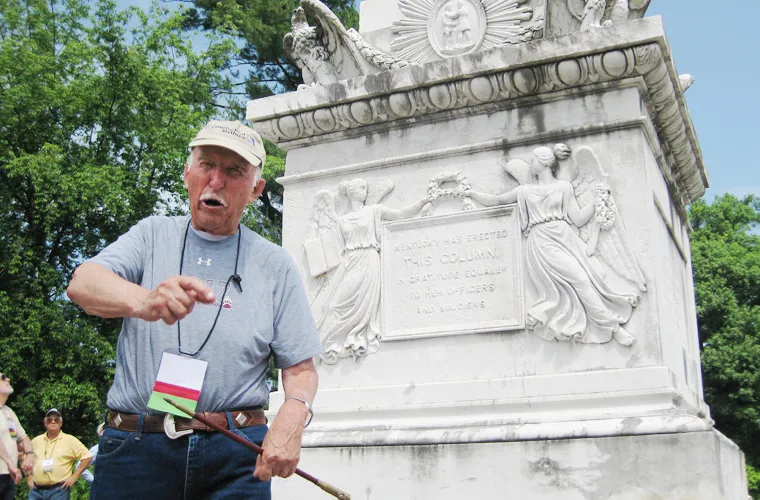
In 1966, Bearss was transferred to Washington, D.C. He became the National Park Service's Chief Historian in November 1981, a position he held until July 1994. He served as the Director's Special Assistant for Military Sites until his retirement on October 1, 1995. Following retirement, Bearss continued his decades-long association with the nation's military history through lectures, television appearances, writing and his renowned battlefield tours.
Bearss received numerous awards in the fields of history and preservation, including the T. Harry Williams Award, Bruce Catton Award, Alvin Calman Award and Bell I. Wiley Award. He was named Man of the Year at Vicksburg in 1963 and received the Harry S Truman Award for Meritorious Service in Civil War History. In 1964, he became a member of the Company of Military Historians and was later elected a Fellow. In 1983, he received the Department of the Interior's Distinguished Service Award, the department's highest honor. He also received a commendation from the Secretary of the Army in 1985.
Throughout his career, Bearss conducted detailed historical studies for numerous National Park Service sites, including Vicksburg, Pea Ridge, Wilson's Creek, Fort Smith, Stones River, Fort Donelson, Richmond's battlefields, Fort Moultrie and many others.
A prolific author and popular public historian, Bearss appeared regularly on the History Channel, A&E Networks and TLC, as well as in Ken Burns's landmark 1990 documentary The Civil War. He was particularly devoted to the importance of preserved landscapes in understanding the past. Among the pioneers of the modern battlefield preservation movement, he remained an enthusiastic battlefield guide, traveling as many as 200 days a year well into his 90s.
Bearss was an early board member of the Civil War Trust, a predecessor of the American Battlefield Trust, and continued serving on the Trust's board as historian emeritus until his passing. In recognition of his extraordinary contributions, the Trust named its lifetime achievement award in his honor and dedicated a monument celebrating his achievements at Champion Hill Battlefield in Mississippi.
Edwin Cole Bearss passed away peacefully on September 15, 2020, at the age of 97, surrounded by family. His remarkable legacy as a historian, educator, battlefield preservation advocate and World War II veteran continues to inspire generations of Americans to explore, understand and protect the places where history happened.
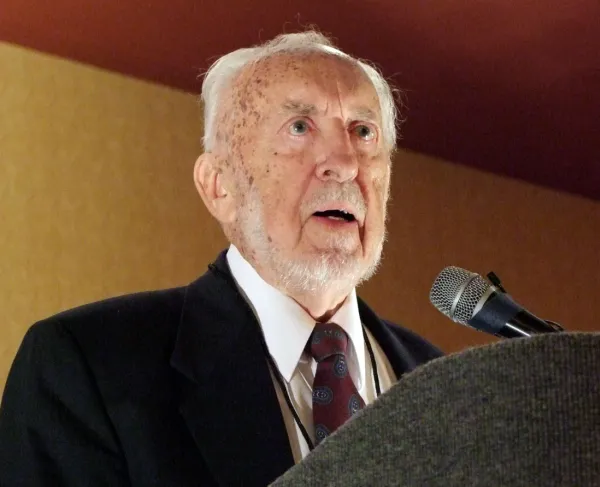
The Rev. Bob Bluford
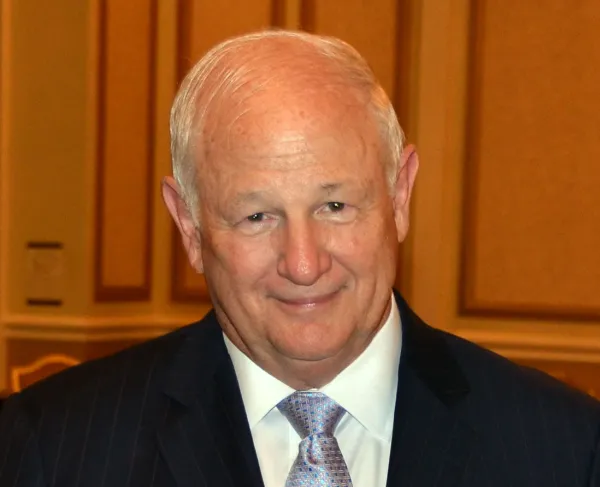
Clark B. Hall
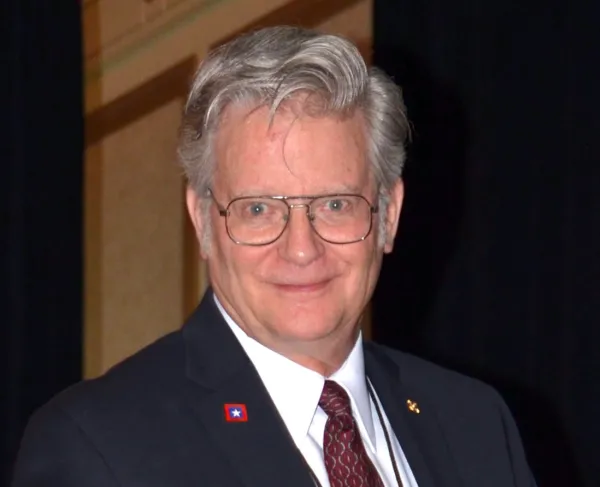
Edward T. Wenzel
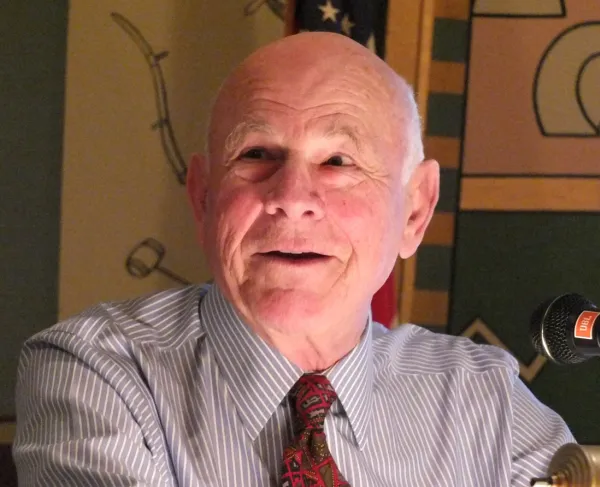
Emanuel “Tersh” Boasberg III
More about Edwin C. Bearss