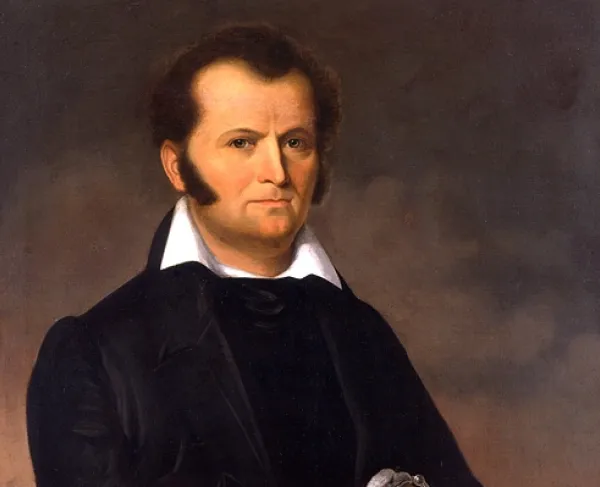
James W. Fannin Jr.
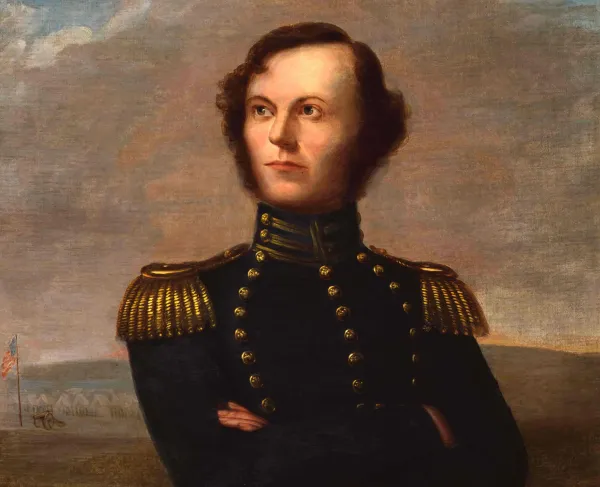
James W. Fannin Jr. was born in Georgia on January 1, 1804. His biological father, Isham Fannin, a plantation owner and veteran of the War of 1812, did not raise the young boy for unknown reasons. Fannin was instead adopted by his maternal grandfather, James W. Walker who raised the young boy on a plantation near Marion, Georgia. Due to his illegitimate birth, Fannin’s name and spelling changed periodically throughout his early life. By adulthood, he had settled on “James W. Fannin Jr.”, adopting his father’s surname. Fannin was the fourth “James” within the family as his great grandfather, grandfather, and uncle all had variations of the name. Due to this, Fannin probably adopted the Jr. portion to differentiate himself from the others.
On July 1, 1819, Fannin was admitted to the United States Military Academy at West Point at 14 years old. There are few records of his time at the school though he was listed 60th out of 86 within his class. Students ranked 61-86 were “found deficient and turned back to recommence the studies of their respective classes." The young Fannin only remained at West Point for about two years before dropping out in November 1821, returning to Georgia to tend to his ailing family.
Fannin remained in Georgia throughout the 1820s where he became a planter and merchant eventually acquiring numerous enslaved African Americans. During this time James Jr. met Minerva Fort and the two married on April 24, 1828, in Powelton, Georgia. The couple had two daughters: Missouri Pinckney, born on July 17, 1829, and Minerva, nicknamed Eliza, born in 1832.
While in Georgia, Fannin’s political influence also grew. He was commissioned as a Major in the local militia, attended the Masonic Lodge, and was a member of the Free Trade and State Rights Association of Muscogee. James Fannin’s rebellious spirit was also apparent as he became an advocate for nullification, which sought to nullify federal laws that were seen as unfair to states.
Despite his growing social affluence, the Fannin family was in serious financial trouble, owing large amounts of debt to creditors. To make money, James Fannin started pursuing business in Cuba, with historians speculating that he may have participated in the illicit slave trade which had been outlawed in the United States since 1808. His ventures frequently led him to the Mexican region of Tejas, and he subsequently settled in Velasco by 1834 with his family joining shortly thereafter.
When tensions began to bubble between the Anglo-American settlers of Tejas and the Mexican government, Fannin attempted to use his military connections back in the United States. He sought to establish a Texian officer corps filled with graduates of West Point, although the plan never came to fruition as most American officers did not want to go through the process of resigning their commissions. With his initiative however, Fannin became a Captain in the “Brazos Guards,” part of the Texian volunteer army, at the onset of the Texas Revolution on October 2, 1835.
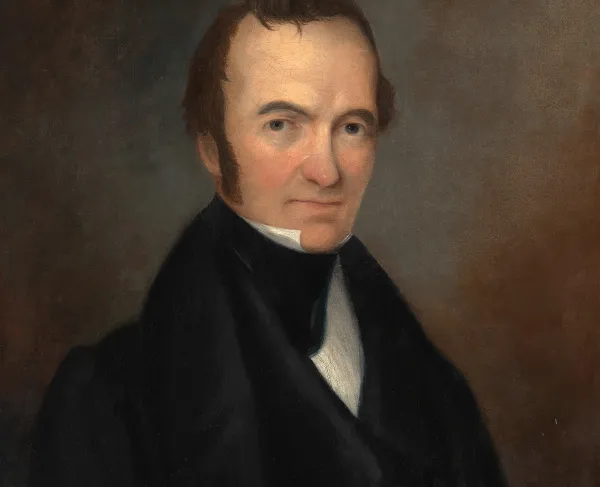
With the revolution underway, Fannin was under the leadership of Stephen F. Austin. He served as the second-in-command to Colonel James Bowie during the Battle of Mission Concepción and during the Siege of Béxar. In the wake of the battle, General Sam Houston offered Captain Fannin the position of Inspector General, however he wanted to remain in the field leading men and instead asked for a promotion to Brigadier General. It is also possible that the cancelled assault of Béxar on November 22nd caused some frustration, leading to his requested discharge. In response, Austin allowed Fannin to separate from the volunteer militia, allowing him to apply for a larger role in Texas’s regular army.
On December 7, 1835, James Fannin joined the regular force as a colonel and began enforcing discipline which was not well received by his subordinates. For the remainder of his life, Fannin became increasingly unpopular amongst both his enlisted men and fellow officers. Following the early victories and the capture of Béxar, Texian leadership, including Fannin, believed that an offensive campaign could swing the war in the right direction as supplies and morale began to dip over the winter of 1835-1836. The General Council, under the Provisional Government of Texas, prepared plans for a Texian invasion of Mexico.
Despite the apprehension on the part of Governor Henry Smith, who vetoed the plan, the General Council eventually appointed Colonel James Fannin to head the ill-fated Matamoros Expedition. Under this new plan, Fannin was designated an “agent to the Provisional Government.” He now answered directly to the council, which superseded any commands from Houston. This move created a sense of empowerment on Fannin’s part to disregard direct orders from Houston, causing contempt between the two. Ultimately, the decision to give Colonel Fannin this position contributed to the downfall of him and his men.
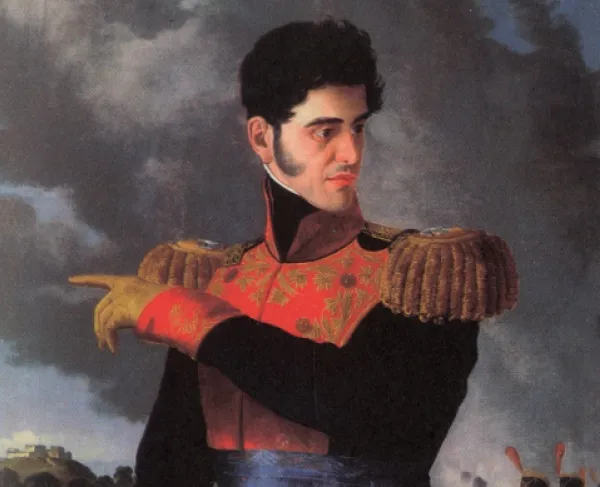
As more intelligence arrived at the Texian lines regarding Mexican troop numbers, even Fannin began to have doubts about the Matamoros Expedition. He, along with most of the army, pivoted to a defensive plan but it was too late as Mexican General José Urrea would commence his offensive in January 1836. Fannin also received requests to reinforce the Alamo garrison in San Antonio. He made a half-hearted attempt but ultimately decided to remain at Goliad. Colonel Fannin’s force occupied the Presidio La Bahía in Goliad, renaming it Fort Defiance. By March 11, 1836, General Houston ordered the withdrawal of Colonel Fannin’s force from Goliad to Victoria, but due to communication delays and indecision by Fannin, they did not withdraw until the nineteenth. By this point the Alamo in Béxar had already fallen to General Santa Anna’s men and General Urrea was closing Colonel Fannin’s heels.
“Colonel Fannin ... could not be made to believe that Mexicans would dare follow us. He had too much contempt for their own prowess, and too much confidence in the ability of his own little force.” -Captain Jack Shackelford
Fannin and his men attempted to reach the woods along Coleto Creek but were instead caught in the open by Urrea’s cavalry. Enduring an all-day battle, in which Fannin was wounded, the colonel surrendered to the Mexican army the next morning. Despite the belief that they would be treated honorably as prisoners of war, the Tornel Decree stated that captured foreign nationals, which comprised most of Fannin’s army, would be executed.
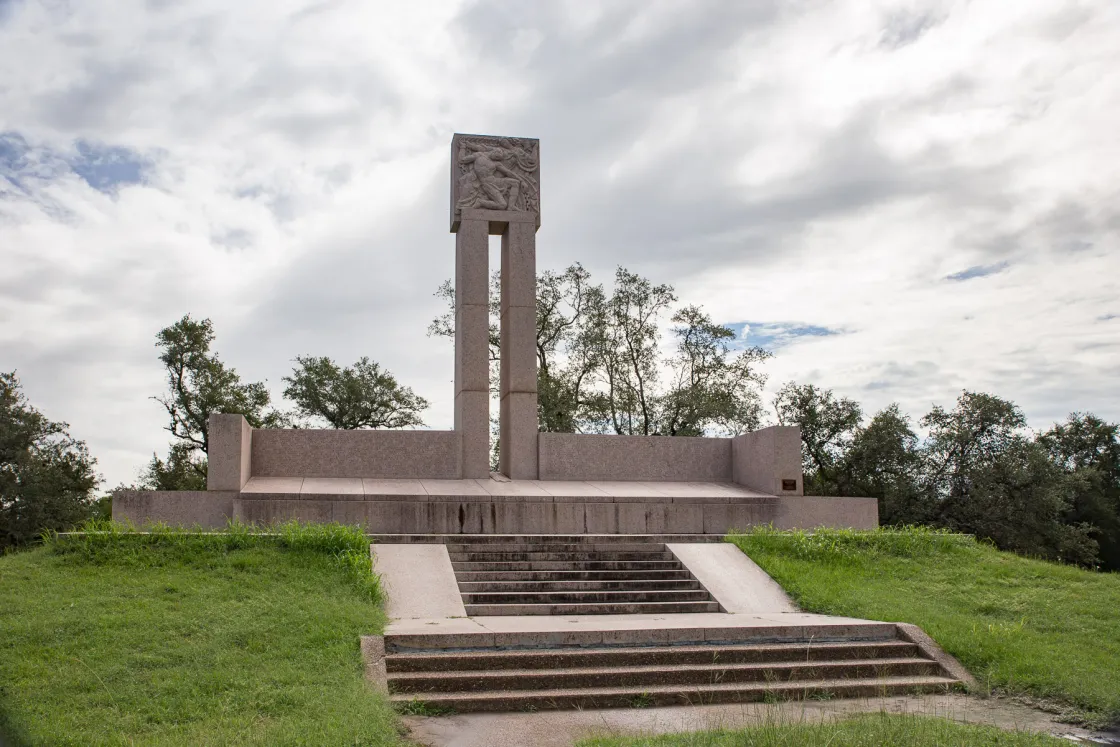
On March 27, 1836, the men were marched out of the front gates of Fort Defiance and executed by firing squad on the prairie around Goliad. Fannin, who could not walk, was instead blindfolded and seated in the courtyard. He gave three final requests to the Mexican officials: that he receive a proper burial, that his belongings be returned to his family, and that he be shot in the heart and not the face. Fannin was executed at point-blank range by firing squad, and his body was thrown alongside his fallen comrades to be burned. He became a martyr for the revolution and “Remember Goliad!” quickly became the rallying cry until Texas Independence on April 21, 1836, when Santa Anna was defeated at San Jacinto.



.jpg)