William B. Travis
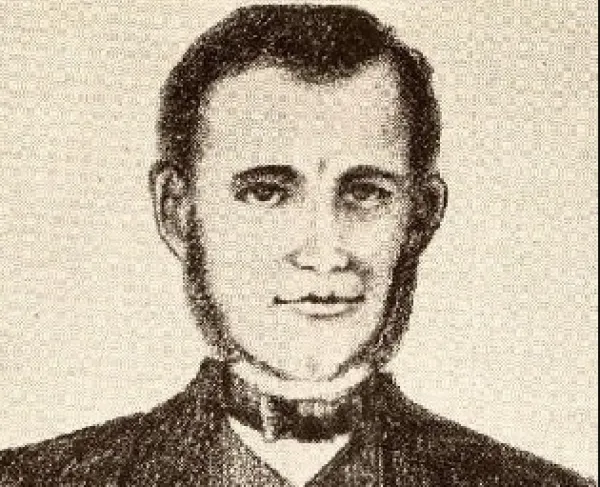
William Barret Travis was crucial to the Texas Revolution, known for his role in the Anahuac disturbances and the Battle of the Alamo. His famous “Victory or Death” letter helped galvanize support for the cause and immortalized him as a Texan hero.
Travis was born on August 1, 1809, in Saluda County, South Carolina as the eldest of ten children. When he was nine, Travis’ uncle Alexander convinced the family to move to the Alabama Territory and settle recently speculated land. As his father became a farmer, Travis grew closer to his uncle who became a preacher at the Old Beulah Church, a community leader, and educator. Travis enrolled in his uncle’s Sparta Academy, before moving to nearby Claiborne to finish his education. Graduating at 18, he briefly became a teacher in Monroe County. During this time, he fell in love with one of his students, Rosanna Cato, and the two married on October 26, 1828. Having a son the next year, Travis decided to leave teaching and study law.
Remaining in Claiborne, he opened his new law firm and in early 1829 and simultaneously started his own newspaper, The Claiborne Herald. He struggled to maintain both, seeing little business, and quickly went into debt to fund them. His newspaper shut down in late 1829 and his firm struggled to attract any clients. By mid-1829, he was in debt for about $150, and by 1831, he owed a total of $834. In March 1831, his former law mentor James Deller sued Travis for not paying back his debt. To avoid his immediate arrest, Travis ran away after the trial. He chose Texas as his destination, hearing of its plentiful farmland and need for lawyers. Leaving his pregnant wife and two-year-old son behind, Travis promised to eventually send for them to join him. He never did, and the two divorced five years later, although Travis later gained custody of his son, Charles.
In May 1831, Travis reached Texas, where he purchased land from Stephen F. Austin and became his counsel. Setting up a law practice in Anahuac, Travis quickly became prominent in the Anglo-American Texan (also known as Texian) community. He helped form a local militia unit. With it, played an important role in a series of conflicts between Texians and Mexicans known as the Anahuac disturbances, which enflamed tensions and led to the Texas Revolution.
A dispute over slavery led to the first disturbance in 1832. When Mexican Brigadier General Juan Davis Bradburn sheltered a runaway slave (slavery was outlawed in Mexico in 1829), Travis agreed to legally represent the enslaver. Bradburn arrested Travis twice during this time, accusing him of concocting a plot to revolt against the Mexicans. The Texian militia were enraged. They marched onto the prison and on June 9 and 12, fought with Mexican forces, resulting in the death of six. Travis was freed in negotiations with Bradburn and the Texians signed the Turtle Bayou Resolutions, the first formal protests of the Texians against the Mexican government. They called for resistance against Mexico and protection for Texian liberties.
A second disturbance arose when on June 27, 1835, a Texian organization called the Citizens of Texas began protesting Mexican taxes. Two men, Andrew Briscoe and DeWitt Clinton Harris, were arrested by Captain Antonio Tenorio for incompliance. Travis, hearing of these developments, created a militia and sailed to Anahuac. His 25 men quickly forced the 40 Mexican guards to surrender, in the process disarming them and freeing the Texians. Despite an apology, Mexican officials demanded Travis’ arrest and appearance before a military trial. However, Texian colonists refused to surrender him, and Travis remained free.
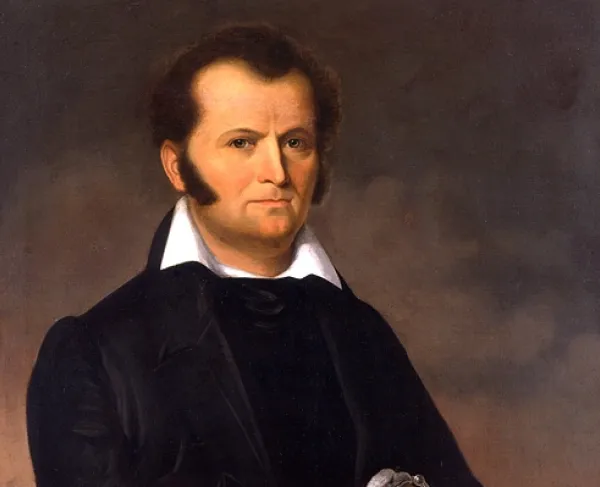
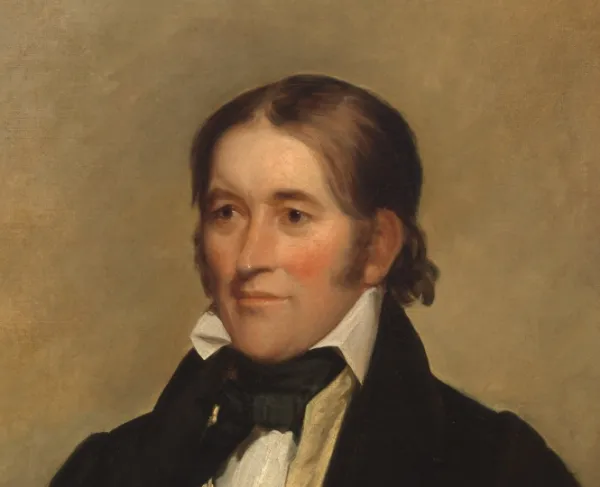
As the rebellion against the Mexicans intensified, Travis was commissioned as a lieutenant colonel of the “Legion of Cavalry”. In January 1836, Colonel James C. Neill requested reinforcements for his garrison at the Alamo Mission in San Antonio. Three separate voices answered: James Bowie arrived with 30 men on January 19, William Travis with 18 regulars on February 3, and Davy Crockett with some volunteers on February 8-9. Neill left Travis in command, as the highest-ranking officer when he left on February 11, but due to popular will, he shared command with Bowie.
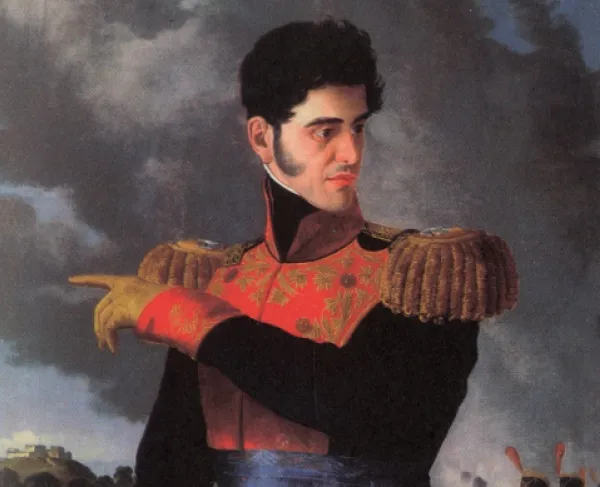
On February 23, General Antonio Lopez de Santa Anna and his 1,500 men initiated a siege of the Alamo after Travis refused an unconditional surrender. The next day, with Bowie’s health deteriorating, Travis took full command of the garrison and sent out a letter to reinforcements. The letter, known as the “Victory or Death” or the “To the People of Texas & All Americans in the World” letter, failed in drawing help to the Alamo. A thirteen-day siege followed and on March 6, Santa Anna’s forces stormed the Alamo. The Texians attempted to defend but the overwhelming Mexican force prevailed. William Barrett Travis, along with all the Alamo defenders perished. Travis himself fell in what is today the lobby and front steps of the U.S. Courthouse at the northern edge of the modern Alamo Plaza. Santa Anna ordered their bodies to be burned. Joe, Travis' slave, was one of the few survivors of the Alamo, spared by the Mexican forces.
While Travis' letter failed in its immediate mission, it succeeded in drawing attention to the Texian cause, motivating more Texans and Americans to support independence. Rallying the morale of the Texian Army, Travis and the other Alamo defenders became martyrs.
About a year after the battle, on March 28, 1837, Colonel Juan Seguin led a public ceremony for the Alamo and gave the ashes of the defenders a proper burial. They were buried near the Alamo, the exact location forgotten. When the nearby Cathedral of San Fernando was renovated a century later, ashes believed to be of the Alamo defenders was found. While never confirmed, the remains were put in a sarcophagus, decorated with the faces of Travis, Bowie, and Crockett.
Related Battles
400
189