John Witherspoon
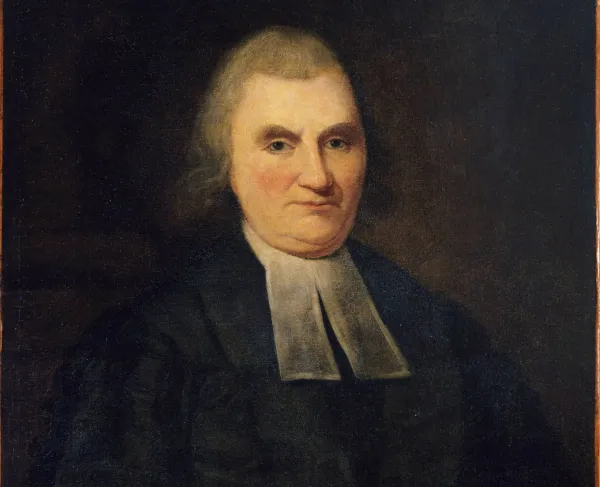
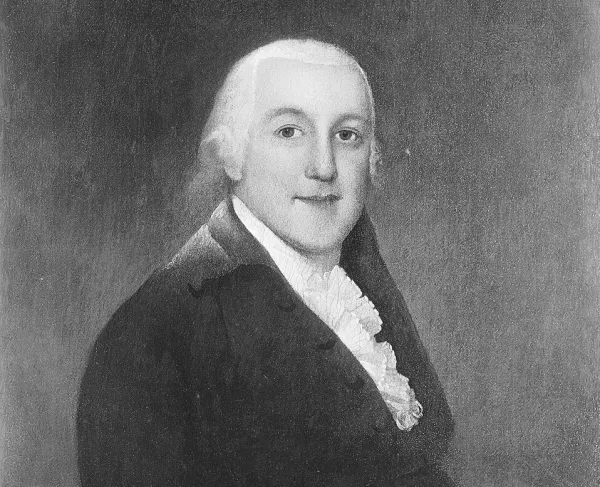
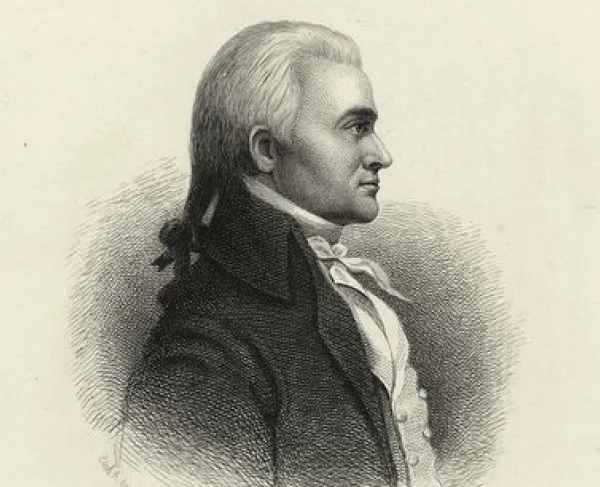
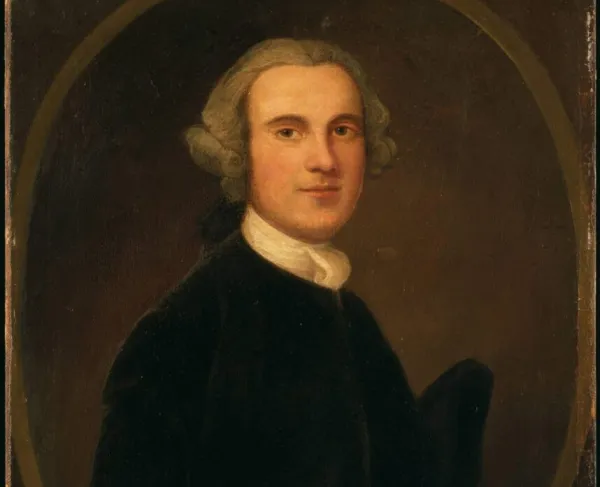
Though often lost in the constellation of stars who signed the Declaration of Independence, the Reverend John Witherspoon was one of the most influential minds of the founding era. He was a clergyman, a congressman, and an educator whose legacy shaped the United States for a generation. Through his writings, preaching, and the many students who thrived under his tutelage, Witherspoon embodied a moral and political philosophy which must still be contended with 250 years later.
John Witherspoon was born in 1723, 25 miles east of Edinburgh, in the parish of Yester, where his father, James Alexander Witherspoon served as minister. The eldest son, John followed in his father’s footsteps and, at the age of 13 entered the University at Edinburgh, where he ultimately received a masters degree. By age 20, he was a doctor of theology and took charge of a parish of his own two months after his 22nd birthday. He married Elizabeth Montgomery three years later, in 1748, with whom he had nine children, five of whom survived to adulthood.
Witherspoon was steeped in the Scottish Enlightenment ideals of natural rights, rational thought, and representative democracy. His philosophy followed that of another Scotsman, 16th-century theologian John Knox, who wrote “resistance to tyranny is obedience to God.” In this vein, Witherspoon opposed the Jacobite Rising of 1745 and was briefly imprisoned following the Battle of Falkirk. Afterward, as minister of Laigh Kirk, Paisley, he opposed the patronage system within the Church of Scotland, which allowed local landowners to install their own ministers over the objections of their congregations. He criticized the practice in his satirical “Ecclesiastical Characteristics”—one of three well-known theological treatises he authored during this period. In other words, Witherspoon established himself as a cleric who strongly favored republican ideals and whose moral philosophy had political dimensions.
Witherspoon’s reputation crossed the Atlantic and garnered the attention of Benjamin Rush and Richard Stockton, trustees of a small, struggling Presbyterian seminary in New Jersey. After several entreaties to lead the college, Witherspoon finally accepted the presidency of the College of New Jersey in 1768. That small Presbyterian college—now known as Princeton University—transformed greatly under Witherspoon’s leadership. Immediately upon arrival, he began reforming the debt-ridden institution, soliciting funds from both the local population and from friends abroad. He modeled the syllabus after his alma mater, teaching the classics, moral philosophy, rhetoric, history, and French. He purchased of state-of-the-art scientific equipment and donated hundreds of his own books to the school’s library. Under Witherspoon, a school primarily designed to train ministers became one the colonies’ most prominent institutions of higher learning—and his students (many of whom he taught personally) went on to become some of the most influential men of the era. During his tenure as president, Witherspoon’s pupils included 49 future U.S. congressmen, 28 senators, three Supreme Court justices, a Vice President (Aaron Burr), and President James Madison. In short, many of the minds that shaped the early founding of America were heavily influenced by this Scottish clergyman from Yester.
Inspired in part by the British Crown’s interference in colonial church affairs, Witherspoon soon found common cause with those working for American Independence. He joined the New Jersey committee of Correspondence in 1774, and also used his influence as educator and minister to further the cause. In particular, his May, 1776 sermon “The Dominion of Providence over the Passions of Men,” (a meditation on Psalm 76:10) provided some of the theological underpinnings for revolution. The king was in error, he argued, and the anger of the colonies—far from being sinful—was righteous wrath and the rightful response to the king’s overreach. In breaking from England, “the wrath of man” (in this case, the colonies), “will praise God.” The sermon was reprinted widely, increasing Witherspoon’s reputation as a voice for independence. In June, 1776, Witherspoon joined the Provincial Congress of New Jersey and was one of five New Jerseyans sent to represent the colony in the Second Continental Congress. According to legend, during the debate over independence, when it was suggested that the colonies were not yet ready for independence, Witherspoon replied that the fledgling nation “was not only ripe for the measure, but in danger of rotting for want of it.” Witherspoon voted to adopt the Virginia Resolution for Independence and, alongside Richard Stockton, Francis Hopkinson, John Hart, and Abraham Clark, signed the Declaration of Independence. He continued to represent New Jersey in the Continental Congress until 1782—taking a one-year hiatus for health reasons in 1779. As congressman, he was an active member of numerous committees and served as Congressional Chaplain.
Following the Revolutionary War, Witherspoon remained active in politics and church affairs until his death. He advocated for the adoption of the Articles of Confederation, and, in 1787, was a member of the New Jersey conventional to ratify the U.S. Constitution. Simultaneously, Witherspoon was working on a different constitution—for the newly formed Presbyterian Church of the United States. He is even believed to have advised Alexander Hamilton on the creation of the United States Treasury. During this time, his son-in-law, Dr. Samuel Smith, assisted him in superintending the business of the college, allowing the aging Scotsman to being to withdraw from public life.
John Witherspoon died at his home near Princeton on November 15, 1794. Beyond merely signing the Declaration of Independence, Witherspoon should be remembered as an influential patriot, educator, and clergyman, whose legacy was felt for many generations to come.