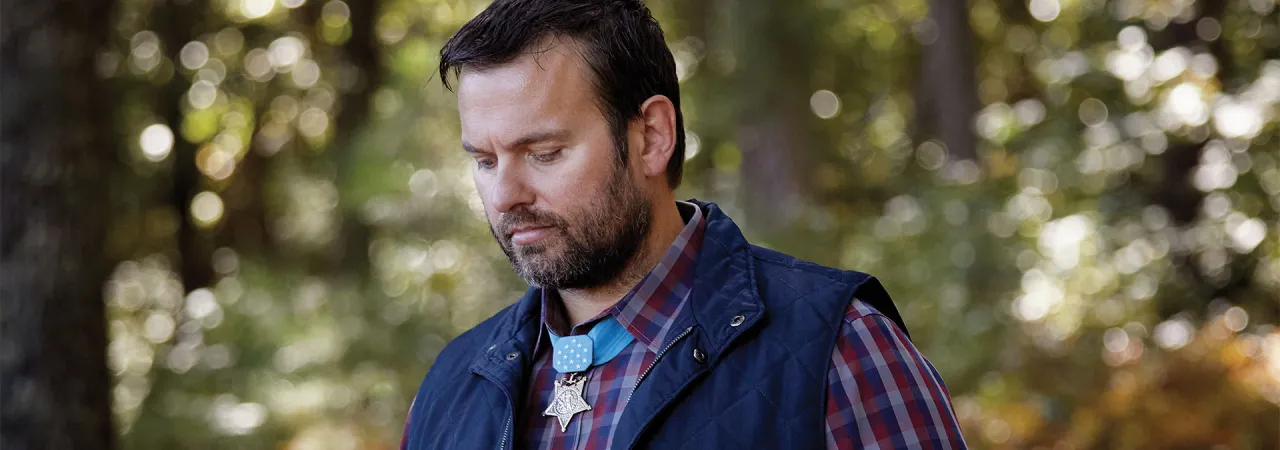
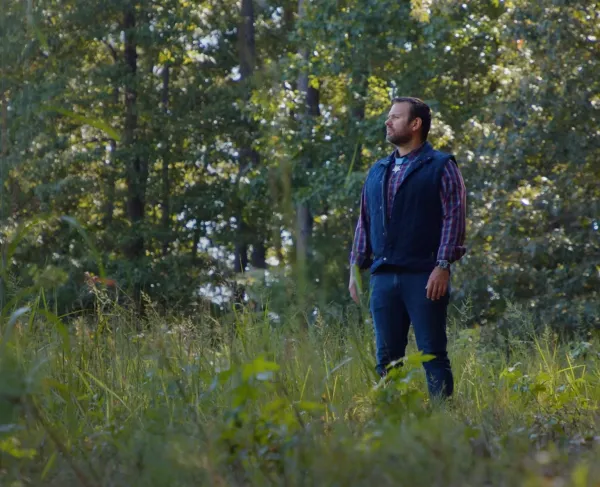
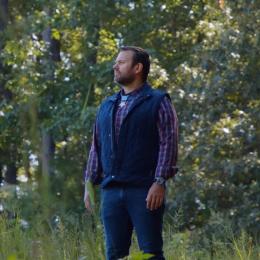
Medal of Honor Recipient Edward C. Byers at Petersburg Breakthrough Battlefield, Va.
I grew up in northwest Ohio, in a town of fewer than 1,000 people where everyone knows everyone. My father was a Navy veteran of World War II, and patriotism, sacrifice and citizenship were really big in our family. In middle school during the ’90s, I watched the First Gulf War on television and was drawn to the military, to doing something greater than myself. I was fascinated by books and movies about the Navy SEALS, individuals who could deploy in an instant anywhere in the world to do a very hard, specific mission using incredible technology.
I joined the Navy in 1998 and started my career at Camp Lejeune. Even then, I wanted to be a SEAL, and the Marine Corps was the closest I could start, so I trained as a hospital corpsman. I went on my first deployment to the Mediterranean in 2000, and that’s when the USS Cole blew up, but it was just a precursor, a foreshadowing, to what happened just a year later.
Shortly after September 11, 2001, I got my orders to go to BUD/S, Basic Underwater Demolition/SEAL Training. The Naval Special Warfare community, the Navy SEALS, are recognized around the world as having the hardest military training in existence: It isn’t just Hell Week; if you survive that, there are another five and a half months to go. We started with nearly 200 carefully selected recruits, but only about 20 graduated in Class 242.

Byers, in uniform, during one of his deployments.
It is really hard to describe how much of a suck-fest that training is, testing every component of who you are. It tests your mind; it tests your spirit, your will; it tests your body. It strips away your selfishness and puts the focus on the group. When everything is on the line, you have an almost foolish sense of trust that the person to your left and your right is going to be with you, no matter what is at stake. And you only get that by going through something incredibly severe.
I’m not sure there was anyone other than my best friend who thought I was capable of completing it. But you don’t know truly what somebody’s capable of until you watch them walk this path with an unrelenting pursuit of a passion. When you truly want something extraordinary, it has to be something that consumes all of you, because it demands all of you.
I was assigned to SEAL Team Four in 2004, the last team to get combat experience in the global War on Terror; all the other teams had already done at least one deployment in Iraq. I was newly married, with an infant, when I went off on a seven-month deployment. But it wasn’t until the end of my second deployment to Iraq, in April 2007, when the absolute reality of combat hit me. We were about a month from going home when there was an operation that changed the whole dynamic. In that operation, my dear friend Clark Schwer was killed; Mike Day was shot 27 times but got himself back to the helicopter. That day was a catalyst for why I ended up going for Naval Special Warfare Development Group, an even more elite unit often called SEAL Team Six.
May 2011 saw the proudest moment of my career, taking part in the Bin Laden raid. But that was swiftly followed by tragedy in August 2011 — the Downing of Extortion 17, the greatest single loss of life in special operations history. In a moment, 30 Americans, a military working dog and eight Afghanis were killed, tearing a giant hole in our command, in our community. Beyond the grief, officials had to reconstitute that troop, and I was one of a handful of men from different squadrons moved to compensate.
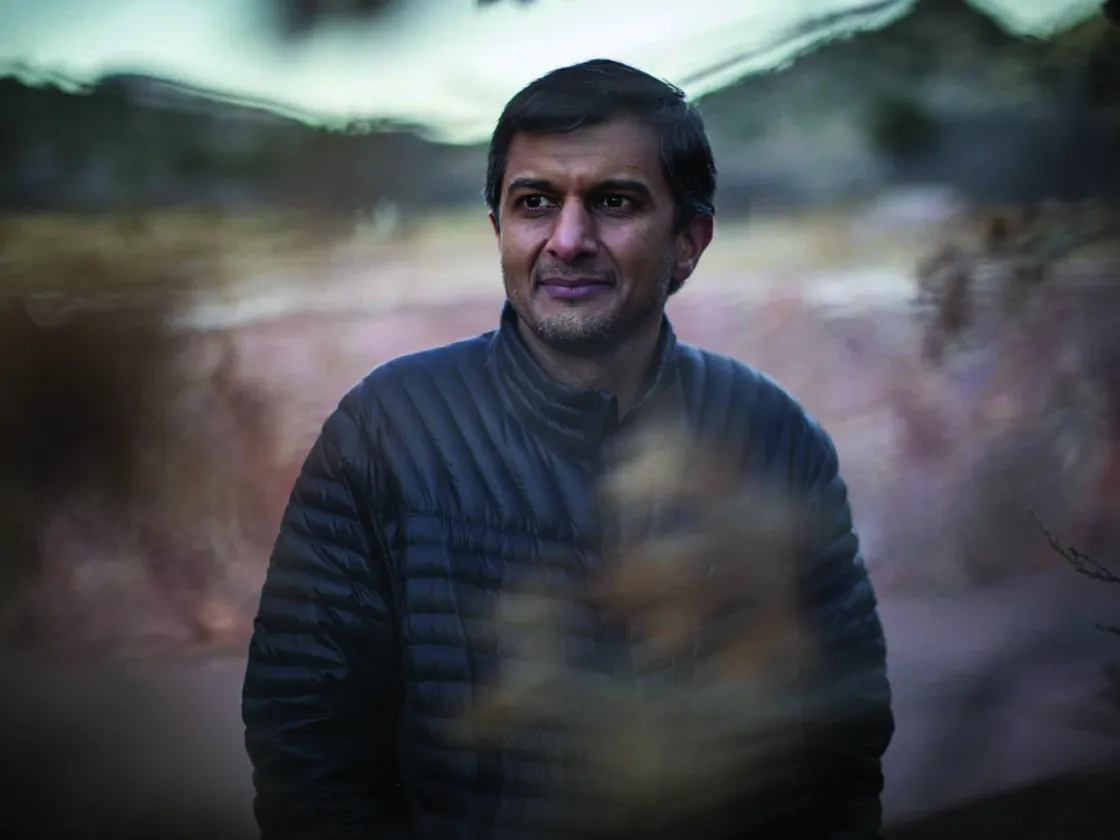
Dr. Dilip Joseph, American physician kidnapped by the Taliban.
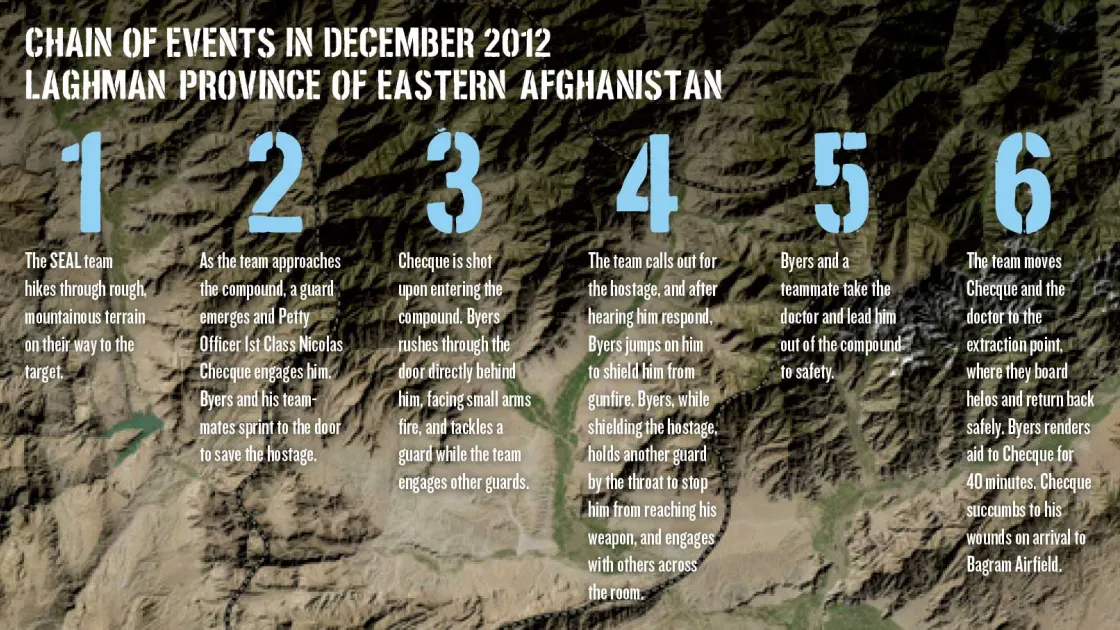
Photo by Leslye Davis, ZUMA Press/CorbisAbout a month into deployment, once we’d reconstituted, we began tracking the kidnapping of American physician Dr. Dilip Joseph by the Taliban. Victims were being used to trade for the release of Al-Qaeda or Taliban members being detained by the U.S. government. When word came that he was going to be moved into Pakistan, where he might be imprisoned for years, executed or simply vanished, we decided to execute on the operation.
The night of December 8 was very cold in the mountains. And at the compound we were targeting there was an illumination risk because moonlight in the valley could reveal silhouette movement across a long distance. So we landed about three or four hours outside the compound, and our reconnaissance guys made a trail to the top of the mountains and down the steep backside. We had night vision on, but it was slow going; by the time we were in place, we heard the call to prayer come out over the valley and sunrise peek over the ridges. We had to decide in an instant: turn back or execute immediately.
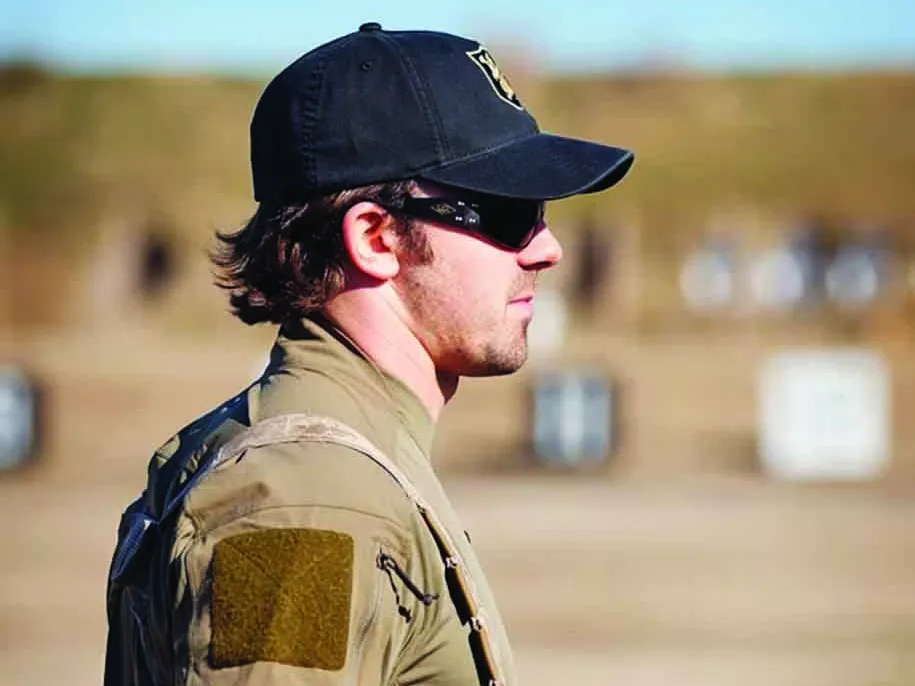
Chief Petty Officer Nicolas Checque
U.S. NavyWe went. Nick Checque led our team out, and I was right behind him. As we approached the building where we thought the doctor was, one of the guards came out to start his day. Nick engaged him and started sprinting toward the building, with us all on his heels. Shots had been fired, and we needed to get into the building fast, so we could make sure the doctor was alive. The unusual door to the building delayed us, but then Nick started to move through. I was right behind him. I heard more shots, and then I stepped over a body. Nick. Down the hall I saw a Taliban guard had an AK-47 about three-quarters of the way leveled at me, but I was able to shoot him first.
There was movement across the floor, but I didn’t know whether or not that was another guard or a hostage. I got on top of that person and saw they’d been going for a stash of weapons, but I didn’t know why — perhaps it had been someone trying to move to escape. I was able to adjust my night vision and now knew this wasn’t one of the potential hostages. Then the doctor spoke up so I could better assess the situation. I shot the person I was on top of and then leapt across the room to the doctor. I used one arm and my body armor to shield the doctor while I pinned one of the remaining Taliban guards into the corner and used my free hand to choke him as the rest of the team came in.
The entire timeframe from when we decided to execute on the target to the time we were on our way home was under 30 minutes. The time I was in the building conducting the clearance happened really fast, but there were multiple buildings — a whole team taking down the compound. And the reality of our story, the complexity and scope, became evident after the fact. There is no doubt in my mind that the incredible skill of our explosive ordinance disposal guy — covering through one window to take out the guy who is believed to have shot Nick as he stepped through the door — saved my life that day. If it wasn’t for that precision shot in the most critical of circumstances, the same fate would have awaited me, and the mission might not have been a success.
As for the aftermath, we’re very good at compartmentalizing. You’re conditioned to fight in a certain type of environment, and you build up a hardness around navigating that. I’m not saying every scenario coming back home after deployment is sunshine and roses; we all have our difficulties. I relied a lot on faith beyond just war theory. I honor and remember those that we served alongside who are no longer with us, but I also tend to reflect on how incredible it was to serve with such exceptional humans. For myself, it would be a tragedy to have made it through so much because of the sacrifices of others and to waste the gift of a next chapter.
My Medal of Honor ceremony was February 29, 2016. I’d only been notified two months before, which isn’t much time to adjust to how this will impact the rest of your life. The day itself was surreal. In his speech, President Obama noted it was probably the largest-ever gathering of tier one special operations in a formal environment. Only some of my colleagues and teammates were in the room, the ones able to be on camera or photographed; the rest were a floor below, watching on TVs. It was a striking juxtaposition between me being worldwide news, and this whole group of fellow soldiers who cannot be known because they do a job that very few of us can comprehend.

Byers receiving the Medal of Honor at the White House Feb. 29, 2016.
U.S. NavyI’d only recently gotten the opportunity to meet a Medal of Honor recipient, Tommy Norris, a SEAL from Vietnam and a legend in our community. We talked about what life was like after the Medal, what to expect, some pitfalls and traps to hopefully avoid. From him and with the ceremony, I started to meet this brotherhood of Recipients and, through their citations, be humbled by the breadth of the military and what it represents.
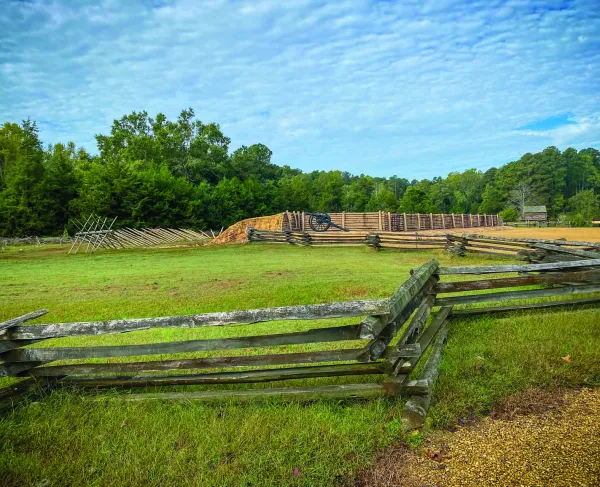
In a figurative sense, the Medal is a heavy burden. I think of that every single time I put it on — how I didn’t earn this by myself. I think about my friend Woody Williams from Iwo Jima, who, for 70 years, wore that Medal on behalf of this nation and promoted its values. To carry that responsibility for decades upon decades is no small thing. I think about Recipients from earlier conflicts too, especially when I’ve been able to visit the places where they fought — Joshua Chamberlain and his Soul of the Lion on Little Round Top at Gettysburg. Or Charles Gould, when he broke through the Confederate lines here at Petersburg.
Standing at such a place of connection, I can feel parallels in so much of Gould’s experience. These are the earthworks he went over by himself ahead of his unit. He suffered multiple wounds in hand-to-hand combat: bayoneted through the mouth and cheek, clubbed by muskets, stabbed again. In modern combat, with our technologies and weapons systems, hand-to-hand combat is very rare, but as with me, it does happen. Adrenaline running extremely high can dull your senses to pain and provide overwhelming strength. Anything not geared toward you surviving in that moment does not enter into your psyche. I can imagine that feeling for him and how he used his instincts.
CHARLES GOULD is absolutely a hero. Courage is knowing that something bad can happen to you and you still go ahead and do it anyway. Because of a serious childhood injury, he didn’t walk until he was six. He knew pain and recovery firsthand. But he volunteered for the Army, willing to make the ultimate sacrifice if required. And at 20 he burst over these works, ahead of everyone.
There are six traits to the Medal of Honor: sacrifice, integrity, patriotism, courage, commitment and citizenship. I believe the citizenship component is last because it signals the closing of a chapter. It was the greatest honor of my life to have served our country, but then what’s next? Charles Gould ended his military career and went back into civilian life, as is supposed to happen. But his idea of service wasn’t done. He lived another 50 years and gave back to his country in different ways, working in the Pension Office and the War Department as a clerk, and ultimately in the Patent Office.
In the SEAL community, we say you have to “earn your Trident” every day. Wearing the Medal upended my career path, but it gave me the incredible opportunity and platform to start a veterans charity called The Untold Journey Foundation, where we help support tier one special operations. If it wasn’t for this Medal, I would never have spoken about the things I’ve done; because of it, I’m able to talk about some of the sacrifices and give praise to a group that is deserving of it, but would never want it
Related Battles
8,150
3,236
3,500
4,250