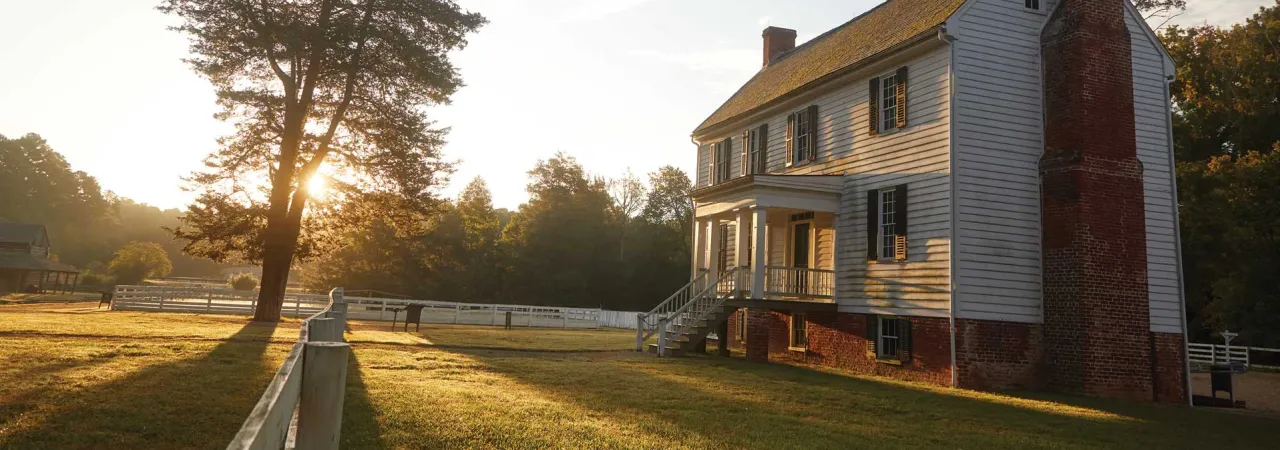
Tudor Hall at Pamplin Historical Park, Petersburg, Va.
Ancestry and Fold3 have been helping people understand their ancestors and why they fought for causes large and small for decades. Now, Ancestry and Fold3 have joined forces with the American Battlefield Trust, so that you can find the veterans in your family's past and understand their stories and the impact on the generations that followed. You can learn more at https: www.fold3.com/projectregiment.
In addition to this recurring Hallowed Ground column, this partnership has resulted in an exclusive discount for Trust members to subscribe to Ancestry and Fold3! Check your email for this exclusive offer.
Today, Pamplin Historical Park preserves 424 acres at the heart of the Petersburg Breakthrough Battlefield. For thousands of visitors each year, it is a place to learn about the Civil War and reflect on its legacy. But for Dr. Robert B. Pamplin, Jr., and his father, Robert B. Pamplin, Sr. — both men of vision and resources, whose success in business and philanthropy enabled them to purchase and preserve this land in the 1990s — the site holds even deeper meaning. Their gift was not only to the American public, but also a way of honoring their own family’s story and its ties by bloodlines to both the home front and the front lines of the Civil War.
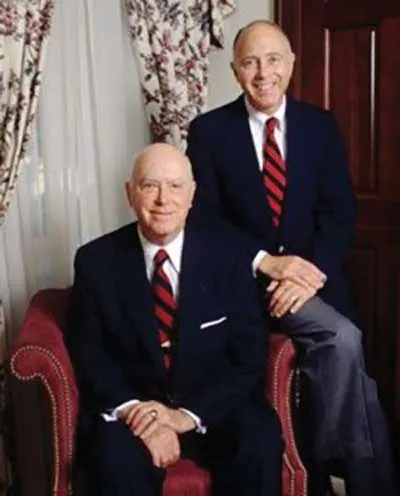
Dr. Robert B. Pamplin, Jr., and his father, Robert B. Pamplin, Sr.
Both of Robert Sr.’s grandfathers served in the Confederate army and were connected to the Petersburg Campaign. John R. Pamplin, born in Buckingham County in 1830, enlisted in 1861, leaving behind a pregnant wife and two toddlers. A farmer by trade, he endured illness, repeated hospitalizations and even the amputation of a finger. Captured and released multiple times, his service reflected the harsh cycle of war for ordinary soldiers. His regiment, the 59th Virginia Infantry, fought at Petersburg, though John himself was no longer in the ranks by the time of The Breakthrough. Likely compelled by injury and the desperate needs of his family farm, he left the army in 1863. His story illustrates the crushing choices faced by poor Southern farmers, who balanced duty at the front with survival at home.
William James Beville, born in Dinwiddie County in 1848, was barely 15 when he enlisted in 1863. His youth did not spare him — he fell ill during the Petersburg Campaign and was recorded absent, sick, in late 1864. The records do not clarify whether he returned before the war’s end, but his regiment was present at The Breakthrough in April 1865, meaning he may well have witnessed the final, desperate defense taking place in his own backyard. Beville lived in Dinwiddie County until his death in 1923, carrying his memories of boyhood service into the modern era.
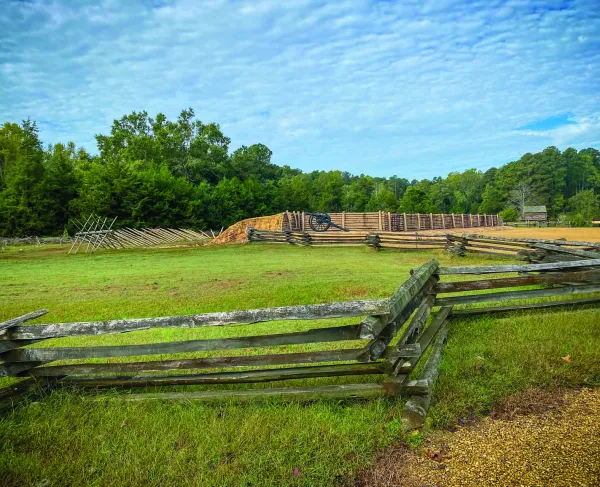
Both men’s surviving records, marked by enlistment dates, hospital stays and casualty notes, preserve only fragments of their wartime journeys. Yet together they represent the diverse faces of Confederate service in the Petersburg Campaign — journeys that, whether on the front lines or already ended by circumstance, ultimately closed with The Breakthrough.
Through William Beville’s wife, Ella Boisseau, the Pamplins are also tied to the Boisseaus of Tudor Hall. Built in 1812 by William Boisseau and expanded in the 1850s by his son Joseph, Tudor Hall was more than just a family homestead — it was a working tobacco plantation that sustained generations of the family. During the Civil War, the Boisseaus were forced to leave their home as it was commandeered by Confederate forces. From late 1864 through early 1865, Tudor Hall served as the headquarters of Brig. Gen. Samuel McGowan and his South Carolina brigade, who manned the defensive line protecting Petersburg. On April 2, 1865, Union troops stormed across those same fields, breaking through Lee’s lines in the decisive assault that became known as the Petersburg Breakthrough. For the Pamplins, this connection meant that their family history was bound not only to the men who fought but also to the very house and fields that bore witness to the conflict.
For Dr. Robert B. Pamplin, Jr., and his father, protecting the Petersburg Breakthrough was more than philanthropy — it was both a tribute to their family’s ties to the land and an affirmation of the battlefield’s national importance. By placing the site in the care of the American Battlefield Trust, they ensured that its meaning would endure in perpetuity — inviting future generations of Americans to connect with this ground, whether through its significance to the nation’s history or as a spark to discover their own.


Related Battles
8,150
3,236
3,500
4,250