Lucy Flucker Knox
Lucy Flucker Knox was born in 1756 to a wealthy and well-connected Massachusetts family strongly connected to royal authority in the American colonies. Her father served in the colonial government as Lucy was growing up, serving as the Secretary of Massachusetts in the years immediately prior to the outbreak of the Revolutionary War. The Fluckers were Loyalists with influence and a name to uphold — and Lucy was soon made to choose if she wanted to stay in that life of ease and allegiance to the British crown.
She met Henry Knox at his Boston bookshop in 1772. A merchant man, he was not the type of person Lucy’s parents wanted her to marry. Their disapproval did not stop Lucy from falling in love with the headstrong commoner as they discussed books in his small shop. It was a secret relationship for two years, with the young rebels flirting through letters, and they were married without the Fluckers’ knowledge in June 1774. When Lucy’s parents discovered the marriage, they disowned her.
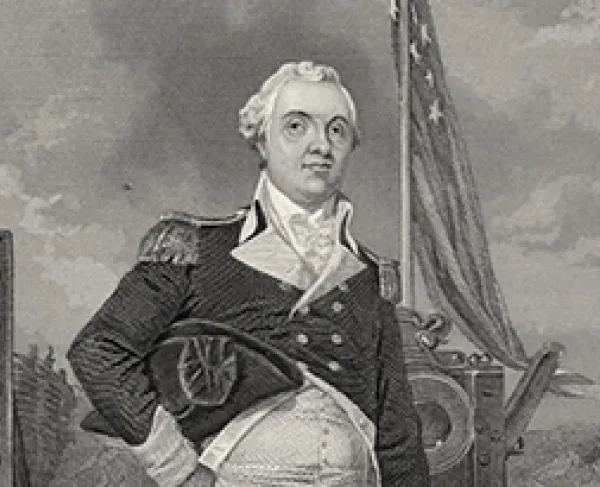
Less than a year later, the Revolutionary War erupted at Lexington and Concord. Boston was soon besieged, controlled by British General Thomas Gage. The young lovers had to make a choice: Stay in Boston and become loyal subjects to King George III or leave Boston and join the American cause. Fearing for Henry’s life, Lucy sewed a sword into his cape in case he encountered danger. But Henry’s sympathies lay with the Patriots, and in May 1775, the couple snuck out of the city on horseback and crossed over to the Continental Army encampment in Cambridge. The camp soon became familiar with Lucy as a Patriot and officer’s wife as Henry eventually rose to the rank of chief artillery through that snowy New York winter in 1775.
The marriage would face difficulty when Henry was tasked with the arduous orders to transport cannons and artillery from Fort Ticonderoga to Boston, a journey across rivers and mountains in the middle of a brutal winter. During this time, Lucy gave birth to their first child, a daughter, far away from her husband. Her first months as a mother were spent in isolation, and she reached out to her estranged family for comfort. After reconciling, they remained in close contact.

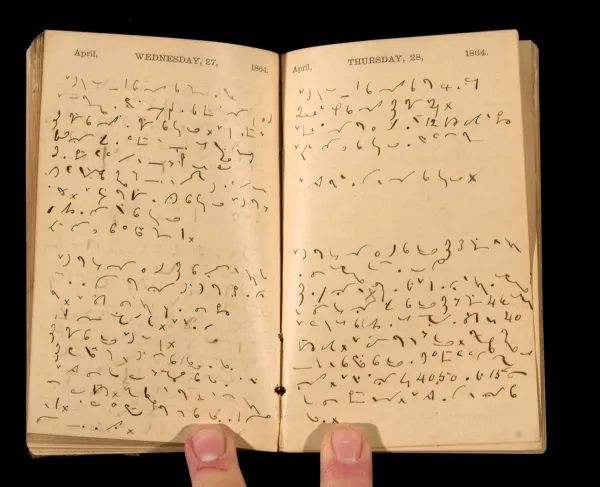
Lucy was a verbose letter writer, not just to her family, but also to Henry and her close friends. Though she occasionally expressed frustration with Henry’s time away from home, her letters reveal deep understanding and affection. In 1777, she wrote: “I love you with a love as true and sacred as ever entered the human heart — but from a diffidence of my own merit I sometimes fear you will Love me less — after being so long from me.” No matter how much she missed her husband, Lucy stood strong in the quest for American freedom.
In May 1778, Lucy joined Henry at Valley Forge, where he had spent the previous winter with General George Washington preparing troops for organized battle. She quickly became close friends with Martha Washington, as they hosted lively parties and kept each other company while the men were away attending to military duties. Both came from wealthy families and had changed their lives by choosing to join the Revolution, bringing comfort and understanding to their relationship. They traveled to Mount Vernon together as Henry and George marched south for the Siege of Yorktown and subsequent end of the war in 1781.
With the American victory, Lucy’s life changed yet again. She and Henry settled down slowly, moving between West Point, Boston, Philadelphia and New York City as Henry’s service to the new country continued. When Henry retired in 1795, the family moved one last time to claim Lucy’s inheritance from her wealthy family — land in present-day Maine. They built a 19-room mansion on the St. George River, where they lived together quietly until their deaths.
Lucy Flucker Knox’s story is one of many showcased in the recently extended traveling exhibition, the American Revolution Experience. This project highlights the Revolutionary experiences of those sometimes overlooked by the history books on both sides of the conflict — ordinary people who, just like Lucy, faced a difficult choice: to pledge loyalty to the Patriot cause and the prospect of a new nation, or remain loyal to the King as subjects of the British Empire. Explore more stories at www.americanrevolutionexperience.org and see if the traveling exhibit is coming somewhere near you.