Saratoga Campaign | Jun 14 - Oct 17, 1777
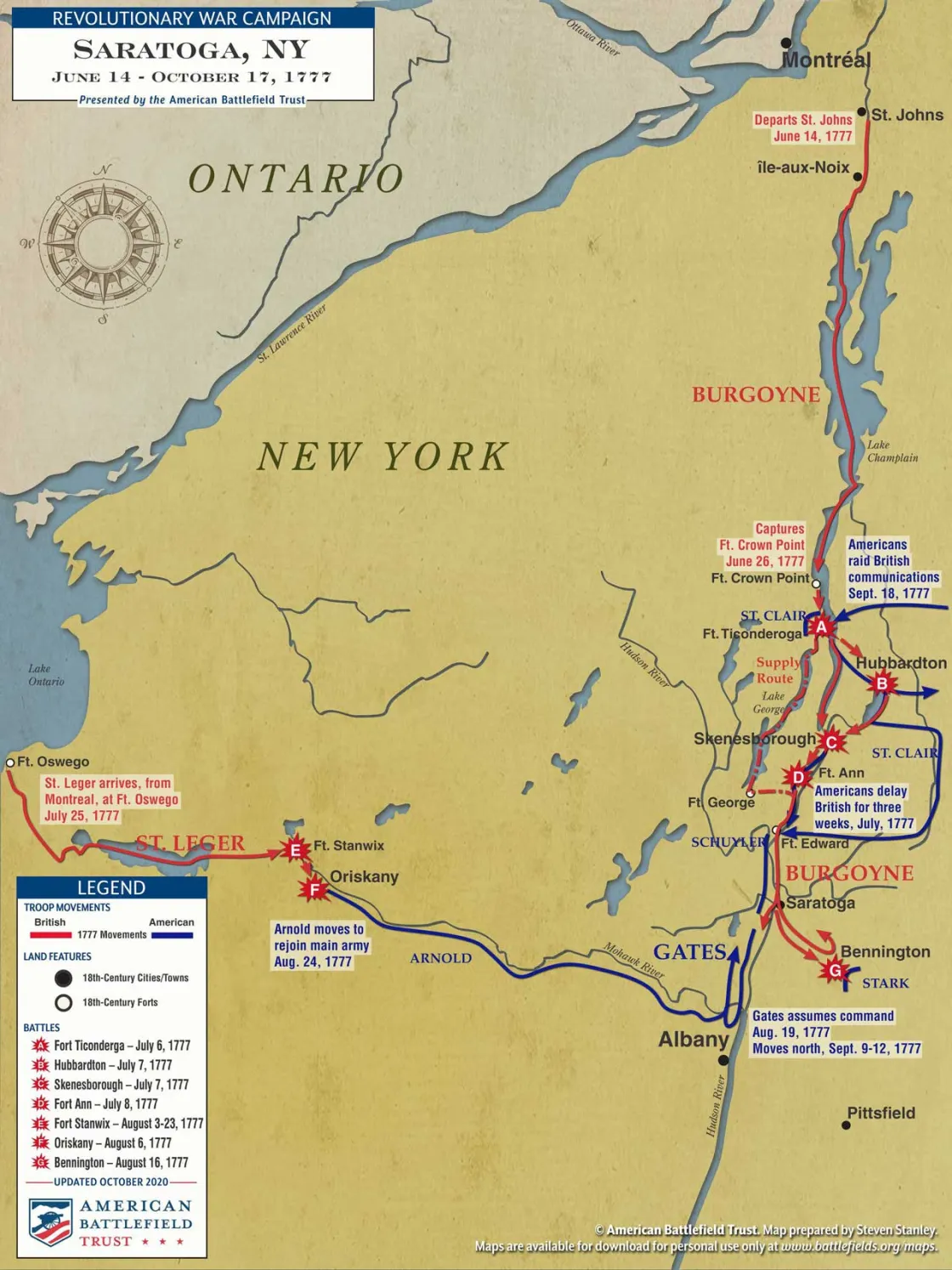
The Saratoga Campaign of 1777 stands as one of the most decisive chapters of the American Revolutionary War. Fought in the wooded wilderness and along the river corridors of upstate New York, it was here that a bold British gamble unraveled—and where the American cause found new life and powerful allies.
The campaign grew out of British strategy. In London, officials believed that New England was the heart of the rebellion. If they could sever it from the middle and southern colonies, the uprising might collapse. General John Burgoyne was tasked with leading an army south from Canada along the Lake Champlain–Hudson River corridor. He would advance toward Albany, where he expected to meet other British forces marching north from New York City. The plan looked elegant on paper. In practice, it depended on flawless coordination across hundreds of miles of rugged terrain.
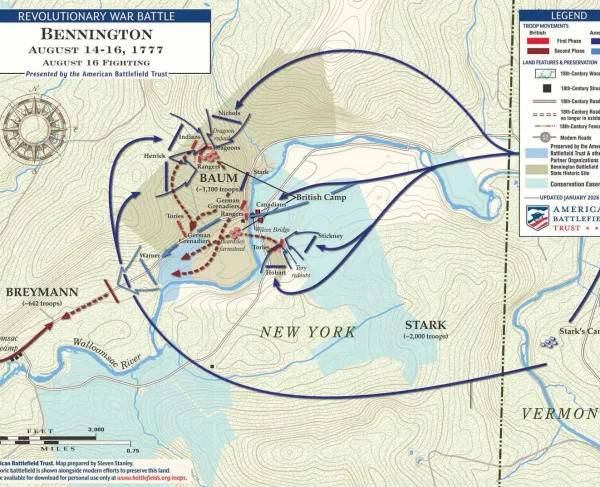
Burgoyne’s army began its advance in June 1777, capturing forts and pushing steadily south. But the American response stiffened. At the Battle of Fort Ticonderoga, the British forced an American withdrawal, yet the retreating Continentals slowed the enemy’s progress by felling trees, destroying bridges, and harassing supply lines. Burgoyne’s force, burdened with artillery and an enormous baggage train, crept forward at a grueling pace. A failed British foray to seize supplies ended in defeat at Bennington, further weakening his army and emboldening Patriot resistance.
By September, Burgoyne approached the heights near Saratoga, where American forces gathered under General Horatio Gates. Among Gates’s subordinates was the fiery and aggressive Benedict Arnold, whose battlefield instincts would prove critical. The first major clash came at the Battle of Freeman’s Farm on September 19. Though tactically inconclusive, the Americans fought with surprising tenacity, inflicting heavy casualties and denying Burgoyne the swift breakthrough he needed.
Three weeks later, on October 7, the armies met again at the Battle of Bemis Heights. This time the Americans seized the initiative. Arnold, though his role is debated to this day, rode onto the field and led daring assaults against British positions. The British faltered under relentless pressure. Their lines broke; key fortifications fell. Burgoyne’s army, battered and surrounded, retreated north but soon found escape impossible.
On October 17, 1777, Burgoyne surrendered his entire force near Saratoga. It was a stunning reversal. For the first time, a full British army had capitulated to the Continental Army.
The victory transformed the war. News of Saratoga crossed the Atlantic and convinced France that the American cause was viable. In 1778, France formally entered the conflict as an ally, bringing naval power, troops, and vital financial support. What had begun as a colonial rebellion now widened into a global war.
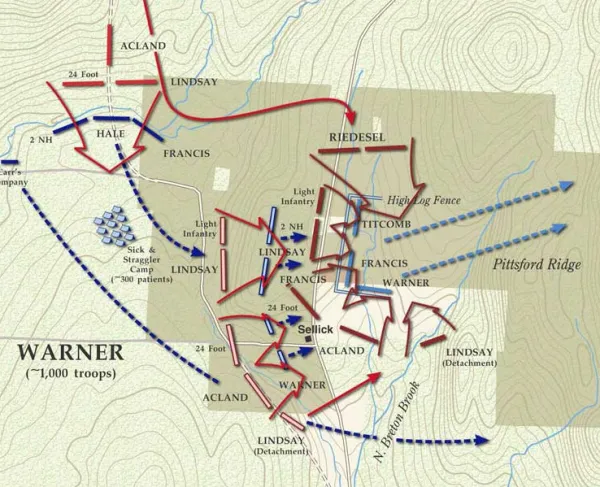
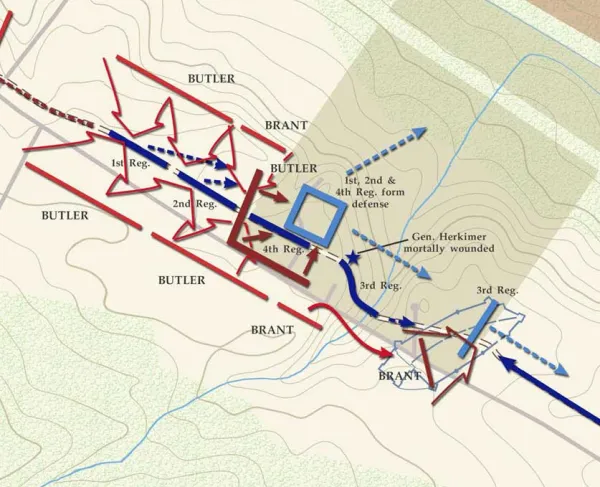
Related Battles
330
1,135
34
66
465
28
18
5
367
190
50
38
70
907