CSS Neuse Civil War Interpretive Center
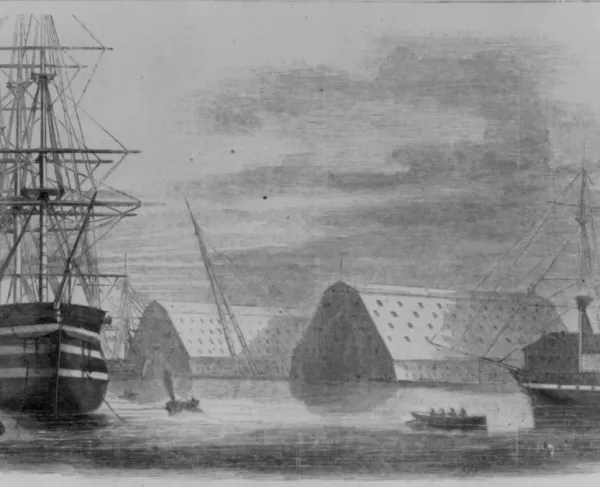
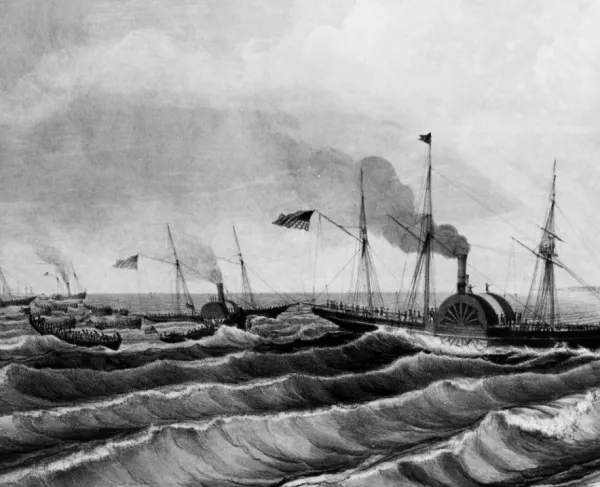
In 1861, North Carolina found itself suddenly exposed to a new kind of threat, not from marching armies, but from warships pressing in from the sea and moving inland through its rivers. Union forces used their powerful navy to seize coastal ports, cut off supplies, and turn the state’s vast network of waterways into invasion routes. With limited industry and no hope of matching the Union fleet ship for ship, Confederate leaders in North Carolina turned to a bold solution: ironclad warships. Armored with iron and built along inland rivers, vessels like the CSS Albemarle, CSS North Carolina, CSS Raleigh, and CSS Neuse were designed to defend vital waterways, protect towns and supply lines, and challenge Union control where it mattered most.
The CSS Neuse was commissioned in October 1862; it was designed and constructed to secure North Carolina's sounds and rivers. It also had a specific mission to recapture and maintain control of the vital port city of New Bern, North Carolina. Built by Howard and Ellis near Whitehall, or present-day Seven Springs, on the Neuse River, the Neuse was a flat-bottomed, twin-screw steamer with an iron-plated casemate housing two 6.4-inch Brooke rifles. It measured 158 feet in length, 34 feet in width, and weighed approximately 376 long tons.
In April 1864, the Neuse was completed, and although her construction was progressing smoothly, she encountered trouble reaching her first mission. On April 22nd, while navigating the Neuse River to assist in the retaking of New Bern, she became grounded on a sandbar approximately half a mile below Kinston. She remained immobile in the mud for nearly a month; subsequently, as the water level increased, she was refloated. By that time, the Confederate infantry that would have provided support had been redeployed to Virginia, and therefore, a second effort to recapture New Bern was never undertaken. Consequently, she was confined to the waters surrounding Kinston, functioning more as a floating battery rather than an active warship.
In the spring of 1865, the final changes of control came as Union forces pushed deeper into Confederate territory, seized major transportation hubs and cities, and shattered Southern lines, making continued resistance increasingly impossible. Union armies under major generals Jacob D. Cox and John M. Schofield moved inland after capturing Wilmington, aiming to unite with forces under Major General William T. Sherman. Confederate forces under General Braxton Bragg tried to stop them at the Battle of Wyse Fork (March 7-10, 1865). The Confederates initially had the upper hand in the battle, but Union reinforcements soon changed the momentum.
Bragg ordered a retreat toward Kinston on the night of March 10. Once there, Bragg moved toward the Neuse River. The ship's commander, Captain Joseph H. Price, was instructed by Bragg to cover the retreating troops and delay the Union advance if possible. To prevent the ironclad's capture, he was then ordered to destroy it. On March 11, 1865, as Union troops advanced and the Confederates retreated. The crew of the Neuse opened fire on the approaching cavalry, set fires on the ship, placed a charge under the bow, and abandoned it. The explosion tore a large gash in the port bow, causing the ship to sink into the mud of the Neuse River.
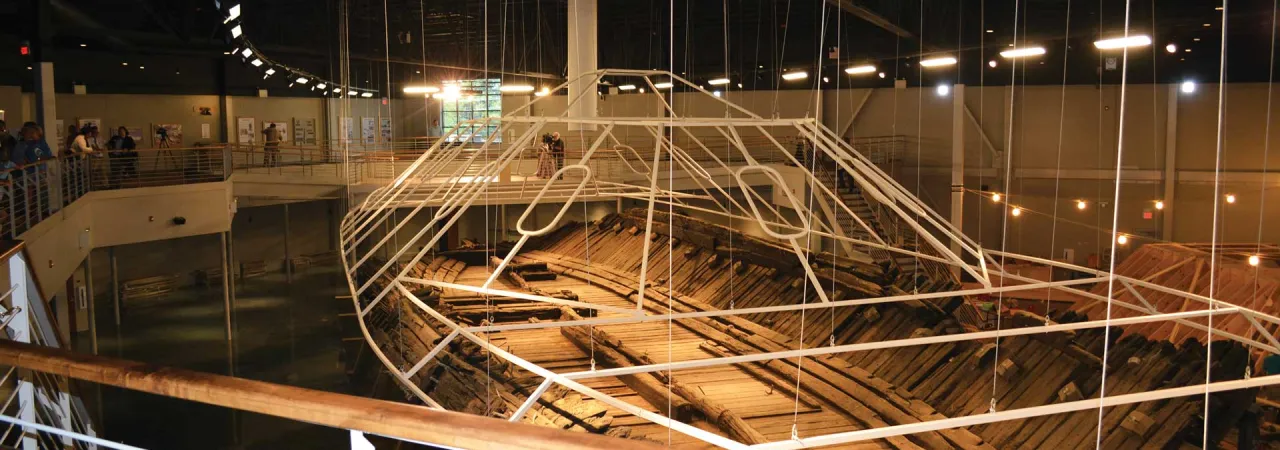
Over the following decades, the sunken hull stayed hidden in the Neuse River near Kinston. After the war, machinery and guns were salvaged, but the hull remained in the mud. In 1961, a private salvage operation began; by 1963, the lower hull was raised. Approximately 15,000 artifacts were recovered, making it the most extensive and successful collection of Confederate naval wrecks ever found. Today, the remains are displayed in a climate-controlled setting at the CSS Neuse Civil War Museum in downtown Kinston, allowing visitors to see a rare, preserved Confederate ironclad firsthand. Additionally, a full-size replica of the ship is in downtown Kinston.
Although the Neuse never played a decisive role in the war, her final act—providing rear-guard cover during the Confederate retreat after the Battle of Wyse Fork and scuttling herself to avoid capture—represents one of the last desperate efforts by a declining Confederacy. Her story remains a constant reminder of the hopes, limitations, and ultimate sacrifice of the Confederate Navy in North Carolina's inland waters.
Related Battles
1,101
1,500