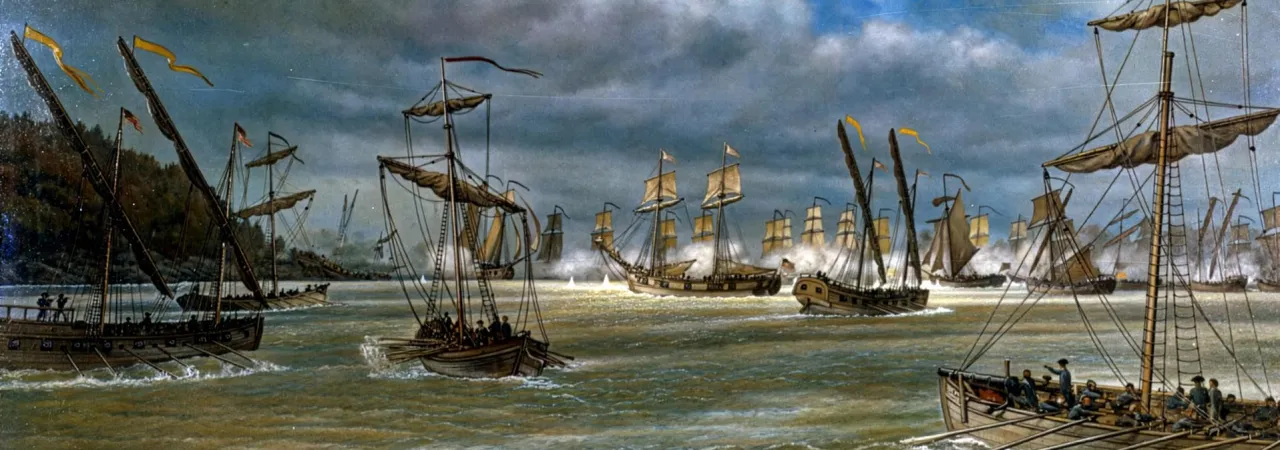
Battle of Valcour Island, by V. Zveg, date unknown. The painting depicts the naval engagement between American and British forces on Lake Champlain on October 11, 1776.
Valcour Island
Valcour Bay
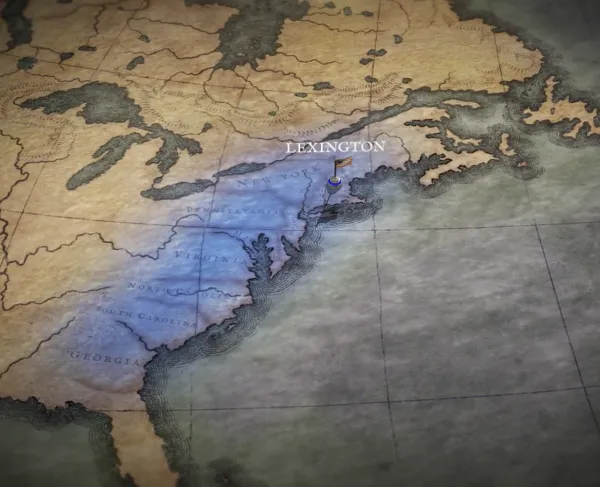
New York | Oct 11, 1776
The naval Battle of Valcour Island, also known as the Battle of Valcour Bay, took place on October 11, 1776, on Lake Champlain, and is generally regarded as one of the first naval battles of the American Revolution and one of the first fought by the United States Navy.
How it Ended
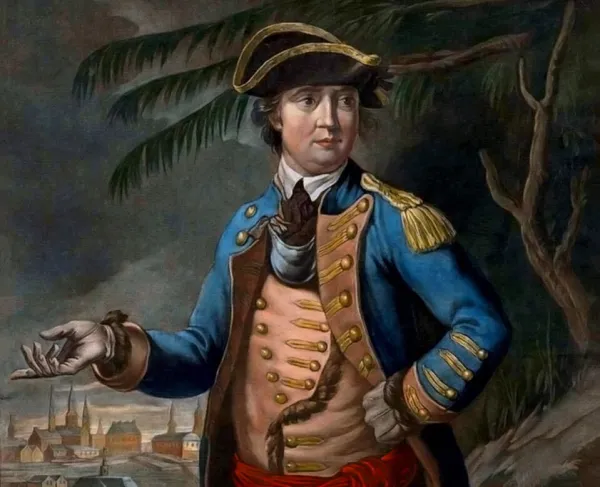
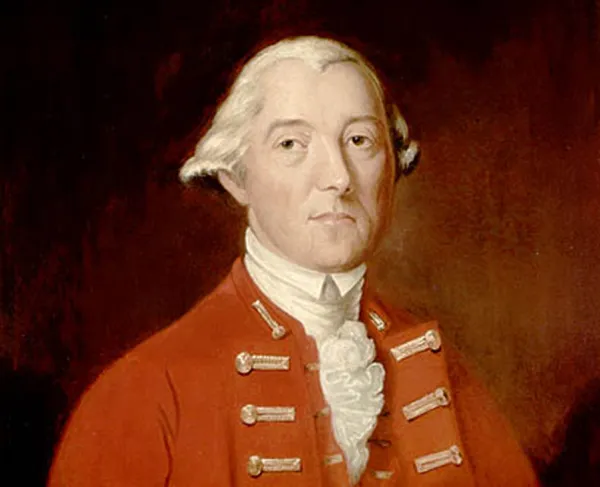
British Victory. Most of the ships in the American fleet under the command of Benedict Arnold were captured or destroyed by a British force under the overall direction of General Guy Carleton. Despite losing 11 ships and nearly 200 sailors to capture or casualty, the American defense of Lake Champlain stalled British plans to reach the upper Hudson River valley.
In Context
After a failed invasion into Canada in 1775, Arnold retreated with his troops to the southern end of Lake Champlain. There, in July 1776, he convened a council of war, petitioning for the assembly of a naval force that could defend against British forces. Arnold knew what the British were setting their sights on: Lake Champlain and the upper Hudson River Valley were central to colonial trade, providing shipping alternatives to nearly impassable overland routes. This region also connected the New England colonies — where most of the revolutionary fervor was seen to rest — to those farther south. If British forces secured control, they could effectively sever communication and trade between the colonies, picking off rebellious colonies one by one rather than fighting a united force.
So, Arnold’s wish for ships was granted. Construction efforts commenced at Fort Crown Point on Lake Champlain, originally built in 1759 by British and colonial troops to defend against the French. By October of 1776, a small American naval force of about 17 ships and approximately 500 men was fashioned. This fleet began with four ships, Royal Savage, Revenge, Liberty and Enterprise, and was then joined by the cutter Lee, the gunboats New Haven, Providence, Boston, Spitfire, Philadelphia, Connecticut, Jersey and New York and three row-galleys, the Trumbull, Washington and Congress, Arnold’s new flagship.
The British force was comprised of roughly 1,300 men, including both trained seamen and Native Americans. The Royal Navy fleet boasted 30 vessels, including the flagship HMS Inflexible, the schooners HMS Maria, HMS Carleton, HMS Royal Convert and the ketch HMS Thunderer, as well as more than 20 gunboats.
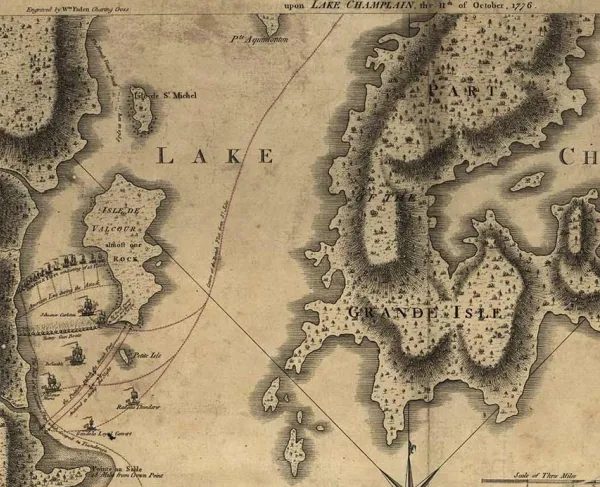
The main action took place in Valcour Bay, a narrow strait between the New York mainland and Valcour Island. Carleton's fleet, commanded by Captain Thomas Pringle and including 50 unarmed support vessels, sailed into Lake Champlain on October 9.
On the 11th, after two days of sailing south in search of Arnold’s fleet, the British ships passed the northern tip of Valcour Island where Arnold had positioned his ships in a line. Arnold sent out the Congress and the Royal Savage to draw the attention of the British. However, after several exchanges of fire, both American crews were forced to abandon their vessels after running aground and being swarmed by British warships.
The British gunboats and warships then maneuvered within range of the main American line. Though struggling against a stiff headwind, the British fleet was successful in positioning most of its ships in a line of battle against Arnold around 12:30 pm. Both fleets exchanged heavy volleys of cannon fire with several ships on both sides taking serious damage. Arnold’s Revenge was heavily hit and the Philadelphia was also damaged and eventually sank around 6:30 pm that afternoon. A British sloop, the Carleton, whose guns wrought havoc against the smaller American boats, became the focus of American attention. Enduring a withering cannonade, the Carleton’s casualties were relatively significant – taking sixteen total casualties – and she was also heavily damaged.
As darkness approached, the British 22-gun Inflexible finally reached the action. The largest of the ships to engage in the battle, she quickly silenced most of Arnold's fleet, and sent the rest sailing for cover. The British also began landing Native American auxiliaries on both Valcour Island and the lakeshore, in order to deny the Americans the possibility of retreating to land. As darkness fell, the American fleet retreated, and the British called off the attack, in part because some boats had run out of ammunition.
With darkness came the realization that most of the American ships were damaged or sinking and the crews reported around 60 casualties, whereas the British reported around 40 casualties on their ships. Knowing that he had no chance of defeating the powerful British fleet, Arnold decided to abandon the fight under the cover of night for Fort Crown Point 35 miles away. On the moonless foggy night, Arnold’s fleet threaded its way through a gap about one mile wide between the British ships and Valcour Island, and by morning, they had slipped away. General Carleton, upset that the Americans had escaped him, immediately sent his fleet around Valcour Island to find them.
200
40
Adverse winds as well as damaged and leaky boats slowed the American fleet's progress. Eventually the British vessels located and gave chase to the struggling American for the next two days. Along their escape route, many of Arnold’s ships were purposefully run aground and burned rather than falling into the surging British. The Washington however, too slow to make it for land where her crew could make their escape, was forced to surrender to the faster British ships.
Arnold then led the remaining smaller craft into a small bay on the Vermont shore which was far too shallow for the larger British ships to give chase. These boats were run aground, stripped, and set on fire, with their flags still flying. Arnold, the last to run his ship aground, personally torched his flagship Congress. The surviving ships' crews, numbering about 200, then made their way overland to Fort Crown Point. Upon reaching their destination, they were pleasantly surprised to see four surviving American ships which had, unbeknownst to them, escaped the British fleet shortly after the battle began on the 11th.
Despite this consolation, Arnold knew control of the lake was firmly in British hands, and he ordered the destruction of the fort before retreating to Ticonderoga. With winter settling in, Carleton opted not to push further down into the upper Hudson for Ticonderoga, and thus, his goal of stalling the British expedition had ultimately succeeded despite the drubbing his fleet took at Valcour Island.
Valcour Island: Featured Resources
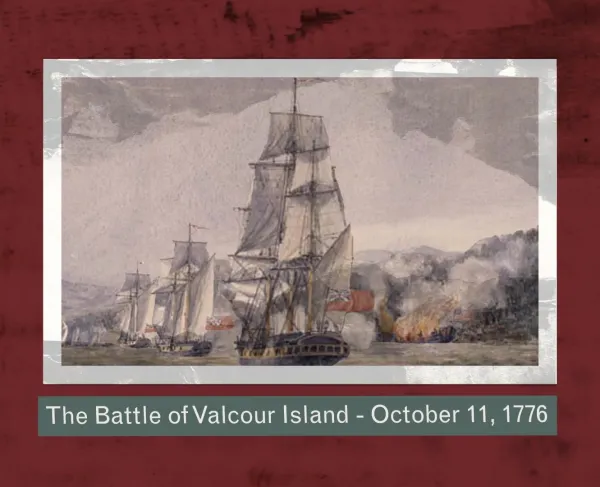


All battles of the Canadian Campaign
Related Battles
500
2,300
200
40