Richard Caswell
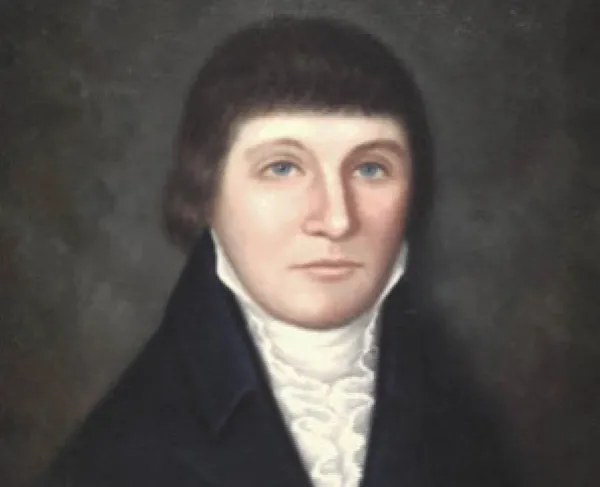
Born at the Maryland seaport Joppa on August 3, 1729, Richard Caswell was one of eleven children born to Richard and Christian Caswell. He grew up at the family plantation, Mulberry Point, and was educated at the local parish school. By his early teens, Caswell took over the family business and farming as his father’s health failed. Opportunities declined in Joppa, and in 1745, the family sold their property in Maryland. Young Richard Caswell and one of his brothers went to North Carolina first, trying to secure land and jobs before the rest of the family moved.
A letter of recommendation from Maryland’s governor helped the Caswell boys make connection with North Carolina’s royal governor. Richard Caswell became an apprentice to James Mackilwean, the surveyor general. Two years later, in 1747, he finished his training and became the colony’s deputy surveyor general. That same year Caswell received his first land grant, and he built a home later called Newington-on-the-Hill for a residence for his parents and younger siblings. He joined the Johnston County militia and served as an officer in the troop of horse during 1749-1753. In the 1750s, Caswell also worked as a court clerk and high sheriff.
He married Mary Mackilwean on April 21, 1752; the couple had three children and lived at Red House plantation. Tragically, Mary died from childbirth complications in February 1757. Caswell married a second time on June 20, 1758. He and Sarah Heritage Caswell had eight children. Through the influence of his father-in-law, William Heritage, Caswell studied law and was admitted to the bar on April 1, 1759, then served as deputy attorney general of the colony for next four years.
Caswell took an active role in the colonial assembly from 1754 to 1771. He advocated for legislation on trade, industry, the courts, public defense, and “establishing a free-school for every county” using reimbursement funding from the British Crown for North Carolina’s aid during the French and Indian War. As tensions increased within the colony and between the colonies and Britian between 1765 and 1775, Caswell kept his opinions quiet, and historians still are not sure of his political stance in that period. British governors trusted him, and so did the Whig leaders in the colonial assembly. Caswell helped form the “convention” of the General Assembly after Governor Tryon dissolved the assembly for their boycott of British imports. Then, during the Regulator War, Caswell organized militia to support the governor’s orders, and he commanded part of Tryon’s army during the Battle of Alamance in 1771.
Josiah Martin, the new royal governor, appointed Caswell as a judge. Also continuing in the assembly, Caswell served on a standing committee of correspondence and inquiry—part of North Carolina’s efforts to support other colonies as Britain enforced the Intolerable Acts. He also represented in North Carolina’s provincial congresses and journeyed to the First and Second Continental Congresses. Upon his return from time at the Second Continental Congress, Martin worried that Caswell had been transformed into “the most active tool of sedition”—marking a change in Caswell’s publicly known politics now in favor of revolution. Caswell actually planned to capture Martin and other Loyalists and put all governing power in the hands of the provincial congress. Martin fled before Caswell’s plan was implemented.
On August 20, 1775, in the provincial congress, Caswell proposed to seize the treasury which would deprive the governor and Loyalists of funding. Resigning as a delegate to the Continental Congress, Caswell prepared to stay in North Carolina and was elected with Samuel Johnston to serve as treasurers for the state and oversaw funding for military defense of the state. Caswell commanded the minutemen of the New Bern District, and he led troops to victory at the Battle of Moores Creek Bridge on February 27, 1776.
The provincial congress elected Caswell the state governor in December 1776 and he continued to be elected each year through 1779. He helped to draft the state’s first constitution, too. His governor years focused on supporting the fight for American independence, sending troops to the Continental Army and enlisting militia for the defense of the state. When he left the governor’s office in April 1780, Caswell became a major general, commanding the state’s militia. He fought at the Battle of Camden on August 16, 1780, before ill health forced him to temporarily step down and only command the unit of North Carolina Partisan Rangers.
In the ending years of the American Revolution, Caswell held office as the state controller general, and then in 1785, he was elected governor again, serving until 1787. He strongly supported the U.S. Constitution. Once again serving in the state legislature in 1789, he collapsed from a stroke and total paralysis. Richard Caswell died on November 10, 1789, and was honored with a state funeral. He was buried at the cemetery at Red Hill plantation.

Related Battles
1,050
324