A View from Lookout Mountain
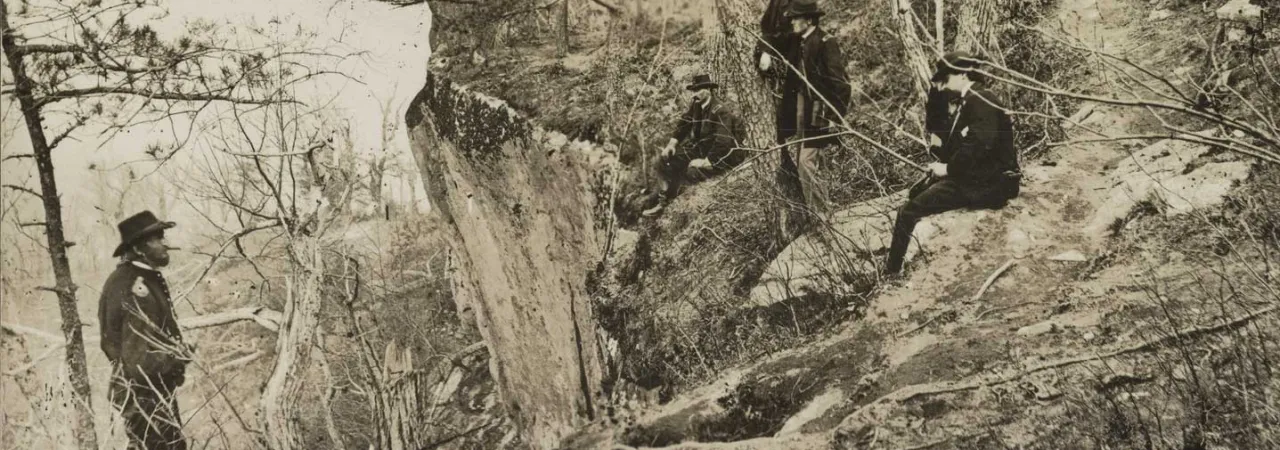
General Ulysses S. Grant and five other men on Lookout Mountain, captured by photographer Robert M. “Royan” Linn.
When the rolling clouds cleared to reveal the Star-Spangled Banner atop the former Confederate-held Lookout Mountain in Chattanooga, Tennessee, on November 25, 1863, following a bloody battle, a cheer rang out across the battered Union forces. The flag was planted before the sun rose by the 8th Kentucky Infantry under Brig. Gen. Walter C. Whitaker by carefully creeping to the crest using sticks, poles and each other for support. This courageous act was reenacted later for photographer Robert M. “Royan” Linn, whose photo studio on Lookout Mountain produced some of the most interesting visuals of the Civil War.
Linn captured his images, which included the Tennessee River’s Moccasin Bend and picturesque rock formations, from his Gallery Point Lookout studio. He found true success, however, in photographing tourists and soldiers. Portraits from atop the mountain became a popular keepsake for those who visited — especially soldiers returning to or passing through Chattanooga in the later years of the war and after.
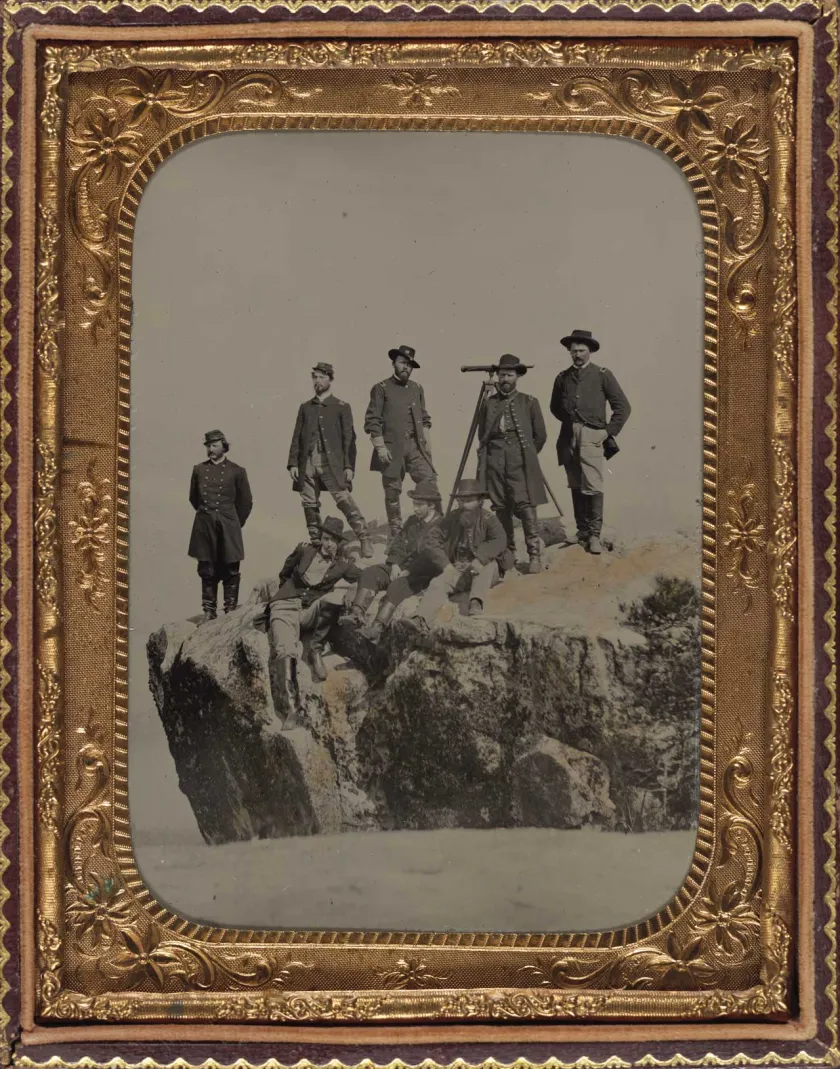
Linn's photograph of officers and soldiers in Union uniforms with telescope at Point Lookout, Tennessee
Library of CongressMaj. Gen. Ulysses S. Grant and his staff visited the famous peak shortly after the Union victory in the fall of 1863, with the resulting photos becoming some of Linn’s most published. Men also posed for portraits at the spot where Confederate leader Jefferson Davis addressed his troops from Pulpit Rock on the mountain’s northern, upper slope in October 1863, doing so either in homage or mockery.
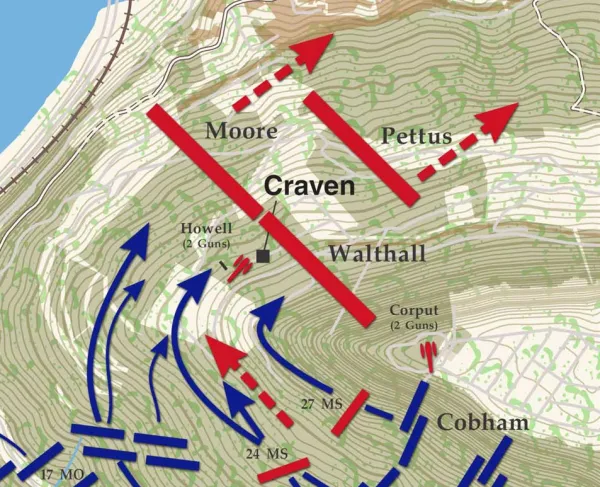
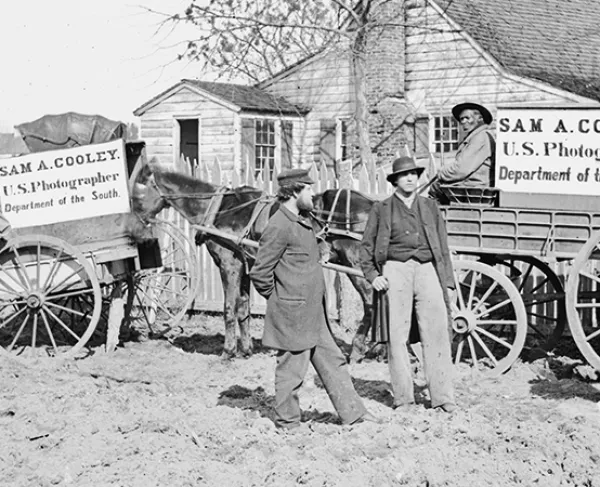
Henry Boynton was another former soldier who could regularly be found at the Chattanooga site. A strong proponent of preserving the battlefields of Chickamauga and Chattanooga, he and a group of military and legislative leaders were photographed by Linn at the Point while on a tour of the site. Boynton had received the Medal of Honor for his actions at Missionary Ridge, just miles from Lookout Mountain but 32 years before the official dedication of the Chickamauga and Chattanooga National Military Park.
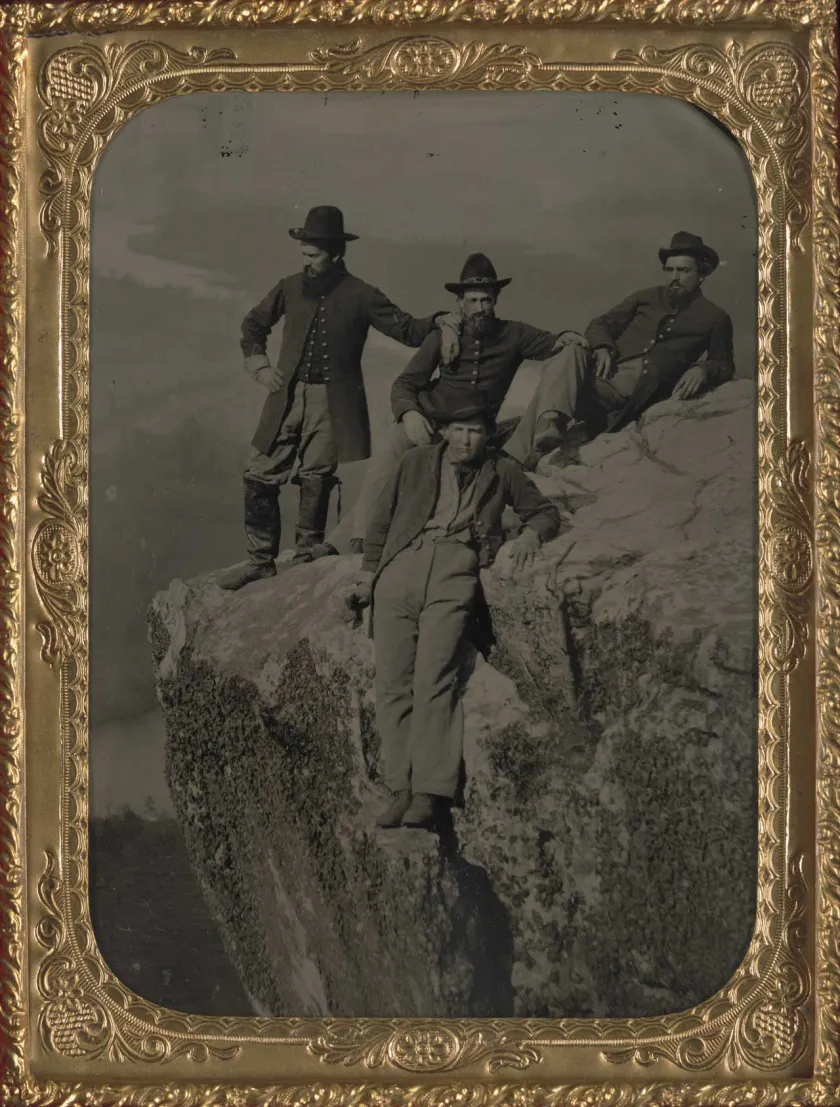
Linn's photograph of Pvt. Henry McCollum of Company B, 78th Pennsylvania Infantry Regiment and three unidentified soldiers in 78th Pennsylvania Infantry uniforms at Point Lookout, Tenn.
Library of CongressAlongside the beautiful view from the peak, the remnants of the 1863 battle were undeniably present in later years. The ladders early tourists used to scale the rocky face were remained from the Confederate encampments; looking over the edge, one could glimpse the rifle pits below. When the 7th Illinois Infantry returned to Lookout Mountain, who in June 1864, Linn took their photos as they remembered the battle from the year before. Their historian would write, “Presently the clouds vanish and we now behold Chattanooga and her fortifications beneath our feet; the winding Tennessee, the current of which is moving on towards the father of waters to tell its silent story of blood, and Missionary Ridge where warriors moved in the grand pageantry of battle, flinging to the wind a hundred union battle flags.”