Calhoun, Clay & Webster: "The Great Triumvirate"
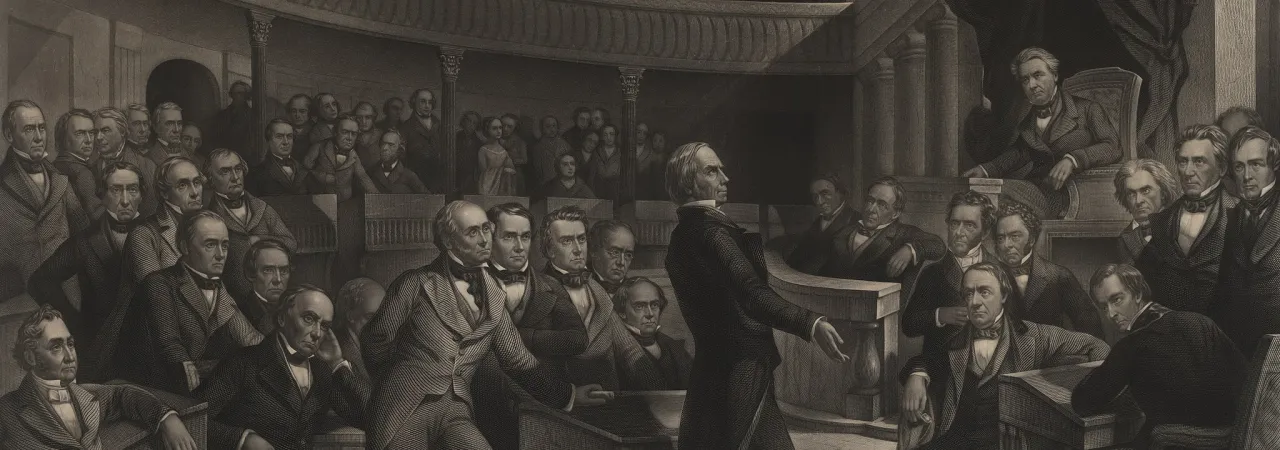
The United States Senate, A.D. 1850, drawn by Peter Frederick Rothermel and engraved by Robert Whitechurch, c. 1855. The scene depicts Sen. Henry Clay speaking on the Senate floor during the debates over the Compromise of 1850. Daniel Webster is sitting directly to his left while John C. Calhoun is to the left of the Speaker's chair.
A set of three great politicians, lawyers and orators dominated the Antebellum Era: Henry Clay, John C. Calhoun and Daniel Webster, collectively known as the “Great Triumvirate.” Each man represented a different part of the United States and vision for the young republic, and all were involved in forging the many strenuous compromises that kept the nation together.
The Men
Henry Clay, the oldest of the three, was born on April 12, 1777, in Virginia, moving to Lexington, Kentucky, at a young age to start his legal career. Elected to the 12th Congress in 1810, he immediately became the Speaker of the House due to his strong affiliation with the war hawks, an anti-British, pro-war faction of the Democratic-Republicans. He was a strong proponent for the War of 1812. At President Madison’s request, Clay served on the peace commission sent to Ghent, where he negotiated the treaty. Returning to the Speakership after the war, Clay began advocating for his new economic plan, the American System. He pushed for high protective tariffs, a strong central bank and greater federal infrastructure investment. In 1820, when Missouri attempted to join the union as a slave state, Clay helped broker the Missouri Compromise to ease sectional tensions, earning him the nickname “The Great Compromiser”.
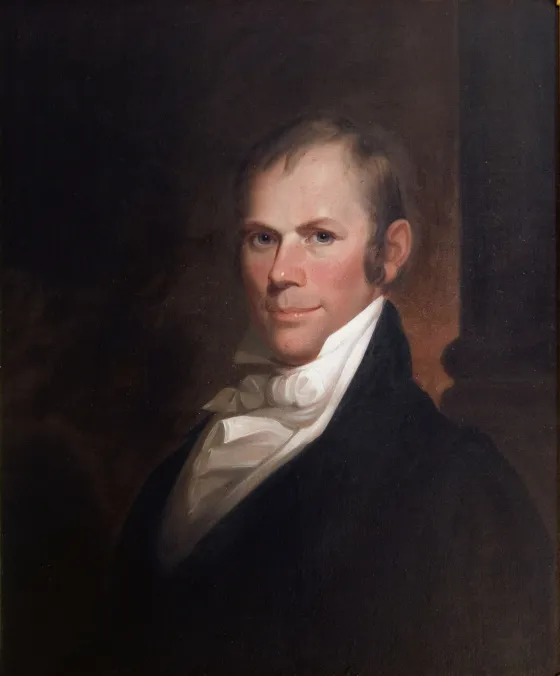
1818 Portrait of Henry Clay
Wikimedia CommonsJohn Caldwell Calhoun was born in backwater South Carolina on March 18, 1782, where he would later have a law practice. Elected to the House as a war hawk in 1810, he helped make Clay the House Speaker. Also a strong supporter of the War of 1812, Calhoun was dismayed by the state of the army, becoming Secretary of War under Monroe in 1817. Initially an outspoken nationalist (even advocating for the creation of the Second Bank of the United States and Clay’s American System), his views began to change after the Missouri Crisis. Opposed to federal intervention over slavery, Calhoun rejected the Missouri Compromise, beginning his rift with Henry Clay.
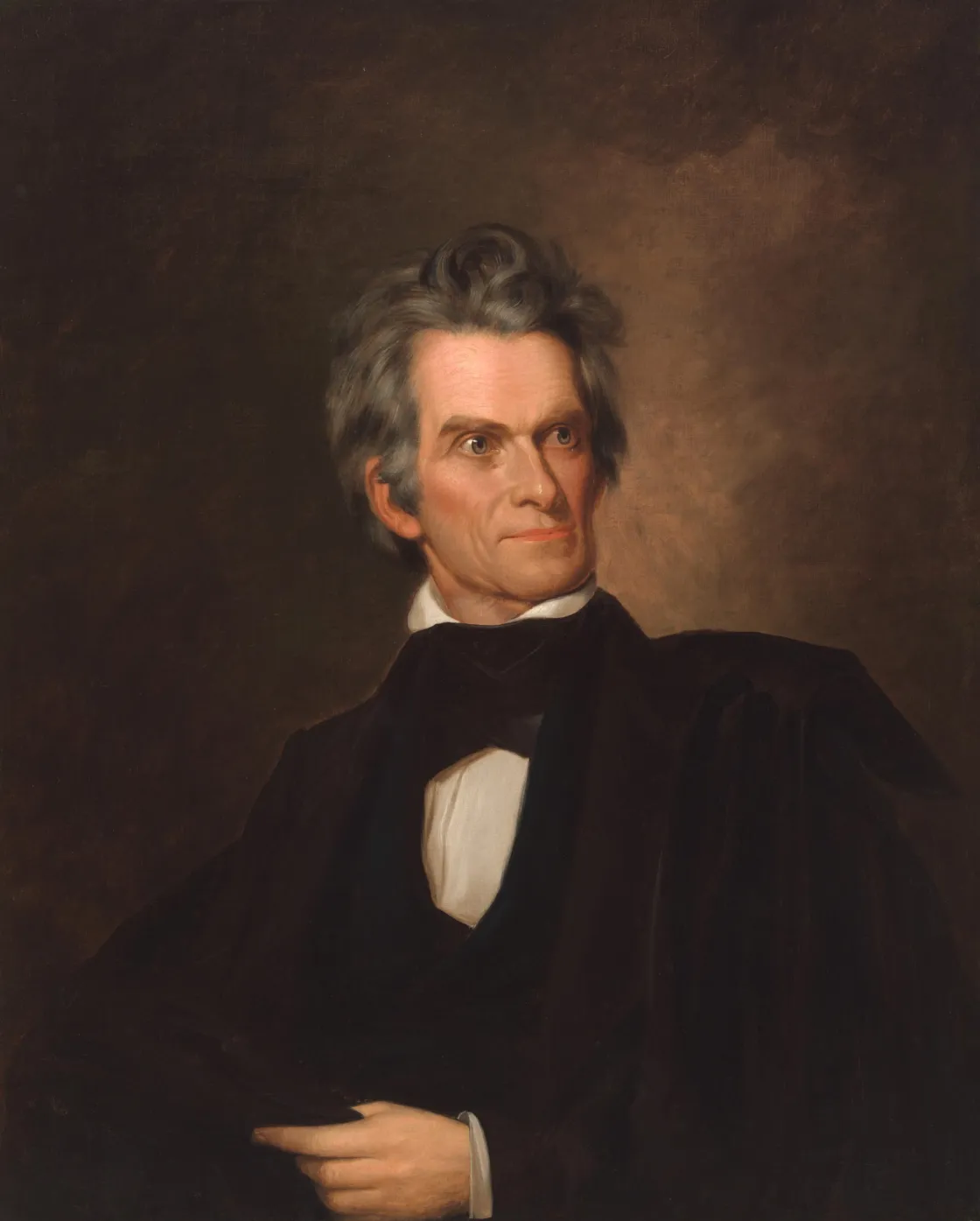
John C. Calhoun, by George Peter Alexander Healy, c. 1845. Calhoun served as vice president, secretary of war, secretary of state and U.S. senator from South Carolina.
National Portrait GalleryDaniel Webster was born on January 18, 1782, in New Hampshire as a descendant of Puritans. Becoming a lawyer in 1805, he was an outspoken critic of both Jefferson and Madison’s presidencies. Elected to Congress as a Federalist in 1812, he led the opposition against the War of 1812. Leaving the House in 1817, Webster returned to his roots as a lawyer. He was involved in three major legal decisions (Dartmouth College v. Woodward and McCulloch v. Maryland in 1819 and Gibbon v. Ogden five years later) that would expand the power of the federal government over the states. He would return to the House in 1823, in time for the first crisis these three men faced together.
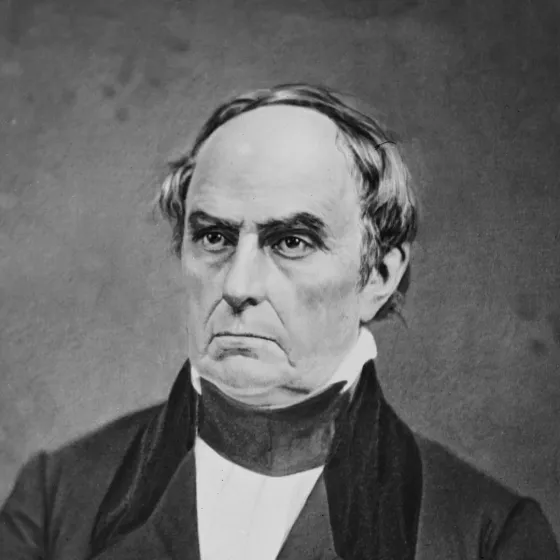
Daniel Webster
Wikimedia CommonsThe Election of 1824
The 1824 Election was one of the most contentious in US history. Four candidates, Andrew Jackson, John Quincy Adams, William Crawford and Henry Clay, competed for the presidency, but none won a majority. Under the twelfth amendment, when such a situation arises, the House must hold a contingent election between the top three candidates. Coming in fourth, Speaker of the House Clay was eliminated from the race. Instead, he rallied the House to support Adams, even though Jackson won a plurality in the election. Webster, initially neutral, then helped Clay rally the vote against Jackson, believing him unqualified for office. Thus, John Quincy Adams won the presidency, and in a “corrupt bargain,” made Henry Clay his secretary of state. Webster remained a strong supporter of the administration, becoming a part of the nascent National Republican Party.
Calhoun, meanwhile, ran mostly unopposed for vice president, and won with ease. Initially expecting Jackson to win the contingent vote, he was horrified by the “corrupt bargain” and the Adams-Clay alliance, thinking it undemocratic. In his role as president of the Senate, he attempted to slow the passage of the American System. In the 1828 election, Calhoun ran once again for vice president, this time officially with Andrew Jackson. The pair crushed Adams and the National Republicans in the election. However, the relationship between Jackson and Calhoun would not last long.
Nullification Crisis
In 1828, Congress passed the Tariff of Abominations, a bill that was supposed to fail. Calhoun and other Jacksonians devised a tariff so intolerable that even the North would reject it, damaging their reputation as pro-tariff right before an election. Webster and other northerners did not pull support as they at first predicted, and the bill passed. In its wake, Calhoun anonymously wrote essays promoting nullification, the legal concept that states can override federal law. Webster vehemently opposed the concept, arguing that the federal government prevails over the states. The Tariff of 1832, aimed at solving the crisis, only enflamed South Carolinians, who attempted to nullify both tariffs. Calhoun, in support of his home state, resigned from the vice presidency and returned to the Senate. The issue quickly spiraled, with South Carolina even threatening secession.
Henry Clay, now in the Senate, attempted to broker a compromise tariff as the federal government threatened military intervention. As the head of the National Republicans and the failed 1832 election candidate, Clay sat down with Calhoun to figure out a solution, despite Webster and Jackson’s strong opposition to compromise with nullifiers. Scared for his political career and reputation, Calhoun agreed to back down from nullification and helped pass the Compromise Tariff of 1833. Once again, the union avoided sectional war with the help of the Great Triumvirate.
The Bank War and Expanding Borders
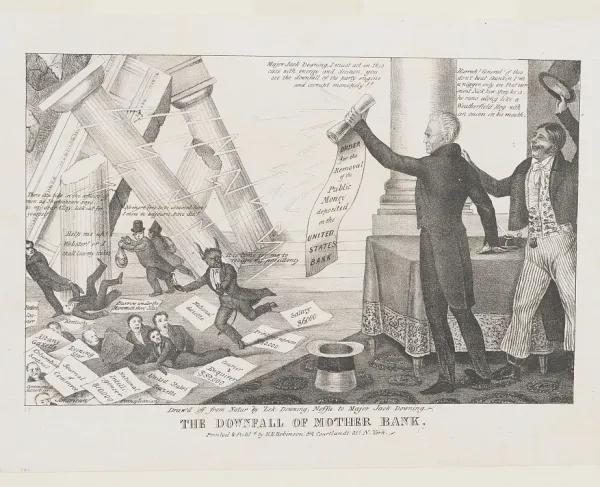
The brief alliance between Webster and Jackson soon ended because of the Bank War. The charter of the Second Bank of the United States was not supposed to expire until 1836, but Clay and Webster pushed Bank President Nicholas Biddle to ask for an early renewal in 1832, an election year. While passed in Congress, Jackson would veto the rechartering and began moving funds away from the central bank to a series of “pet banks.” All three men opposed Jackson’s pet banks, marking the first time they would all stand united on a political issue. Motivated by the issue, Clay and Webster formed a new political party: the Whigs. Webster ran as one of four Whig candidates in the 1836 election, only winning Massachusetts. Clay sought the Whig nomination in 1840 but was defeated by war hero William Henry Harrison. Calhoun would stay a Democrat despite his hatred for its Jacksonianism.
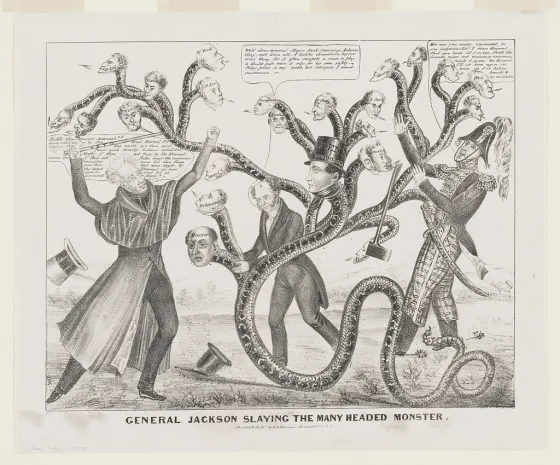
General Jackson Slaying the Many Headed Monster, by Henry R. Robinson, 1836. The political cartoon satirizes President Andrew Jackson’s campaign against the Second Bank of the United States, represented as a many-headed serpent.
Library of CongressHarrison chose Daniel Webster as his secretary of state, and when he passed 30 days later, Webster remained in John Tyler's cabinet. While the rest of the cabinet would quit at Clay’s behest over Tyler’s vetoes of Whig bills, Webster stayed. In 1842, he brokered the Webster-Ashburton Treaty with the United Kingdom, which resolved border disputes with British North America. Webster would leave the cabinet in May 1843 to be replaced in April 1844 by none other than John C. Calhoun. Calhoun supported the annexation of Texas, which Tyler also wanted. However, his Pakenham Letter, which asserted that annexation was simply a means of expanding slavery, alienated many and threatened the plan. Thus, the 1844 election hinged on the issue of Manifest Destiny, with Democrat James K. Polk for and Whig Henry Clay against. Clay would lose his third election, and Texas was annexed.
Compromise of 1850
1850 would be the last time the paths of these three men would cross. The annexation of Texas had sparked the Mexican-American War in 1846. Surprisingly, Calhoun and Webster (both back in the Senate) joined in opposition to the war. Initially remaining silent, Clay joined his two peers in critiquing the war after the loss of his son at the Battle of Buena Vista. His failure to win the Whig presidential nomination in 1848 brought him back to the Senate in time for another brewing crisis.
Conflict over the future of the Mexican cession and slavery sparked heated debate nationwide. Clay began negotiating a series of compromises that would give both the North and South some of their demands. Webster was a strong proponent for the compromise, denouncing sectionalists from both North and South for trying to destroy the Union in his famous “Seventh of March Speech.” Calhoun strongly rejected the compromise because of its inadequate protection of slavery. The 67-year-old, too weak to speak himself, spoke on the Senate floor through Virginia Senator James Mason. Calhoun even helped organize the Nashville Convention that would discuss the prospect of secession.
In September, Clay passed the Compromise of 1850 with help from young Democratic Senator Stephen A. Douglas and President Millard Fillmore. The compromise granted California statehood as a free state, opened the Utah and New Mexico territories to popular sovereignty, banned the slave trade in Washington DC, forced Texas to relinquish its claim in New Mexico in exchange for debt relief, and included a more stringent fugitive slave law.
Calhoun never saw the passage of the compromise, passing away from tuberculosis on March 31, 1850. Clay, on June 29, 1852, also succumbed to tuberculosis. Webster, after a brief stint as Millard Fillmore’s secretary of state and a failed attempt at the Whig 1852 presidential nomination, died of cirrhosis on October 24, 1852.
All three men were known for their excellent rhetorical and oration skills, delivering some of the most famous speeches Congress has ever seen. The ideas of these men would inspire the next generation of American politicians, but whose failure to compromise led the country on the road to disunion.
Further Reading: