John Sevier
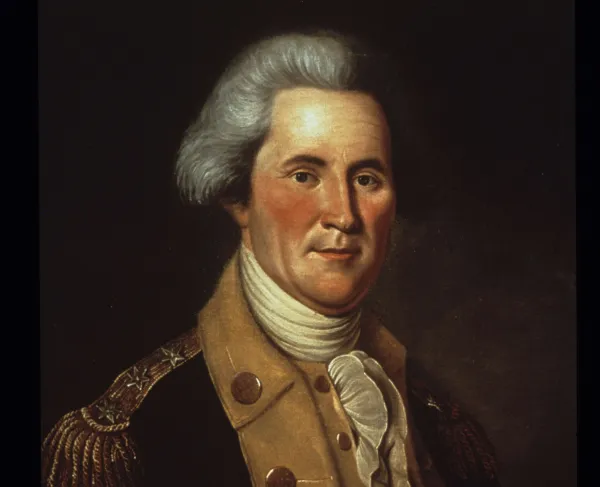
Born in Virginia in 1745, John Sevier descended from Huguenots, French Protestants who had emigrated to America to escape religious persecution. John spent his early life near modern-day New Market, Virginia and in 1761, he married Sarah Hawkins. In 1773, the couple and their family, which grew to include ten children, relocated to the western side of the Appalachian Mountains. By 1776, they were among the many settlers living along the Watauga River in what is now Tennessee. By purchasing land from the Cherokee, these colonists violated the Royal Proclamation of 1763, which placed restrictions on settlement west of the Appalachians.
John Sevier became a member of the Watauga Association, a quasi-official organization set up by colonists to govern their western territory. With the outbreak of the Revolutionary War and the collapse of British authority in the colonies, the Watauga settlers tried to arrange their incorporation into Virginia, but the new state government declined. Instead, North Carolina annexed the settlements as the District of Washington.
Sevier served as a militia leader throughout the war. Most of his combat experience was fighting against the Cherokee, led by Dragging Canoe. Allied with the British, the Cherokee sought to drive the colonists back over the mountains. On July 21, 1776, the Cherokee attacked a fort near modern-day Elizabethton. Sevier and around 75 militiamen defended it. When Catherine Sherrill was caught outside the fort during the attack, Sevier helped her to climb over the stockade wall to safety.
In 1780 as the British marched through North Carolina, Sevier helped lead the Overmountain Men who rallied to oppose a Loyalist army led by Major Patrick Ferguson, who threatened to destroy their settlements if they resisted British authority. At the Battle of Kings Mountain on October 7, 1780, the Overmountain Men routed Ferguson’s army, dealing a crippling blow to the British campaign in the southern colonies. John Sevier’s brother Robert was among the twenty-eight Patriots killed in the battle. That same year, Sevier’s wife died. He then married Catherine Sherrill, the woman he had saved at Fort Watauga four years earlier.
After the end of the Revolutionary War Sevier became a major figure in the short-lived state of Franklin—an attempt by the North Carolinians living west of the Appalachians to establish their own state. Sevier served as governor, but ultimately the attempt failed and North Carolina reasserted control over the territory. Sevier was arrested on charges of treason but was pardoned. A few years later, North Carolina ceded the territory to the federal government, which was then admitted as the state of Tennessee in 1796. Sevier was elected its first governor, serving three terms and then three terms as a member of the House of Representatives. He died on September 24, 1815 in the Alabama Territory and was buried near Decatur. In 1889, the then-governor of Tennessee requested that Sevier’s remains be reinterred in Knoxville. He is buried with his second wife, Catherine Sherill, at the Knox County Courthouse.
Further Reading
- Kevin Barksdale, The Lost State of Franklin: America's First Secession (University Press of Kentucky, 2009).
- Phillip Langsdon, Tennessee: A Political History (Hillsboro Press, 2000).
- Kevin Kokomoor, The Cherokee War of 1776 (Johns Hopkins University Press, 2026)
- Gordon T. Belt, Traci Nichols-Belt. John Sevier: Tennessee's First Hero (The History Press, 2014).



Related Battles
90
1,018