Transportation in the Post-Civil War West
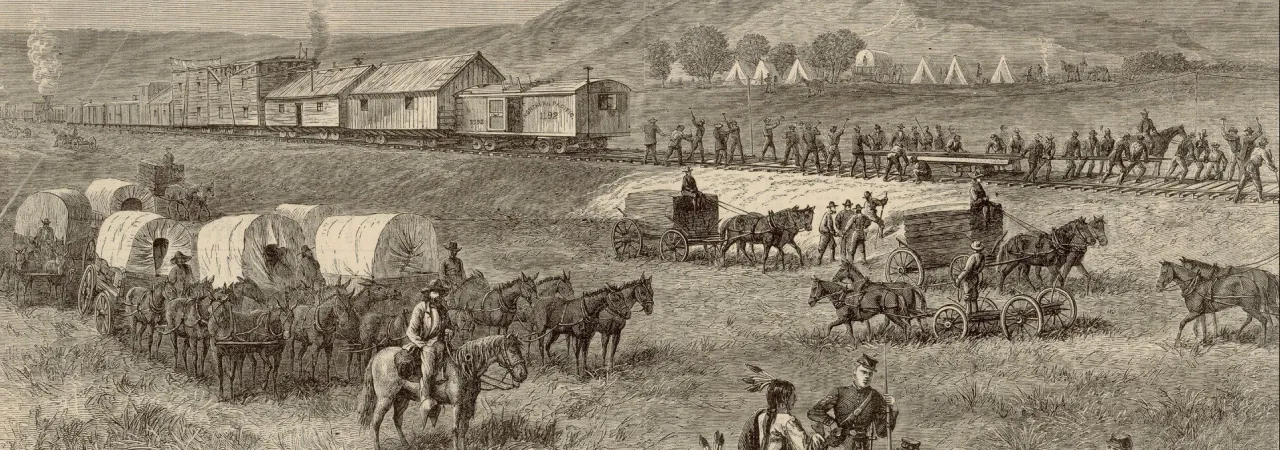
Railroad building on the Great Plains, 1875
When the American Civil War ended in May 1865, the nation looked to pick up the pieces of a shattered union. While North and South reconciled, migrants and veterans were settling in the West. The industrial capacity brought on by the war carried a wave of transportation feats never seen before in the world’s history. In just a few short decades, the United States would go from a frontier of crude wagon trails to an extensive network of railroad lines. Before the locomotive, the success of westward migration depended heavily on the strategic use of animal labor, each suited to different environmental challenges.
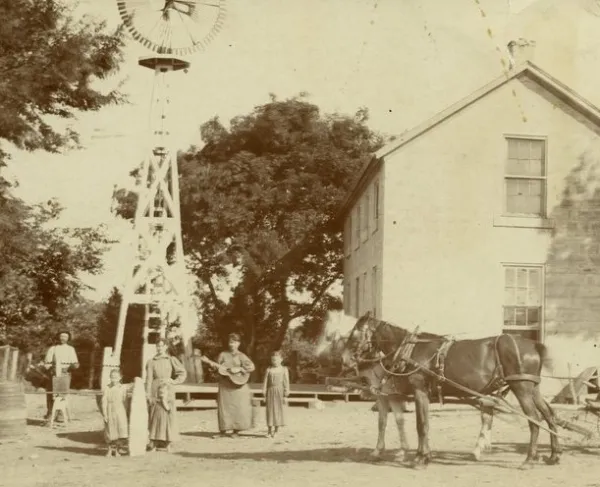
Each animal had a specific purpose with strengths and drawbacks. Horses are the most closely associated with westward expansion because they were used for multiple tasks. They were fast and capable of long-distance travel, but strong enough to pull carriages and wagons, especially in teams. Oxen were often preferred over horses for field work as they tended to be cheaper and hardier. Mules were also extremely popular and even preferred by some for carrying cargo. Known to be excellent pack animals, they performed particularly well in mountainous terrains. In addition to animals, most pioneers utilized some form of wagon or carriage on their way west.
By the end of the Civil War settlers began phasing out large Conestoga wagons in favor of prairie schooners. These were lighter and better suited for the rough terrain of the region and remained dominant until rail lines were readily accessible. Limited space on wagons forced pioneers to walk most of their way across the continent. Although widely available, wagons were also incredibly slow and most pioneers only covered around 7 to 12 miles in a day, depending on the topography and weather.
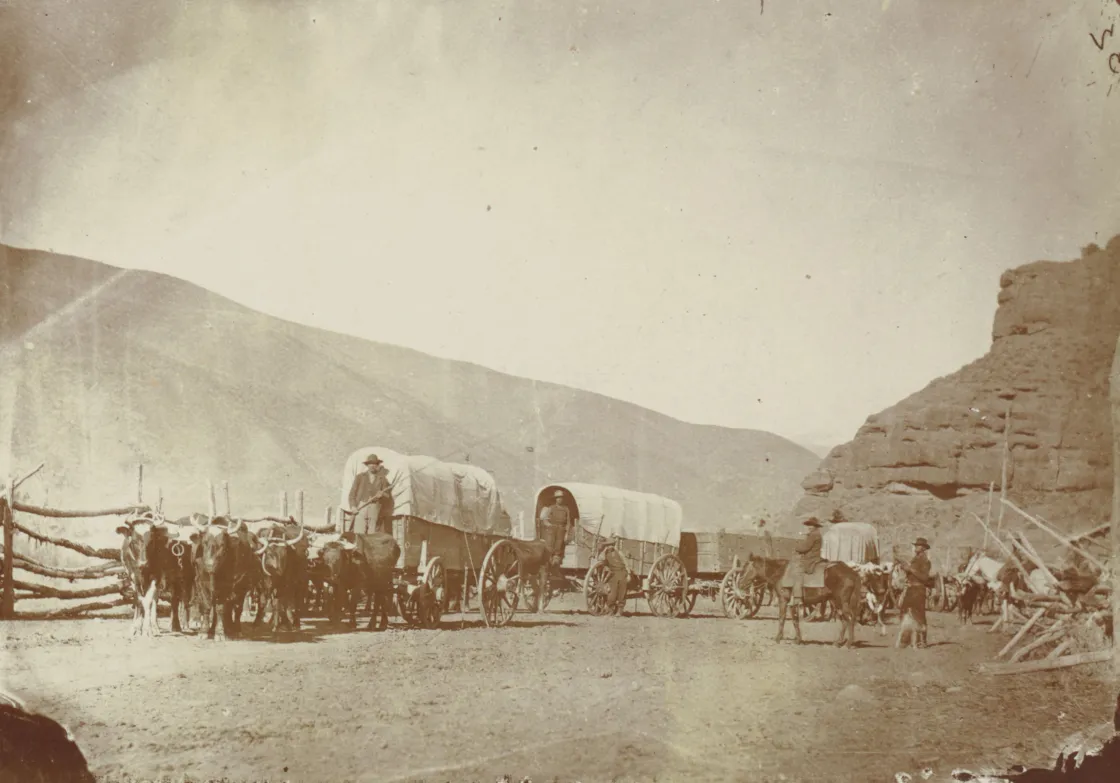
Mormon pioneer wagon train in Echo Canyon, 1866
Nebraska State Historical Society“The climate changes so rapidly that where the sleds and sleighs are, there is no snow, and where the snow is, there you have to ride in coaches, steamboat wagons, carts, and anything else that’s convenient—generally without seats, compelling you to sit on the mail and your baggage. About the time that, being utterly exhausted and worn out, you fall into a doze and begin to dream that you are being torn in pieces by a band of wolves…” -Granville Stuart, January 5, 1867, The Montana Post
Immediately after the Civil War stagecoaches were essential carriers of passengers, mail and cash in the West, making them both valuable assets and targets. During the 1800s, the United States Postal Service began employing armed agents tasked with protecting stagecoaches. Though effective in their duties, the Post Office simply could not employ enough agents to protect every single stagecoach across the nation, and the mail carriers themselves became proficient in self-defense. Stagecoaches remained the primary carrier of mail until the late 1800s with the expansion of the Transcontinental Railroad and Telegraph. Though land routes were the most common for travelers and mail, pioneers took advantage of rivers and creeks when they could.
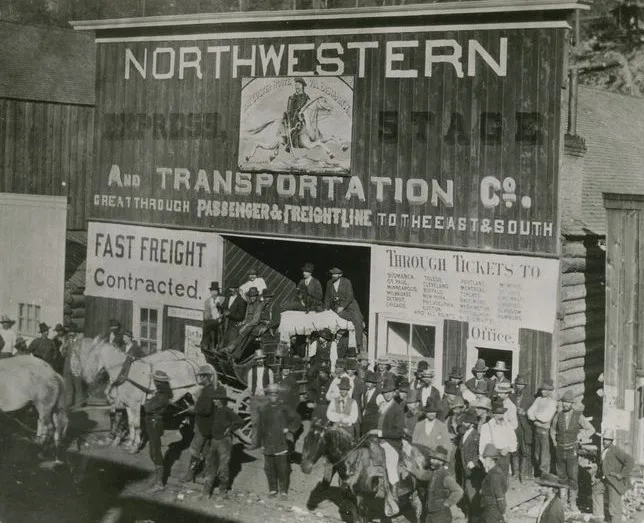
Old Deadwood coach at the office, Deadwood, South Dakota, ca. 1880s
New York Public LibraryLarge waterways like the Missouri and Colorado Rivers became vital transportation routes for passenger and cargo steamboats. Compared to their overland counterparts, traveling by steamboat was much quicker and often just as cheap as a stagecoach. On a good day, steamboats could cover up to 10 times as much distance as a wagon or stagecoach. When railroads expanded further into the frontier by the 1880s and 1890s, trains made steamboats inefficient and costly. What would normally take a steamer a week or two could take a train just a couple of days and thus river transportation quickly fell by the wayside.
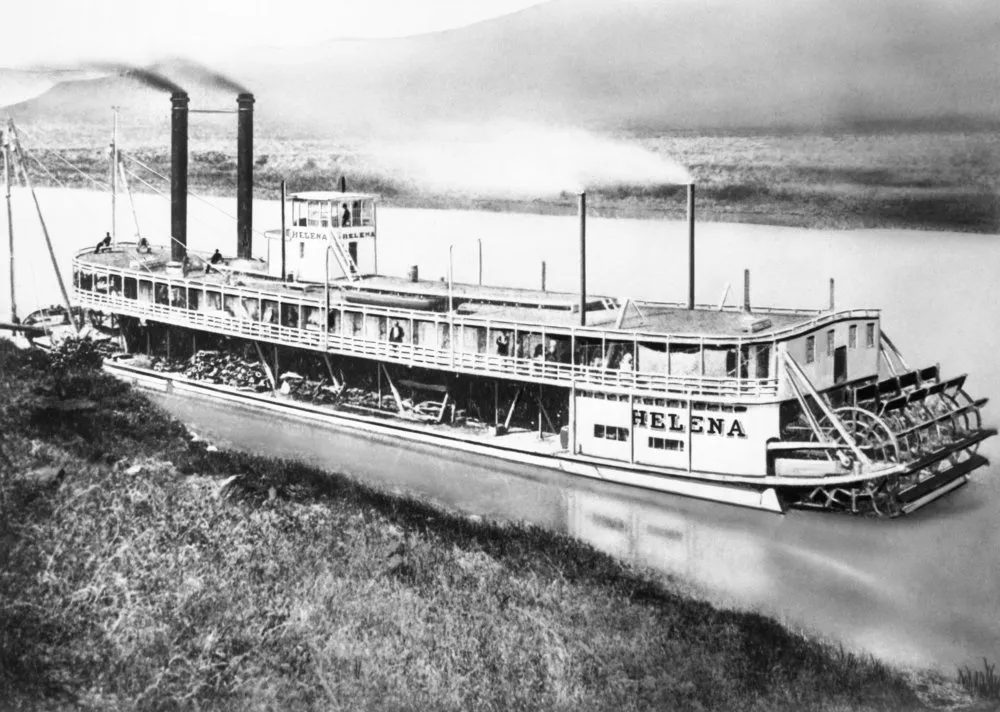
Steamboat 'Helena' on the Missouri River, 1878
Montana State LibraryTwo major policies drove westward expansion in the years after the Civil War: the Homestead Acts and the 1862 Pacific Railway Act. This landmark federal legislation provided land grants and loans to railroads to lay tracks across the continent. Though the Civil War slowed construction for a time, the first Transcontinental Railroad opened on May 10, 1869, linking the Atlantic and Pacific coasts for the first time in American history. By 1871 roughly 45,000 miles of rail line were established. From then until 1900, the United States would lay 170,000 miles of railroad track, nearly quadrupling the nation’s railroad infrastructure.
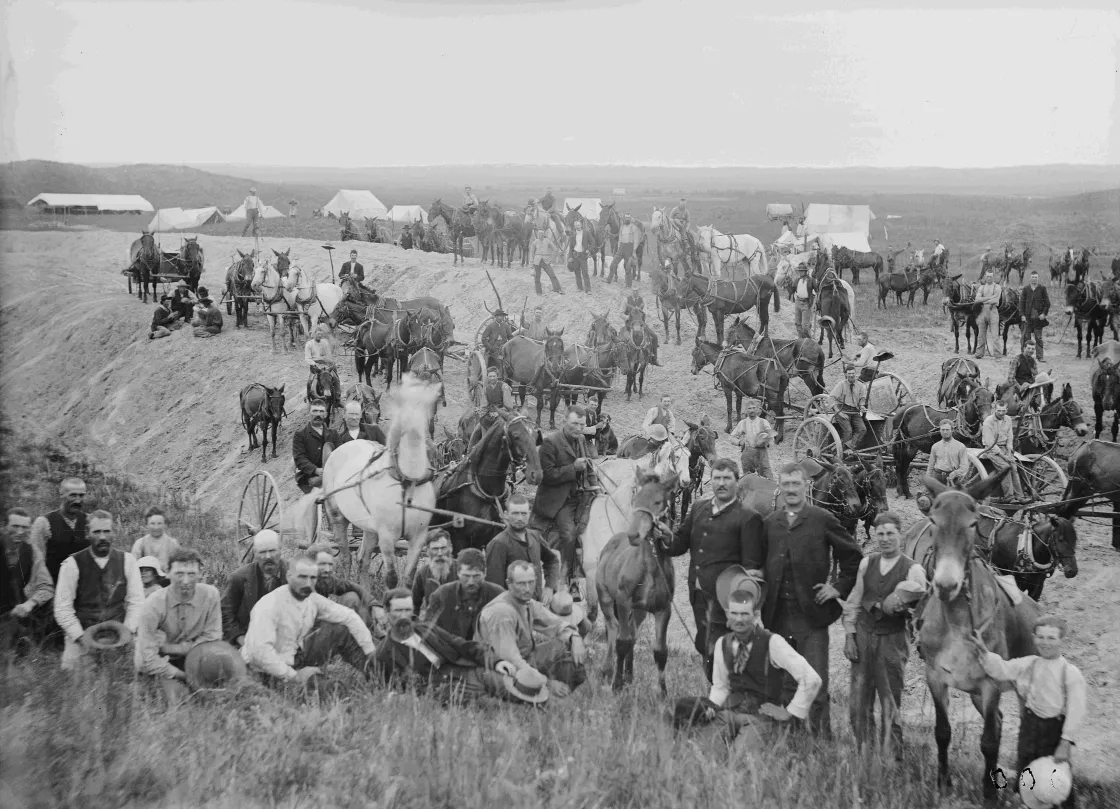
Burlington and Missouri River Railroad construction, 1886
Nebraska State Historical SocietyThe building of rail lines was reciprocally beneficial for settlement as it brought jobs to the West while simultaneously making travel easier. Railroad camps quickly filled with both Union and Confederate veterans looking for postwar jobs. Though not a veteran, one notable individual was Laura Ingalls Wilder’s father, Charles Ingalls, who famously moved the family to De Smet, Dakota Territory in 1879 after receiving a job offer from the Chicago and Northwestern Railroad.
The building of rail lines was reciprocally beneficial for settlement as it brought jobs to the West while simultaneously making travel easier. Railroad camps quickly filled with both Union and Confederate veterans looking for postwar jobs. Although not a veteran, one notable individual was Laura Ingalls Wilder’s father, Charles Ingalls, who famously moved the family to De Smet, Dakota Territory in 1879 after receiving a job offer from the Chicago and Northwestern Railroad.
The building of the Transcontinental Railroad had many ties to the Civil War. In 1866 the Union Pacific railroad hired Major General Grenville Dodge, a veteran engineer in the Western theater, to lead the railroad as its chief engineer. Dodge had a strong background in railroads, having been charged with rebuilding the Mobile & Ohio and Richfield & Decatur lines during the war. During General Dodge’s time as chief engineer, he expanded the Union Pacific’s line from 40 miles to over 500 miles.
The rapid progress of the railroad did not happen at the snap of a finger, however. Workers on the railroad were forced to contend with grueling labor, treacherous conditions, and life away from home. For veterans of the Civil War, these harsh circumstances were nothing new, having spent the previous years in places like Gettysburg, Shiloh, and the Wilderness. Even if veterans saw the railroad as a great opportunity to make a living, the challenges of being away from their loved ones once again may have been the hardest obstacle to overcome.
“I hope you won’t work too hard darling, but still I am glad to know you have men plenty to do so much work in a day for the road can’t be done a minute too soon to suit me. For four years I lived thinking ‘when the cruel war is over’ what happiness we will have together – and now I look forward with some hope to the time when the U.P.R.R. is done.” —Frances Marion Casement to John S. “Jack” Casement, May 7, 1868
The demand for labor was incredibly high, and railroads began hiring Chinese immigrants. Chinese workers faced pay discrepancies, segregation, and racial violence despite contributing heavily to the expansion of the West. The Central Pacific Railroad employed between 10,000 and 15,000 Chinese American immigrants during the construction of the Transcontinental Railroad. For decades, Americans largely ignored their contributions, and very little of their correspondence has survived. Yet their work, along with the work of Civil War veterans, helped make possible the rapid expansion of railroads that defined the postwar era.
Technology and infrastructure developments rapidly evolved in the years after 1865. These advancements contributed to the explosion of migrants seeking opportunities in new places west of the Mississippi, forever changing the landscape of North America. For nearly 100 years after the Civil War railroads remained the king of transportation across the United States. Cities built before and after the train look starkly different, showing just how dependent the Western way of life became on this new mode of transportation.
Further Reading:
- Nothing Like It In the World: The Men Who Built the Transcontinental Railroad 1863-1869: Stephen E. Ambrose
- Stagecoach: Rare Views of the Old West, 1849-1915: Sandor Demlinger
- Chinese Workers on the First Transcontinental Railroad: David N. Anderson
- Across America on an Emigrant Train: Jim Murphy
- By The Shores of Silver Lake: Laura Ingalls Wilder
- Long Day's Journey: The Steamboat and Stagecoach Era in the Northern West: Carlos Arnaldo Schwantes