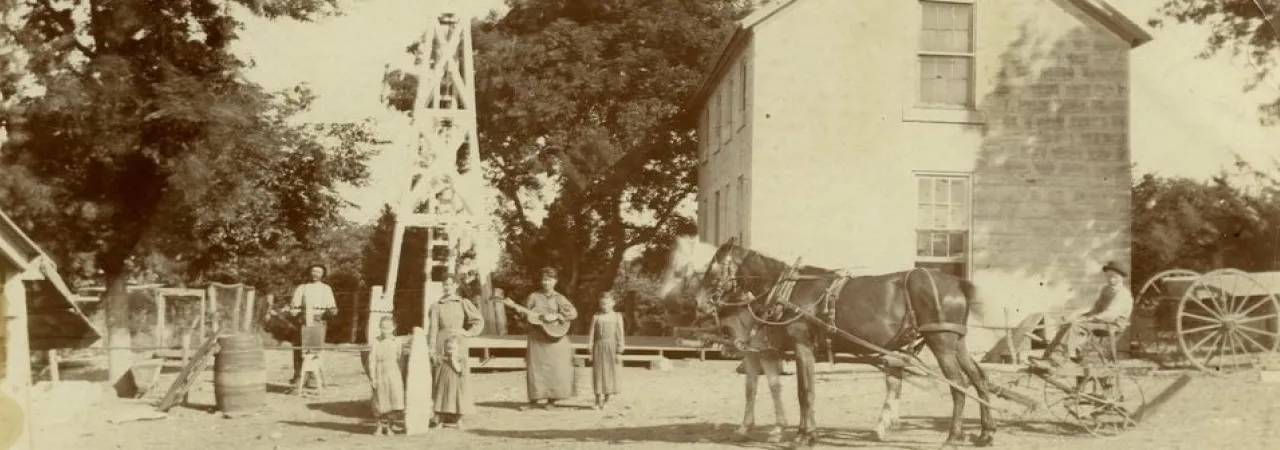
Nehring Family Homestead near Alma, Kansas, 1860s
In the wake of Southern secession, President Abraham Lincoln signed the Homestead Act on May 20, 1862. The bill, which went into effect in 1863, opened land in 30 states to American citizens and immigrants, including thousands of Union veterans. The goal of the 1862 Homestead Act was to incentivize development in the West by redistributing cheap land to prospective settlers. Providing public lands for homesteading had long been a debate in Congress. Pro-slavery Southerners and wealthy Northerners, who both feared losing cheap labor to the West, shot down attempts to introduce a large-scale homestead act.
The Land Ordinance of 1785 first introduced a standardized system for surveying land. The ordinance created 6-square-mile townships which were then divided into 36 sections, each measuring 640 acres. This was the first major step in formalizing land ownership in the United States and helped quell persistent land disputes.
The earliest passage of major public land redistribution came in 1841 with the Preemption Act. The act provided small tracts of land, up to 160 acres, for purchase at a much cheaper rate of $1.25 per acre. The legislation required settlers to be 21 years or older, a head of a household, a citizen or an immigrant declaring to become a citizen, and a resident on that land for at least 14 months. These basic stipulations would remain present in the 1862 Homestead Act, though Congress reduced the residency to only six months.
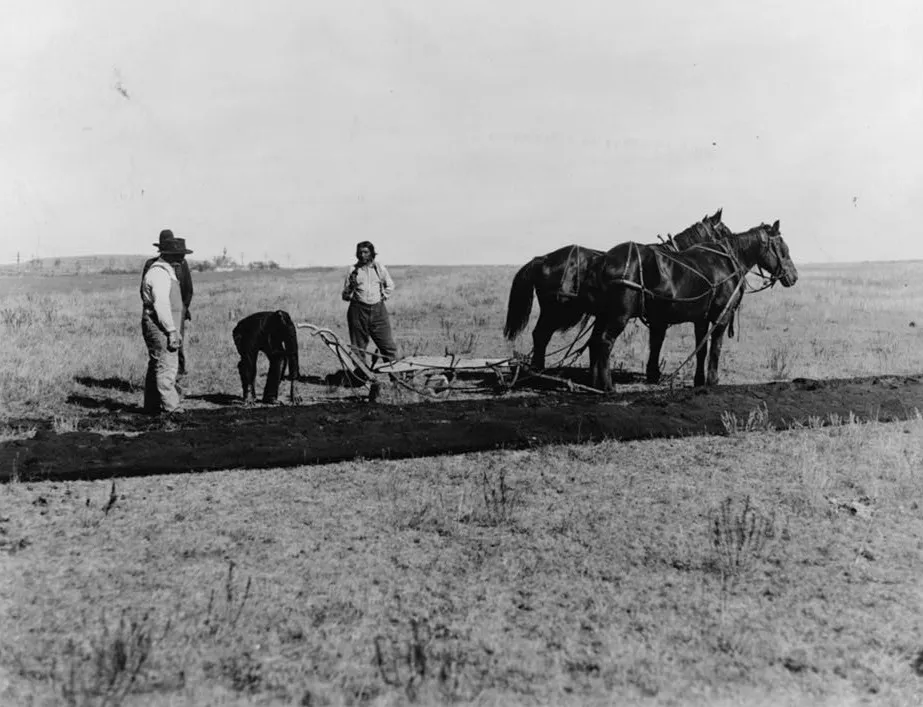
Farmers Breaking Ground on a Homestead in North Dakota, 1883
Library of CongressWhat distinguished the Homestead Act from previous bills was the reduction in cost to settlers. After five years of permanent residence, the government granted the property to settlers for free. Like the Preemption Act, settlers could also acquire a title after six months if the individual improved the land and paid the government $1.25 per acre. Additionally, Union veterans of the Civil War could subtract their time in service from the residency requirements.
Congress also determined that soldiers who served at least 90 days, were honorably discharged, and had claimed less than 160 acres of homestead land before June 22, 1874, could receive extra land, bringing their total up to 160 acres. They did not have to live on or farm the additional land, unlike most applicants. Service members under the age of 21 were additionally permitted to apply for homesteads so long as they spent a minimum of 14 days in service during "the existence of an actual war domestic or foreign."
The Homestead Act was not the first attempt by the government to reward veterans. Bounty-Land Warrants for military service had existed since 1775, but the lack of a residency requirement meant these deeds were often resold to speculators. The 1862 Act instead incentivized veterans to retain their land and develop it, encouraging many former soldiers to join the broader wave of westward migration. Civil War veterans traveled to the West for many of the same reasons their civilian counterparts did. But for many, readjusting to postwar life was difficult and the frontier allowed them to do it on their own terms.
“We hung our swords on the wall and joined the army of peace, in its western march of empire, accepting the benignant profers [sic] of the nation we helped to save, and pitched our tents on Dakota’s fertile plains.” -Henry Robert Pease
Daniel Freeman, a Union veteran, was widely considered the first American to utilize the Homestead Act, staking his claim ten minutes after midnight on January 1, 1863. Freeman initially filed a preemption claim on September 8, 1862, for land near Beatrice, Nebraska, before his homestead application was approved in January. Although the Homestead Act opened western land to millions of settlers, Congress initially restricted certain groups from receiving its benefits.

Daniel Freeman, America's First Homesteader
Nebraska State Historical SocietyOne key provision in the Homestead Act was the exclusion of former Confederate soldiers. The phrase "never borne arms against the United States Government or given aid and comfort to its enemies" intentionally disqualified rebel soldiers and sympathizers. In response to Reconstruction, though, Congress later reversed this restriction and passed the Southern Homestead Act of 1866, permitting Confederate veterans to file homesteads in the South.
Three months after the Homestead Act passed, Congress signed the 1862 Pacific Railway Act. The enactment of the Pacific Railway Act, in tandem with the Homestead Act, created an explosion of westward migration throughout the late 1800s. By May 1869, the first transcontinental railroad linked eastern railroad networks with the Pacific coast. From 1862 to the conclusion of homesteading in 1986, the federal government granted roughly 1.6 million homesteads, totaling 270,000,000 acres. Around 10% of all land in the United States fell under the Homestead Act, with states like Nebraska consisting of nearly 45% homesteaded land.
With monumental successes in migration and advancement came some drawbacks to the 1862 Homestead Act. Across the West, predatory land speculators took advantage of legal loopholes to exploit migrants. They often inflated land prices by purchasing vast swaths of quality real estate to sell at a much higher profit. To do this, they frequently filed false claims by paying an accomplice to attest on record to permanent residence. The General Land Office, which was perpetually underfunded, became highly susceptible to these forms of fraud and bribery.
Perhaps the darkest consequence of homesteading was the displacement of Native Americans from their traditional homelands. Federal policies had already begun to push tribes west in the years before 1862, but the passage of the Homestead Act and subsequent legislation accelerated the removal and consolidation of Indigenous groups. Seeking to expand the 1862 Homestead Act, Congress passed the Indian Homestead Act in 1875. The law extended homesteading rights to Native Americans only if they relinquished tribal affiliations and severed communal ties. This resulted in the disruption of tribal social structures and reduction in reservation land, stripping many tribes of their ability to meaningfully organize. In 1887, the U.S. government sought to continue the assimilation of Native Americans by passing the notorious Dawes Act. In the end, Indigenous tribes lost close to 100 million acres of reservation land from 1887 to 1934.
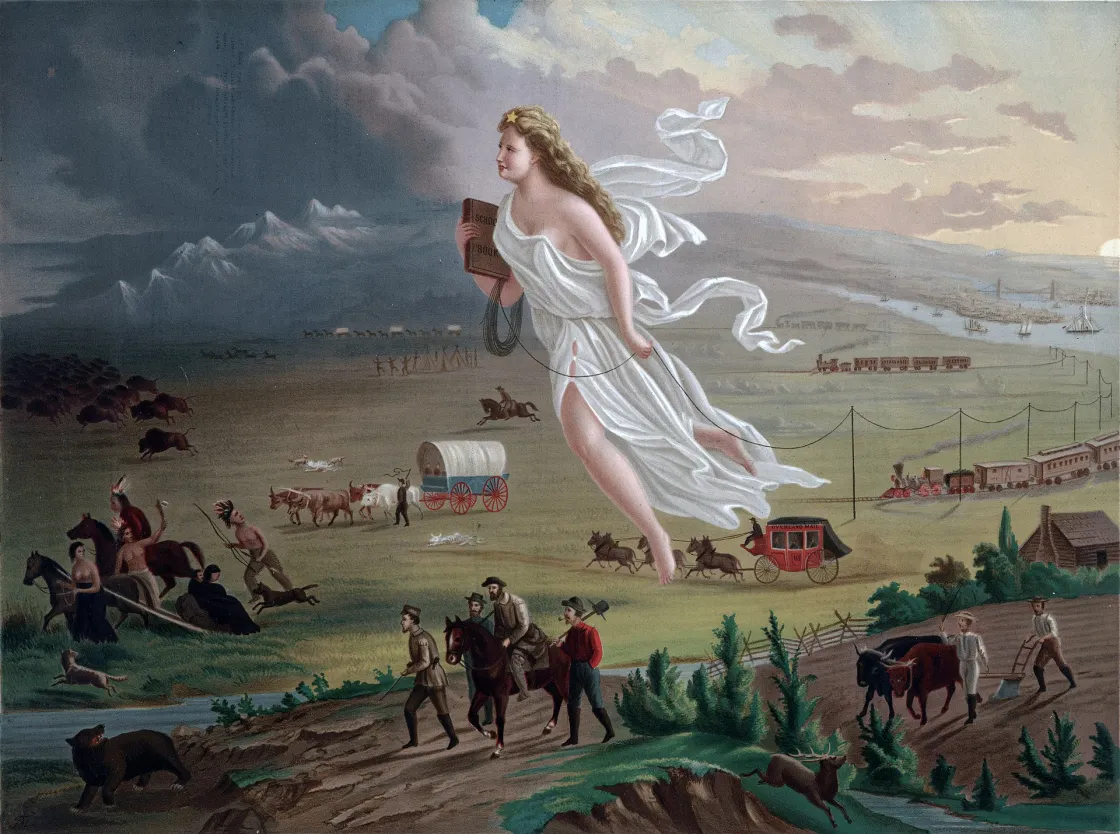
American Progress by John Gast, 1872
Library of CongressThe legacy of the Homestead Act is complicated, as it also made great strides in the inclusion of both women and people of color. In a landmark move, the law specifically includes the term “he or she” no less than five times. Unlike the 1841 Preemption Act and 1850 Donation Land Claim Act, the 1862 Homestead Act furthermore makes no specific reference to race.
It is up for debate whether legislators purposely included African Americans in the bill, as many politicians may not have foreseen enslaved Black people becoming free. However, with the arrival of the preliminary Emancipation Proclamation on September 22, 1862, the optics of homesteading shifted drastically. Over the span of the act close to 3,500 Black people claimed nearly 650,000 acres of land. This number could have been higher, but the cost of goods and labor needed to establish a home was often too high for formerly enslaved African Americans to afford. Despite this, the 1870s saw sizeable African American migrations, known as Exodusters, to places like Kansas.
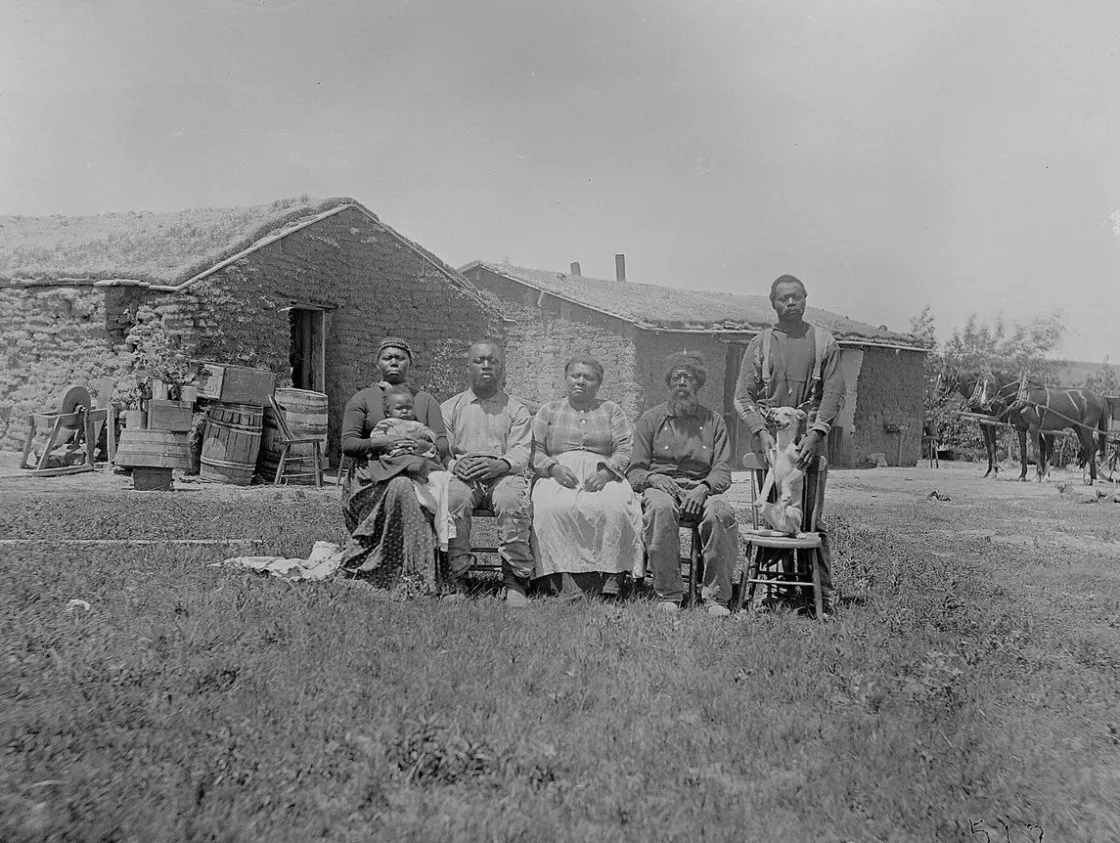
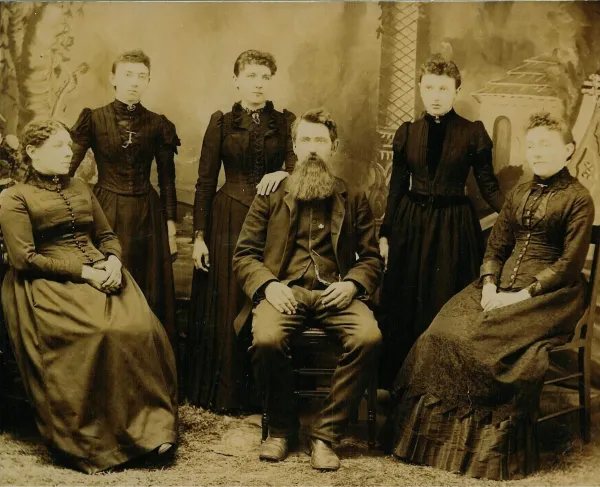
The Shores Family near Westerville, Nebraska, 1887
Nebraska State Historical SocietyOne notable exclusion in the Homestead Act was the inability for Chinese immigrants to participate. Despite playing a pivotal role in the development of the West, the Naturalization Act of 1790 explicitly denied citizenship to Asian individuals. It would take 36 years before the Supreme Court's 1898 decision in United States v. Wong Kim Ark affirmed birthright citizenship for U.S.-born Chinese Americans.
In the decades after the initial Homestead Act, Congress began to expand legislation for homesteads. In addition to the Southern Homestead, Indian Homestead, and Dawes Acts Congress went on to expand land redistribution further with bills spanning 1873 to 1916. The 1862 Homestead Act remained one of the largest entitlement programs in American history until the introduction of the Social Security Act in 1935. Today, over a quarter of the U.S. population, some 93,000,000 Americans, are estimated to have descended from homesteaders.
Further Reading:
- The Homestead Act of 1862: A Primary Source History of the Settlement of the American Heartland in the Late 19th Century: Jason Porterfield
- Homesteading the Plains: Toward a New History: Richard Edwards, Jacob K. Friefeld, Rebecca S. Wingo
- The Last Civil War Veterans: The Lives of the Final Survivors, State by State: Frank L. Grzyb
- The Rediscovery of America: Native Peoples and the Unmaking of U.S. History: Ned Blackhawk
- Letters of a Woman Homesteader (opens in a new window): Elinore Pruitt Stewart
- Pioneer Girl: The Annotated Bibliography: Laura Ingalls Wilder, Pamela Smith Hill