History & Literature: The Little House Series
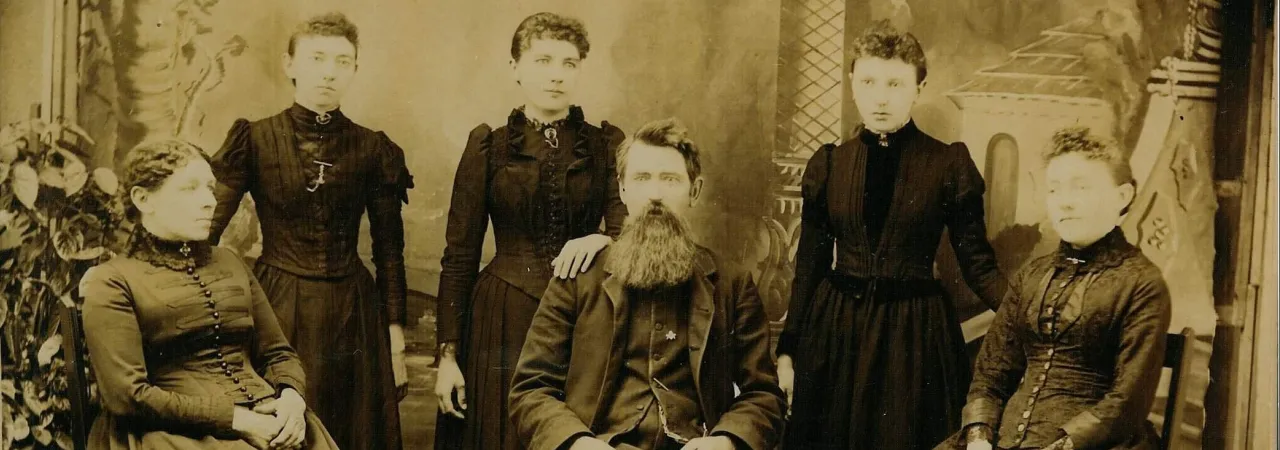
The Ingalls Family
Laura Ingalls Wilder’s widely successful Little House book series captures an often-forgotten period of American history. Her writings offer a valuable window into the political, technological, and social transformations that shaped the American West after the Civil War. The American West became a proving ground for a reunified nation. At the center of it all was the Ingalls family attempting to carve out their own piece of America.
Though the nation was moving towards reconciliation after the Civil War, the legacy of the conflict was still carried into the West. Both Caroline and Charles Ingalls experienced the repercussions of war. Charles’s own brothers, James and Hiram Ingalls, served in the Union Army and Caroline’s brother, Joseph Quiner, was killed in action at Shiloh in 1862. In every new community that the family settled in, they encountered Civil War veterans, each with their own perspective and story. Laura writes directly about her uncles and Reverend Leonard Moses but neglects to mention veterans like Elias Bedal and William Steadman who both played important roles in the Ingalls’ lives.
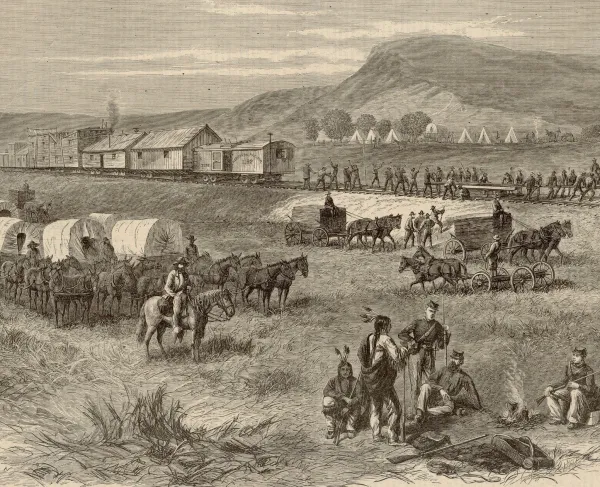
Beyond the political legacy of the Civil War, Laura's stories also document the technological transformation of the West. The first Transcontinental Railroad was completed in 1869, when Laura was just two years old. However, it still took time for the adjoining network of lines to reach the remote regions of the West. When the family moved from Wisconsin to Kansas and eventually Minnesota, they traveled entirely by wagon and foot. It wouldn’t be until a decade later that Laura boarded her first train, and even then, the family only rode as far as Tracy, Minnesota. When the series concluded in the late 1880s, railroads west of the Mississippi River had drastically expanded. Rail expansion symbolized the sweeping technological and economic changes reshaping the late nineteenth-century West.
As the landscape evolved, so too did the opportunities and expectations for women. The character of Laura often challenged conventional gender roles in society. Her writings are reflective of a period when women were pushing boundaries in the West. The era saw a surge in political activism among women with topics of suffrage and temperance at the forefront. Laura's own experience as a teacher and homesteader in South Dakota illustrates the expanding opportunities available to women despite the limitations they continued to face. Her stories have long been revered as an inspiration, but they also portray a darker portion in American history.
Perhaps the largest controversy surrounding the Little House series was the Ingalls’ encounters with the Native American population in Kansas. The family certainly encroached on the Osage Diminished Reservation in 1869 and tensions were understandably high. Laura writes from the uncomplicated perspective of a child and leaves out context for the family’s tepid relationship with the indigenous populace. In addition to Kansas, the Ingalls arrived in Minnesota nearly twelve years after the US-Dakota War’s conclusion. The removal of the Dakota in the 1860s opened massive amounts of farmland in Minnesota for families like the Ingalls, even as the collective memory of the massacres endured. The Dakota remained in exile during Laura’s time in Walnut Grove and would not return until the 1880s, well after the family’s move to the Dakota Territory.
In addition to interactions with Native Americans, the series also briefly touches on the presence of African Americans on the frontier. One of Laura’s first encounters with a Black person was in Kansas when the family was tended to by Dr. George Tann. Though not much information is available on Dr. Tann, he was regarded for his background in eclectic medicine, which saw its peak in the late 19th and early 20th centuries. The frontier offered potential respite for African Americans fleeing the violence of the Post-Reconstruction South and “black laws” of the North. Upon his death in 1909, the community buried the doctor with other white settlers, rather than in the black section of Independence’s Mount Hope Cemetery.
Despite its blemishes as a concrete historical document, the Little House books continue to provide an effective medium for discussion and debate. Laura’s writings, which depict a nostalgic view of the American West, still contain many of the prevailing themes of the period. Although the Little House books are not flawless pieces of history, they supply valuable perspectives on the political, technological and social changes that transformed the United States after the Civil War.
Further Reading:
- Pioneer Girl: The Annotated Autobiography (opens in a new window): Laura Ingalls Wilder and Pamela Smith Hill
- The Selected Letters of Laura Ingalls Wilder (opens in a new window): Laura Ingalls Wilder and William Anderson
- Laura Ingalls Wilder: A Biography (opens in a new window): William Anderson
- The World of Laura Ingalls Wilder: The Frontier Landscapes that Inspired the Little House Books (opens in a new window): Marta McDowell
- Midnight Rising: John Brown and the Raid That Sparked the Civil War (opens in a new window): Tony Horwitz
- Little House in the Big Woods (opens in a new window): Laura Ingalls Wilder