By now you’re probably well aware that the American Revolution happened 250 years ago. There’s even a fancy name for our current commemoration: the semiquincentennial. The fancy name, the larger-than-life heroes (all hail, George Washington!) and antiheroes (hiss, Benedict Arnold, hiss), and the long years that separate us from those events can make the story feel otherworldly. In our fast-paced, digital age, it’s kinda hard to connect with people and a past that feels so distant.
It doesn’t help that, with only stilted portraits and looming statues to aid our imaginations, few of us can conjure visions of our Revolutionary forebears. Whereas with later conflicts, like the Civil War, we have photographs to return our gaze and reflect a shared humanity. There is a pantheon of photographs capturing the big names and common soldiers alike. It’s easier to see ourselves in a past that, well, looks more like us — even if in sepia tone. Coming face to face with figures from history — “seeing the whites of their eyes,” as it were — helps us connect to them on a deeper level.
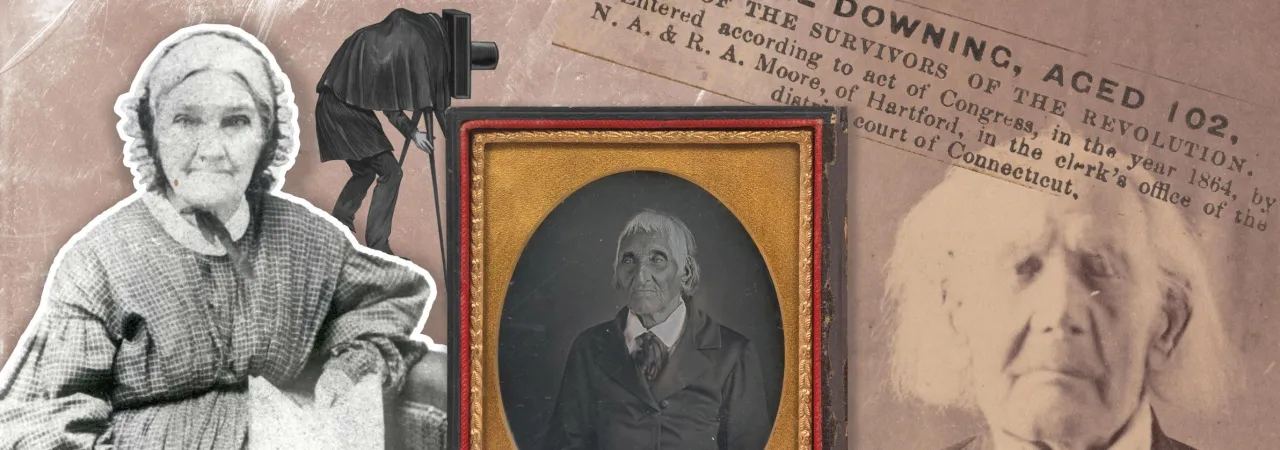
But what if we told you there’s a way to see the genuine faces of the Revolutionary generation — actual photographs of Revolutionary Veterans. Is your head tilting yet?
Practical photography took shape in the 1830s, more than a half-century too late to capture the battlefields or milestone moments of the American Revolution. But as the art became more accessible and mainstream in the 1840s, a perhaps-surprising number of Revolutionary figures, many of them approaching centenarian status, had their pictures taken. As you view them, you can’t help but think of everything these veterans witnessed, remembered, and retold. Not just of their Revolutionary exploits, but all the ensuing decades between then and the time they sat down in front of a camera.
Want to meet some of them?
Sarah Osborn Benjamin
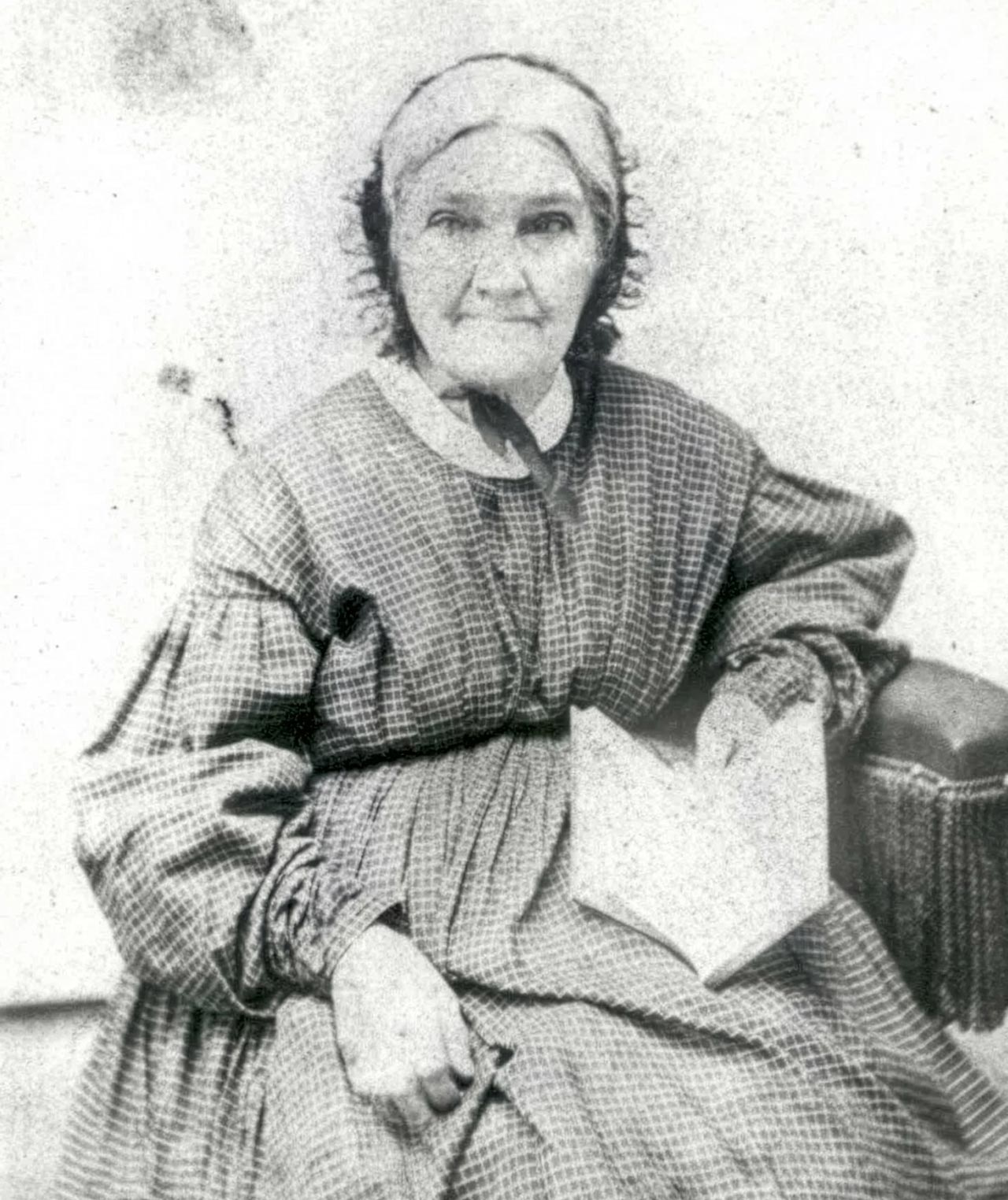
This is Sarah Osborn Benjamin and she was formidable enough to impress no less than General George Washington at the Siege of Yorktown in 1781. She was born in Goshen, New York in 1743—likely making her around 100 years old by the time she sat for a photographer sometime in the mid-19th century. According to her widow’s pension application, filed at the Court of Common Pleas in Wayne County, Pennsylvania, in 1837, she had begun traveling with the Continental Army shortly after marrying Aaron Osborn, who was already serving in the war. Throughout 1780-81 Sarah laundered and cooked for soldiers. She supported the men digging trenches at Yorktown, dodging a barrage of cannon fire while carrying beef, bread and coffee to the men in the field.
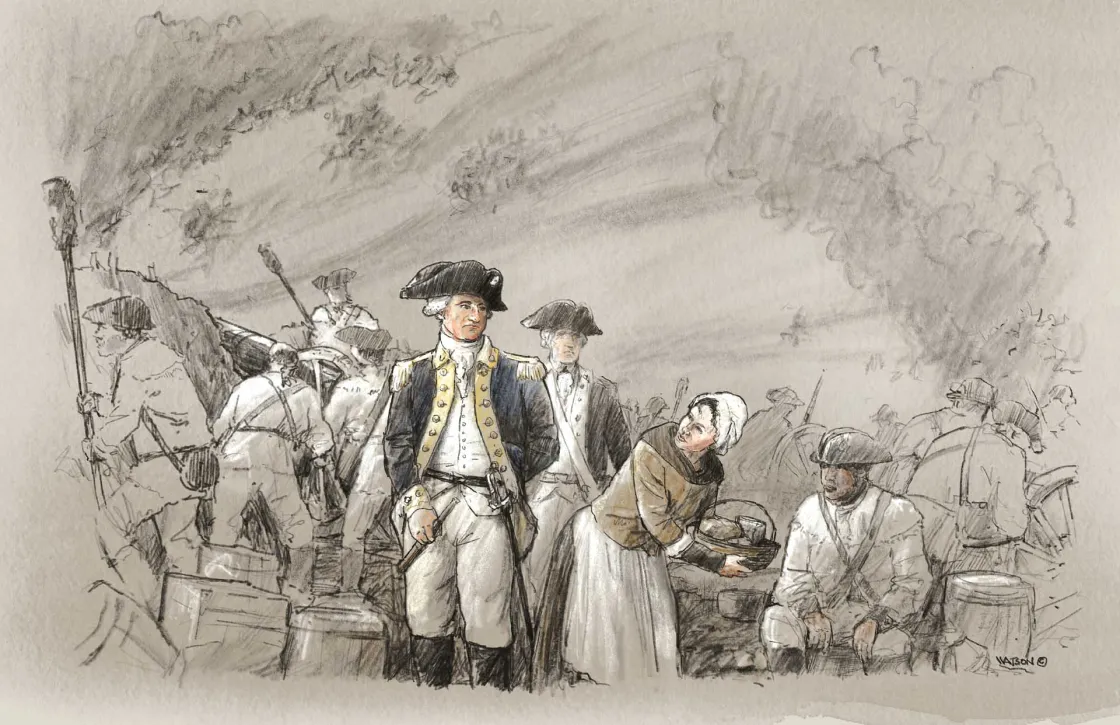
Sarah Osborn Benjamin's encounter with Gen. George Washington at Yorktown
Art by Dale WatsonGeneral George Washington noticed her tenacity and apparent coolness in the face of the British fire. Inquiring why she wasn’t afraid, Sarah looked him dead on and replied “the bullets (will) not cheat the gallows,” and that it wouldn’t do “for the men to fight and starve, too.” Bolstered in part by those carbs and caffeine, the Allied army won at Yorktown, and Sarah was there at the surrender. She recalled standing on the sidelines with a front row view as the British officers and soldiers marched out to surrender, “and playing a melancholy tune.”
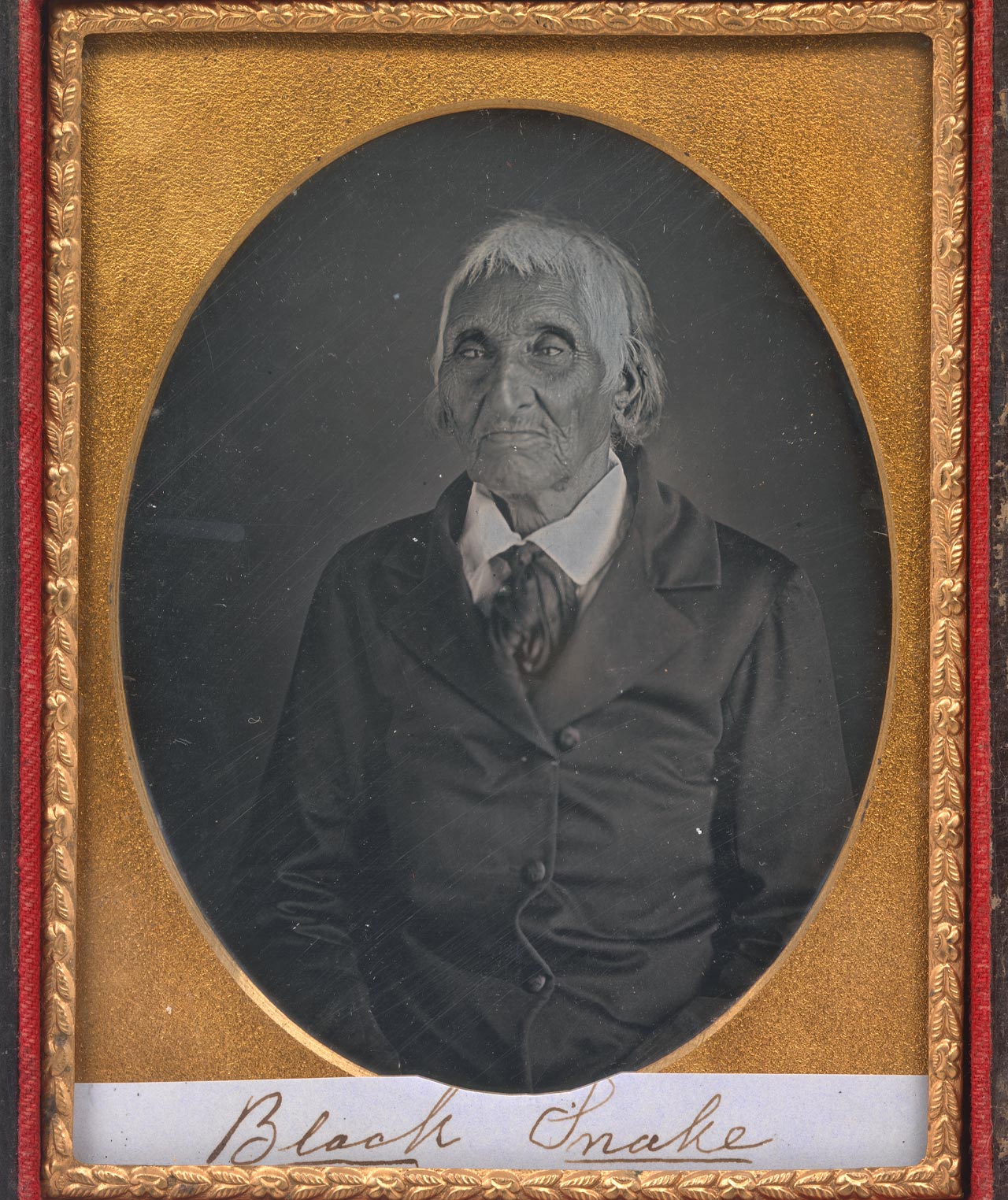
Through this portrait, you can put a face to at least one of the untold number of people who had difficult choices to make during the American Revolution. This is Chainbreaker, also known as Governor Blacksnake, a Seneca leader, captured on camera around 1850. The Seneca, part of the Haudenosaunee, or Iroquois Confederacy, chose to support the British during the war, while other members of the Six Nations sided with the Patriots. Chainbreaker experienced this division on the battlefield, notably at the Battle of Oriskany on August 6, 1777, where he and other members of the Seneca faced Patriots and Oneida, their pre-war allies. Chainbreaker recounted his experiences to a fellow Seneca in the 1840s, becoming one of the earliest and most important memoirs of the Revolution from the Indigenous perspective.
E.B. Hilliard’s The Last Men of the Revolution
The accessibility of photography and desire to preserve first-hand accounts of the Revolution as experienced by aging veterans went hand in hand. During the Civil War, Connecticut Reverend E.B. Hilliard launched a project to collect photographs of Revolutionary veterans and preserve their stories for posterity. In 1864, he published The Last Men of the Revolution, featuring oral histories of six veterans and accompanying photos for five of them. Born between 1759 and 1764, these guys had stories a little juicier than anything you’ll read in a textbook! The oral histories read like a yarn from a favorite uncle who’s too old to care much about self-censoring. Check out Samuel Downing, who joined the Continental Army to wiggle out of his boring apprenticeship. Talking to Hilliard, he called Benedict Arnold “a bloody fellow,” and Horatio Gates “an old granny looking fellow.” Imagine sitting across from this guy at the Thanksgiving dinner table!
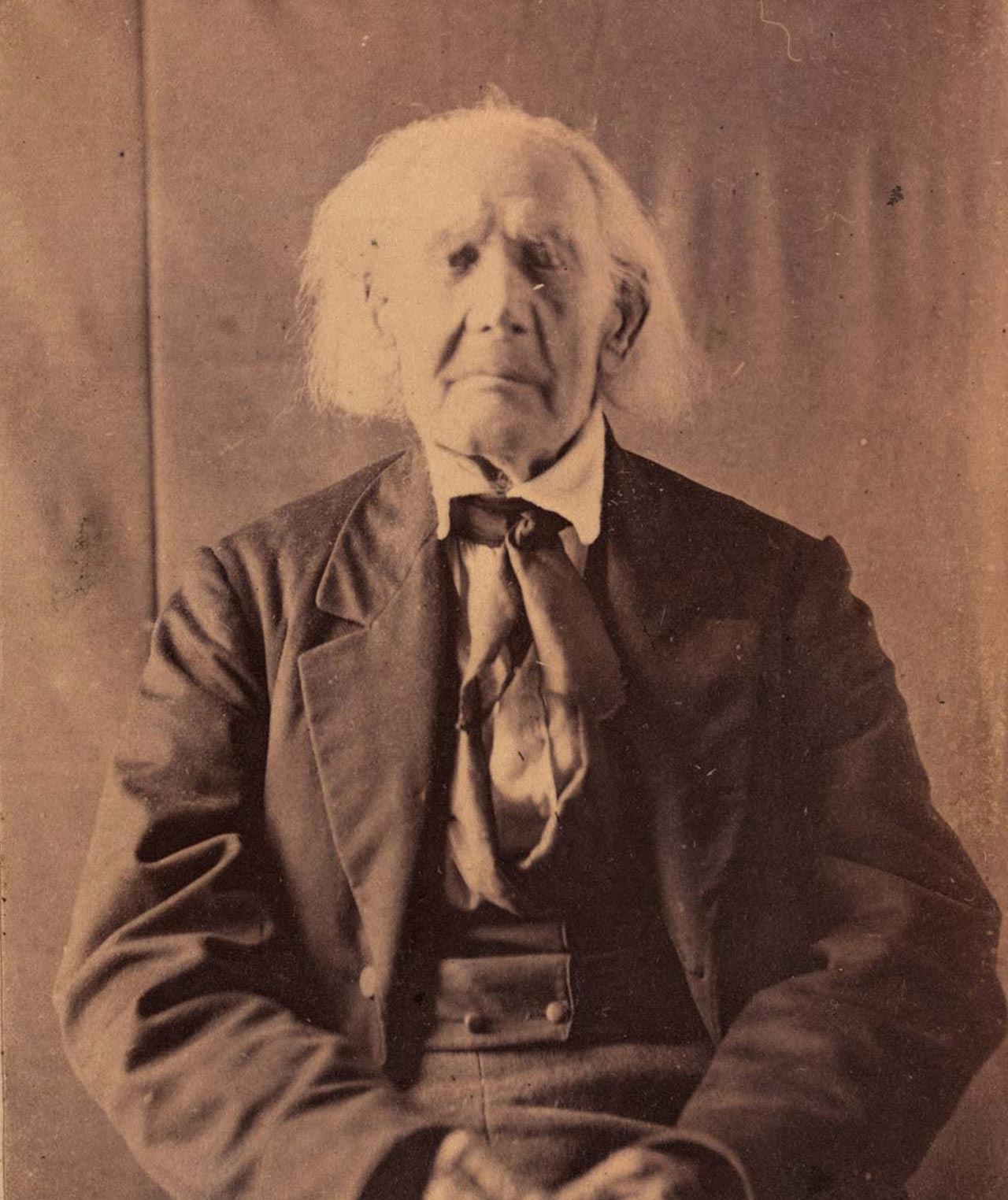
So there you have it — real faces of the Revolutionary generation. And this is just a sampling of faces and the stories they tell. If you’re into connecting more with our Revolutionary history this semiquincentennial by communing face to face with some of the people who lived it, start by learning more about Sarah Osborn Benjamin in the American Battlefield Trust’s online exhibition, American Revolution Experience, and be sure to listen to the conversation about her descendants who have their stories about her 19th-century photograph.
In Sarah’s case, we have a wonderful photograph of her in old age, but as you’ll discover in the online exhibit, we wanted to visualize what she looked like in her younger years while supporting the Continental Army. Trust historians worked with artist Dale Watson to create a new portrait of Sarah, and the other people you’ll meet in the exhibit, deep-diving into genealogy, historic context, and material culture to accurately depict the real people behind real experiences of the Revolution. Because we know that sometimes, coming face to face with our past makes all the difference.