December Disaster
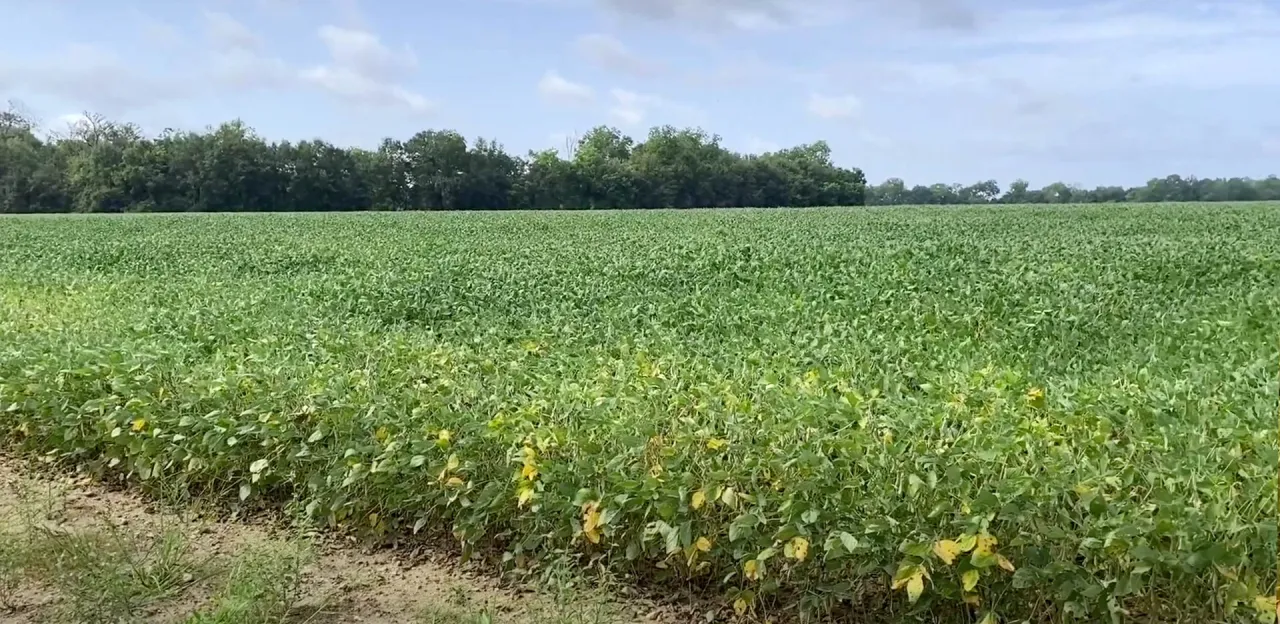
Chickasaw Bayou Battlefield, Vicksburg, Miss.
Emerging Civil WarIn early November, 1862, Union forces under Maj. Gen. Ulysses S. Grant left Corinth, Mississippi and Bolivar, Tennessee. Grant’s plan was to follow the Mississippi Central Railroad south to the vicinity Oxford and Granada to rendezvous with Maj. Gen. William T. Sherman. Together, the Federals would advance on and invest the city of Vicksburg. Towering on high bluffs above the “Father of Waters”, Vicksburg was not only a major fortification, but an important artery in the Confederate supply line. The Mississippi River, in the ante-bellum years and during the conflict served as the economic life blood of North and South.
Grant’s opening of the campaign was coming on a wave of Federal momentum. Maj. Gen. George B. McClellan’s Army of the Potomac had forced Robert E. Lee to abandon Maryland after bloody fighting along Antietam Creek in September. More recently, Maj. Gen. William S. Rosecrans turned back Lt. Gen. Braxton Bragg’s of Kentucky at Perryville.
Grant reached Oxford in the first week of December. Alarmed by news that politician turned general John McClernand had been authorized to raise a separate command to attack Vicksburg, Grant ordered Sherman back to Memphis. From there his subordinate was to launch a riverine expedition against the city.
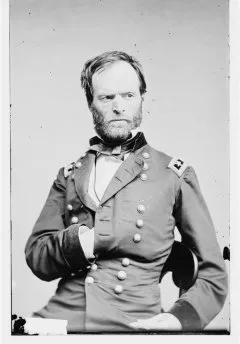
Supported by Rear Admiral David Dixon Porter’s Mississippi Squadron, Sherman and around 30,000 men left Memphis on December 20. The same day, Confederate cavalry led by Maj. Gen. Earl Van Dorn raided and destroyed Grant’s supply base at Holly Springs, Mississippi compelling the Union general to abandon the expedition. Grant’s good friend Sherman would be on his own.
Four days later, Confederate lookouts spotted Sherman and Porter below Lake Providence, Louisiana and quickly sent word to Vicksburg of the enemy approach. Interrupted from a Christmas Eve celebration, the commander of the Vicksburg garrison, Maj. Gen. Martin Luther Smith, decided to place troops in the Walnut Hills line north of the city and prepare for its defense. Smith had around 5,500 men to oppose Sherman.
Sherman and Porter navigated the Mississippi from Milliken’s Bend before turning into the Yazoo River on December 26. The same day, the head of the Department of Mississippi and East Louisiana, Confederate Lt. Gen. John C. Pemberton, arrived in Vicksburg to direct the fighting. Union Brig. Gen. George Morgan’s division landed near Chickasaw Bayou that afternoon. Morgan pushed Brig. Gen. John DeCourcy’s brigade forward to reconnoiter. DeCourcy’s men soon ran into pickets from the 17th and 26th Louisiana, along with elements of the 42nd Mississippi of Col. William Withers’ brigade. Both sides engaged in a sharp skirmish before Withers steadily withdrew to a new position where he could receive further support from the Confederates, under the direction of Brig. Gen. Stephen D. Lee.
Sherman sent out a reconnaissance in force with the bulk of his command the next morning. Union infantry crept silently forward to find Lee. DeCourcy engaged Withers in Sherman’s center. Federal numbers soon allowed DeCourcy to gain the upper hand and Withers withdrew to the main line. Over on the Union right, Brig. Gen. Morgan Smith’s men skirmished with the 31st Louisiana. Brigadier General Frederick Steele, who held the Union left collided with 26th Louisiana. After putting up a stiff fight, the Louisianans also fell back to the safety of Lee’s position, located along the River Road. Despite making little progress, Sherman himself “reconnoitered as well as possible” after nightfall and determined to launch an assault the next day. Meanwhile, brigades led by Brig. Gens. Seth Barton, John Gregg, and John Vaughn had arrived in Vicksburg. Pemberton and Smith quickly sent them north to reinforce Lee.
Stymied not only by a heavy morning fog but also the obstructions they encountered, Sherman made little progress on December 28. DeCourcy resumed his battle within the battle with Withers’ command, this time with the 29th Louisiana. The Union troops once again made little progress. With few options left and after conferring with his subordinates, Sherman decided to drive straight ahead, punch through Walnut Hills and capture Vicksburg.
Union artillery opened a preparatory bombardment around 7:30 a.m. on December 29. The barrage, “a terrific storm of shot and shell” according to one Louisiana colonel lasted for the next four and half hours. Around noon, in parade ground formation, Sherman’s infantry stepped off. Enduring a hail of musketry and artillery fire, DeCourcy and Brig. Gen. Francis P. Blair Jr.’s brigades managed to punch through the outer Confederate works on the Union left. They surged toward the River Road line, held by men from Louisiana and Tennessee. After sustaining heavy casualties, they were forced to fall back. Elsewhere along the front, Confederate guns brought the Union advance to a grinding halt.
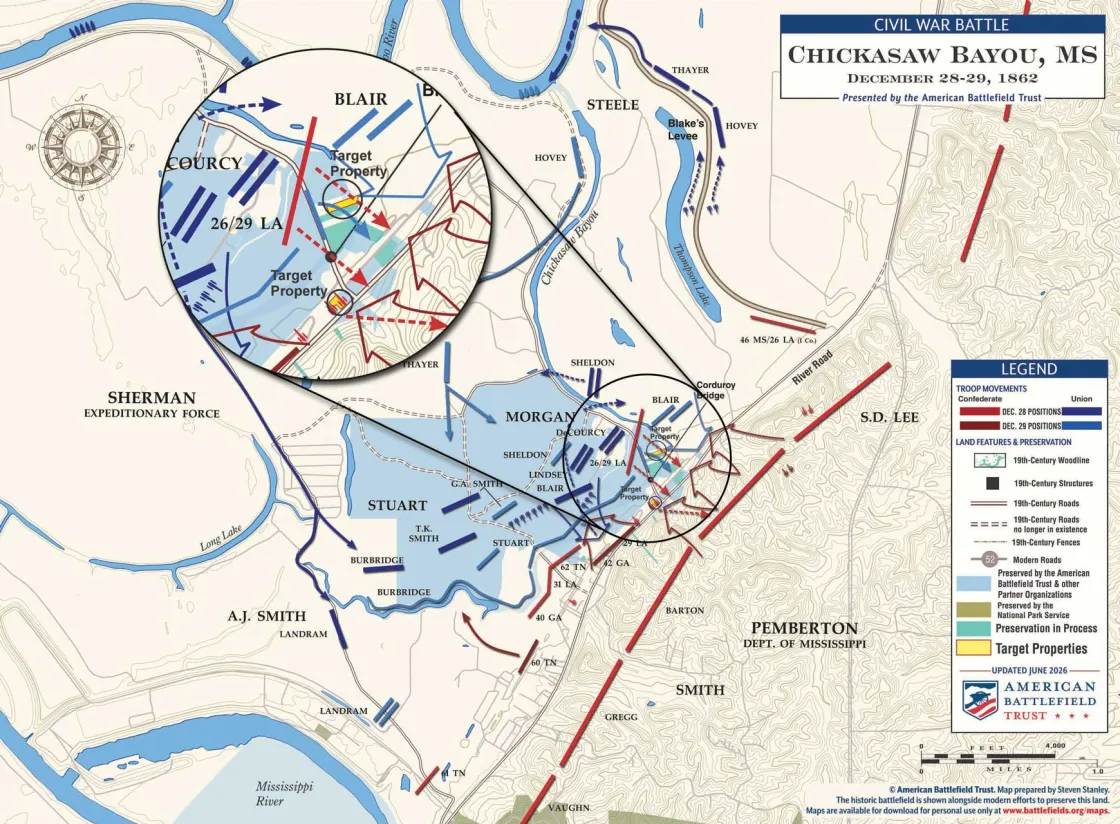
Chickasaw Bayou | Dec 28-29, 1862
American Battlefield TrustSherman brought up and deployed reinforcements the next day. On December 31st, he began slowly withdrawing to embark on Porter’s transports. As 1863 dawned, Vicksburg remained firmly in Confederate hands. Although tempered with Rosecrans’ victory over Bragg outside Murfreesboro, Tennessee, combined with the Union disaster at Fredericksburg, Virginia, Chickasaw Bayou and Grant’s failure in north Mississippi contributed to the feeling of despair
in the Union war effort. Grant, however, was undeterred. The following spring, after a masterful combined operation, Pemberton surrendered Vicksburg to him on July 4, 1863. The capitulation of Port Hudson shortly after Vicksburg's fall gave the Federals complete control of the Mississippi.