Flora MacDonald
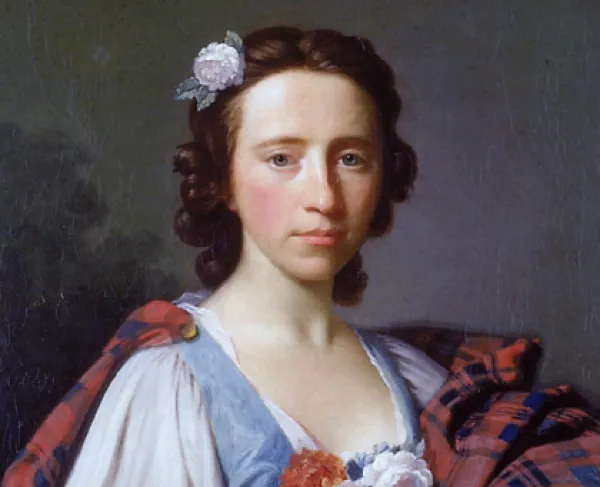
Born in 1722 in the Scottish isles of Hebrides, Flora was the only daughter of Ranald and Marion MacDonald. Many of her life details are either unknown or heavily veiled with legend. Her most famous incident in history took place in 1746 during the Jacobite Uprising.
She grew up on the islands of the Hebrides and had prominent connections through Clan Donald. Her father died when she was an infant, and her mother married Hugh MacDonald, a landholder on the island of Skye. She learned the Protestant faith, and in later years, was noted for her piety and devoted church attendance.
For decades, Scottish Jacobites wanted a Scottish king on the English throne. James Francis Edward Stuart (often called the “Old Pretender”) had a claim to the throne as the only son of James II of England. James II had been deposed and exiled during the Glorious Revolution of 1688, and the following year he was excluded from the future royal succession due to his Catholic faith. When James II died in 1701, “Old Pretender” claimed the thrones of England, Ireland and Scotland, and he rallied military and political support from France. Attempted returns and military exploits in 1708, 1715 and 1719 failed, and James lived in retreat in Rome, Italy.
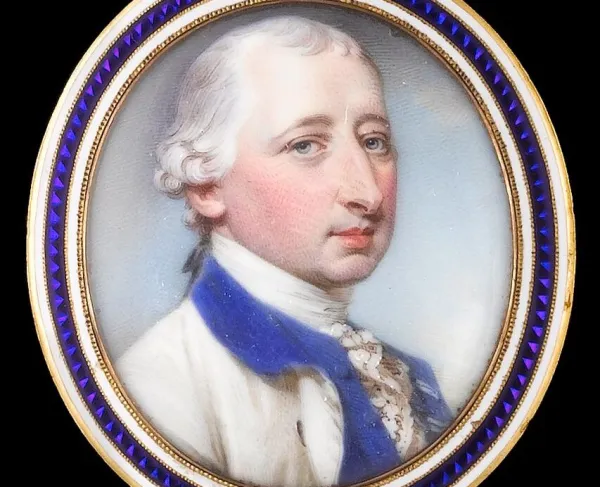
James’s eldest son, Charles Edward Stuart, staged the Jacobite Uprising in 1745-1746 which was the last serious attempt to bring back the Stuart royal family. The Jacobites rallied thousands of supports, received support from the French and invaded England. However, the uprising ended with a disastrous defeat at the Battle of Culloden on April 16, 1746, and led to Charles Edward Stuart disbanding the Jacobite force four days later.
British troops searched for Charles Edward Stuart, and by June 1746, he arrived in the Hebrides. Felix O’Neille, a distant relative of the MacDonalds, asked Flora for assistance. Her step-father, Hugh MacDonald, commanded the Independent Highland Company, guarding the island where Stuart and his friends refugeed. Knowing this Highland Company did not support the Jacobites, O’Neille requested her to help obtain passes so the hiding prince could depart. According to stories, Flora MacDonald brought the needed paperwork and disguises for Stuart and his friends. She remained while the group made their escape to the Isle of Skye, and then France; MacDonald was arrested, taken to England and imprisoned in the Tower of London. In time, she was allowed to live outside the prison, though still under supervision until her release through the Act of Indemnity in June 1747. Flora MacDonald may not have supported the Jacobites; she sometimes explained that she helped the fleeing prince only out of compassion, rather than inspired by politics.
The legendary account of a young woman helping the Stuart prince to escape inspired the imagination of Jacobites and the pro-government supporters alike. Sympathizers on both sides collected a large sum of money for her aid.
On November 6, 1750, Flora MacDonald married Allan MacDonald. He was a captain in the British Army. The couple had seven children who survived childhood. Captain MacDonald fought in the Seven Years War, serving in the 114th and the 62nd Regiments of Foot.
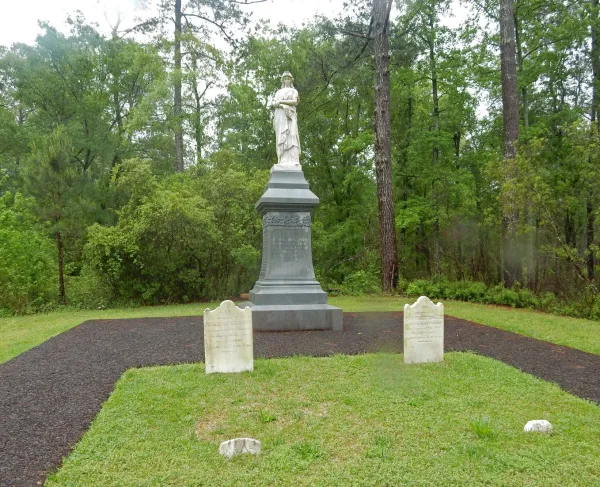
In 1774, MacDonald, her husband and two sons sailed to the colony of North Carolina, settled along Cheek’s Creek and named their plantation Killegray. Highland Scots already settled in the region warmly welcomed Flora MacDonald and celebrated her role in helping Stuart in his escape years earlier. The family sided with the British during the American Revolution, and Allan MacDonald rallied Scots and other Loyalists to fight for King George and royal governor Josiah Martin.
At the Battle of Moores Creek Bridge on February 27, 1776, Flora’s husband and a son were captured by North Carolina militia. For years, she was on her own, relying on the Scottish and Loyalist community for aid when the family’s plantation was seized. Finally, in 1778, Flora MacDonald united with her husband, and they sailed to Nova Scotia where Allan MacDonald served as commander of the 84th Regiment of Foot. The following year they returned to Scotland and settled with extended family on the island of Skye.
Flora MacDonald died on March 4, 1790. She was buried in Kilmuir Cemetery on Skye. The legends of her role in Charles Edward Stuart’s escape live on, popularized again in 19th Century literature. She continues to be remembered and celebrated in North Carolina history, too, as a woman who inspired the Scots during the American Revolution.

Related Battles
2
50