John Trumbull's painting, Declaration of Independence, depicts the moment on June 28, 1776, when the first draft of the Declaration of Independence was presented to the Second Continental Congress.
Fifty-six men signed the Declaration of Independence. They knew they were signing a document considered treasonous by the King of Great Britain, yet they were determined to uphold it with their lives, fortunes and sacred honor. But the promise of American independence in that document was sealed with the blood of tens of thousands of individuals who died in camps, in prisons and on battlefields across the country during the Revolutionary War. Without this sacrifice, this Declaration would merely be elegant prose written during a failed rebellion, rather than the document that has given inspiration to millions of people yearning for freedom around the world. As the United States celebrates 250 years since its passage, it is important we remember the debt paid by those who fought and died to see it become reality.
The Fourth of July is often remembered as a grand day on which patriotic Americans declared their independence and a nation was born. This view is reinforced by images such as John Trumbull’s famous painting, done more than 40 years after the fact. While the scene conveys the event as grand, solemn and orderly, the actual story is much more fraught and fragile. The Declaration was created in a harried time of war and uncertainty.
By July 1776, America had been at war with Great Britain for more than a year. There was hope among many that the war would end with the colonists’ grievances addressed, while remaining a part of the British Empire. Most colonists viewed themselves as English, retaining the rights and privileges of that title. Indeed, they had profited and thrived as colonies within the empire. But the longer the war dragged on, the more the idea of independence continued to grow.
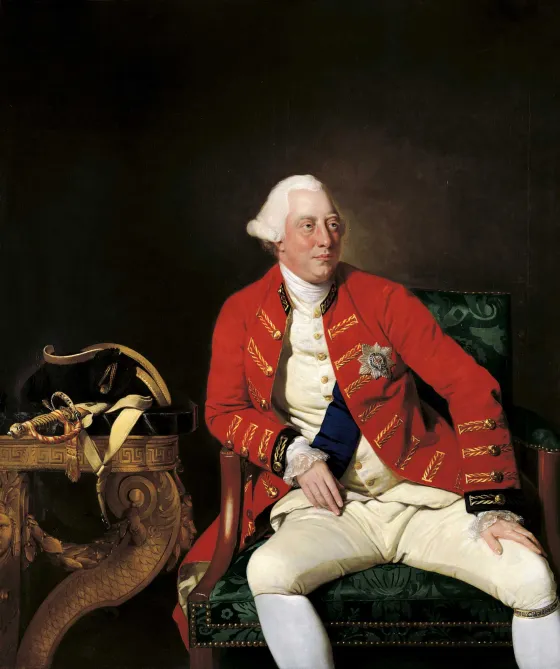
King George III by Johann Zoffany, 1771. Royal Collection Trust, London, England.
Public DomainImbued with the success of George Washington’s forces in driving the British from Boston and moved by the arguments for independence (such as Thomas Paine’s widely read pamphlet Common Sense), many of the delegates to the Continental Congress felt the time was right to declare independence in the summer of 1776. With renegade colonial legislatures acting in the place of their British-authorized colonial governments, it was becoming clear, as Thomas Jefferson noted, that the question was less if they should declare independence and create something new and more if the colonies “should declare a fact which already exists.”
Practical considerations had to be considered as well. Keeping the Continental Army in the field required provisions, arms, equipment and money. The rebellious colonies needed support from other countries, especially France and Spain, who already were no friends of the British. But to engage in diplomacy and alliances, they needed to declare themselves a separate nation on the world stage.
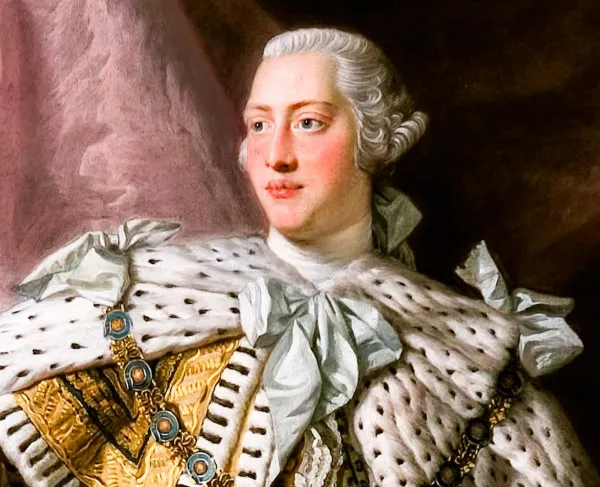
King George III and the British Parliament had no intention of letting the colonies go. The King proclaimed that his forces were to “suppress such rebellion, and to bring the traitors to justice....”
To accomplish this, the British dispatched its largest-ever expeditionary force to the shores of America. More than 400 ships and 32,000 soldiers and sailors began arriving outside of New York City in the summer of 1776. These forces included more than 8,000 Hessian auxiliary troops, among the most professional and feared in the world. At the same time, an expedition of some 50 ships and 3,000 men were arriving off the coast of Charleston, South Carolina. In contrast, George Washington had approximately 23,000 militia and Continental troops to defend New York. In South Carolina, only about 2,000 men and a half-completed palmetto log fort stood in the way of the British forces.
It was against this menacing backdrop that the delegates in Philadelphia debated independence. Despite the clear threat from British forces, individual colonies began to push for a full break from Britain. On April 12, North Carolina directed its representatives to vote for independence if a motion were made. Rhode Island renounced King George III on May 4. On May 15, Virginia directed its representatives in Philadelphia to put a vote on the floor for independence. Finally, on June 7, Virginia delegate Richard Henry Lee put forward the motion to the Congress “that these united colonies are, and of right ought to be, free and independent states…” They decided to hold the vote on July 1.
While the Congress debated the Lee Resolution over the next several weeks, a committee was established to write a Declaration of Independence in the event the motion passed. Among that committee were some of the most famous names in American history: Thomas Jefferson, John Adams and Benjamin Franklin.
While Adams and Franklin provided important edits, Jefferson wrote the first draft of the document. He began by laying out why it had become necessary that the colonies separate from Great Britain. Borrowing from hundreds of years of Enlightenment thought, the second sentence reads: “We hold these truths to be self-evident, that all men are created equal, that they are endowed by their creator with certain unalienable rights, that among these are life, liberty and the pursuit of happiness.” These words have been used by revolutionaries around the world for past 250 years. Though this sentence is often taken out of the context of the time in which it was written, there is no doubt it has become one the most famous sentences in all American history.
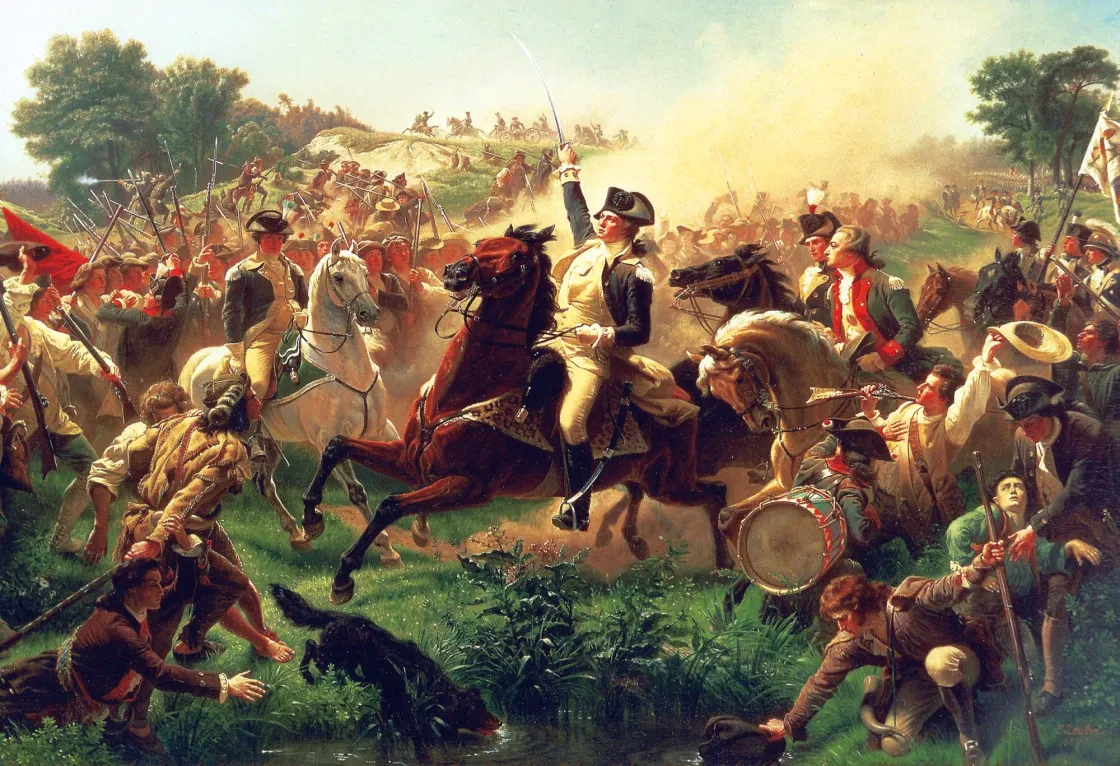
Washington Rallying the Troops at Monmouth, ca. 1851–1854, by Emanuel Leutze.
Courtesy of Doe Memorial LibraryBut even more to the point is the next sentence: “[T]o secure these rights, governments are instituted among men, deriving their just powers from the consent of the governed, that whenever any form of government becomes destructive of these ends, it is the right of the people to alter or to abolish it, and to institute new government....” This is the central argument of the Declaration, a powerful statement on the right to self-determination.
What follows is a long list of “abuses and usurpations” claimed to be perpetrated by King George III. The King had long been viewed as the protector of the colonists from an out-of-control Parliament, but the Declaration of Independence levels its anger specifically at the King. He is blamed for abolishing elected colonial governments, restricting commerce, levying war on the colonies, enticing slave rebellions and Indian raids and ignoring their cries for justice. He is labeled a tyrant “unfit to be the ruler of a free people.” The document closes with a declaration that the colonies are now “free and independent states.”
Despite this, by July 1, some delegates were still not on board with independence. The Congress wanted a unanimous voice at this important moment, so the vote was postponed until July 2 to convince some colonies to vote in the affirmative or simply abstain. This included convincing Caesar Rodney to ride more than 80 miles through the night to arrive in time to swing Delaware’s vote in favor of independence. The New York delegation, still with no direction from the colonial government, agreed to abstain from the vote. The vote on the Lee Resolution was held on July 2, and it passed unanimously with 12 “yes” votes and one abstention. The colonies were now officially independent. They were engaged now in a war not just for the preservation of their rights, but also for their political independence. Two days later, on July 4, the Congress voted and approved the text of the Declaration of Independence.
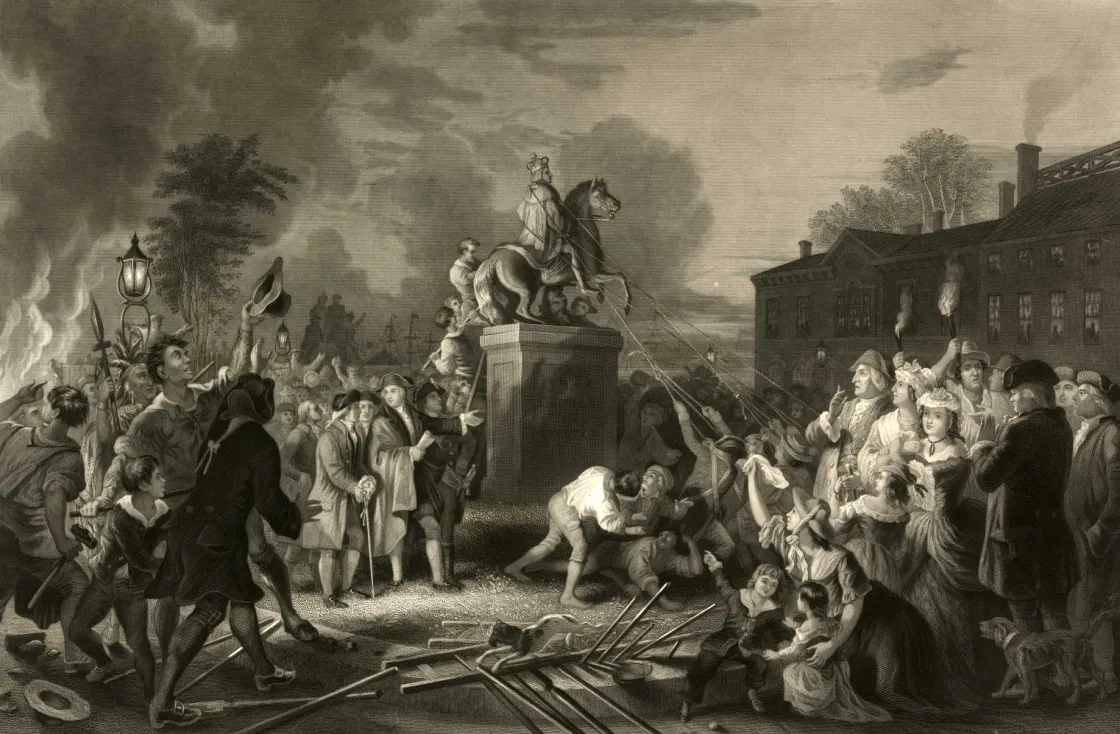
Pulling down the statue of George III by the "Sons of Freedom," at the Bowling Green, City of New York, July 1776 / painted by Johannes A. Oertel ; engraved by John C. McRae.
Library of CongressNews of the signed Declaration sped throughout the Eastern Seaboard like lightning. The document was published on handbills and in newspapers, read in taverns and coffeeshops and declared to assemblies in towns and cities. George Washington had the document read to his army. After hearing the words, a large crowd of soldiers and civilians became so frenzied in patriotic ardor that they tore down the statue of King George III on the Bowling Green.
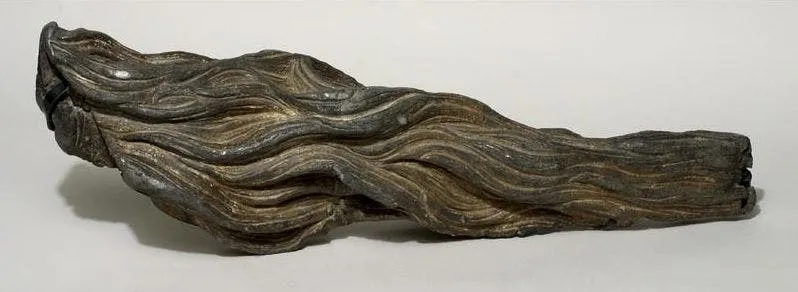
The horse’s tail from the statue of King George III in New York’s Bowling Green Park was hacked off when the monument was pulled down by jubilant Patriots. Smuggled away by Loyalists in Connecticut, the tail is now housed at the New York Historical Society.
New York Historical SocietyLater that July, the Congress learned that the small American force at Charleston, South Carolina, had defeated the British on June 28. With this good news, all eyes were now on Washington as his army attempted to defend New York City. To that end, he exhorted his troops that “[t]he fate of unborn millions will now depend, under God, on the courage and conduct of this army.”
At the end of August, the British in New York finally attacked. In Brooklyn, Washington’s army was flanked and nearly destroyed. Almost surrounded and crushed, Washington evacuated his forces to Manhattan Island. A couple weeks later, the British met with some Congressmen on Staten Island. The British would end the war if the colonials simply renounced independence. The Congressmen refused.
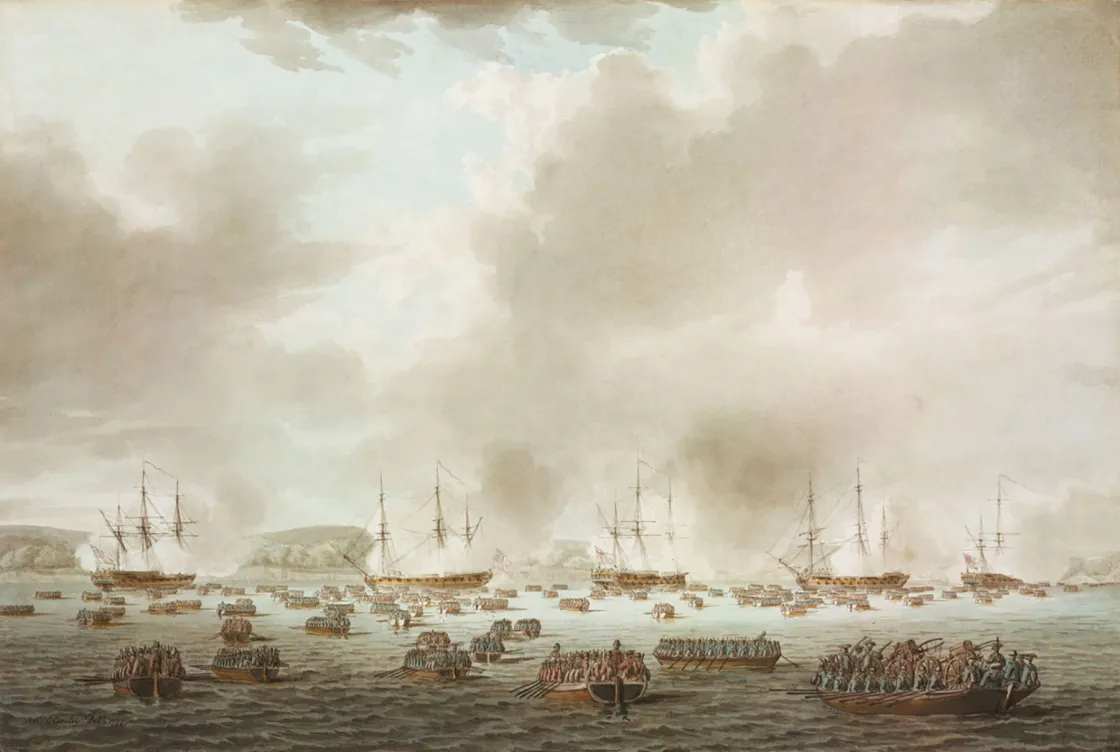
The British Landing at Kip’s Bay, New York Island, 15 September 1776, by Robert Cleveley, 1777. The watercolor depicts British warships bombarding American defenses before an amphibious landing at Kip’s Bay on Manhattan during the New York Campaign.
Public DomainFrom September to November, the British Army thrashed Washington’s troops at Kips Bay, Harlem Heights, White Plains, Fort Washington and Fort Lee. Washington and his dwindling army retreated across the New Jersey countryside, with British troops nipping at their heels. Thinking the British target was Philadelphia, the Continental Congress was forced to flee the city in December. Leaving Washington with dictator-like powers to prosecute the failing war, it was an inauspicious beginning for these “free and independent states.”
Washington’s troops made it to the safety of the Pennsylvania side of the Delaware River in December. His army was decimated, and the enlistments of the few who remained were about to expire at the end of the year. He believed that the “game is pretty near up.” Thomas Paine wrote that “these are the times that try men’s souls.” With the ink barely dry on the Declaration of Independence, it appeared that the war was all but over.
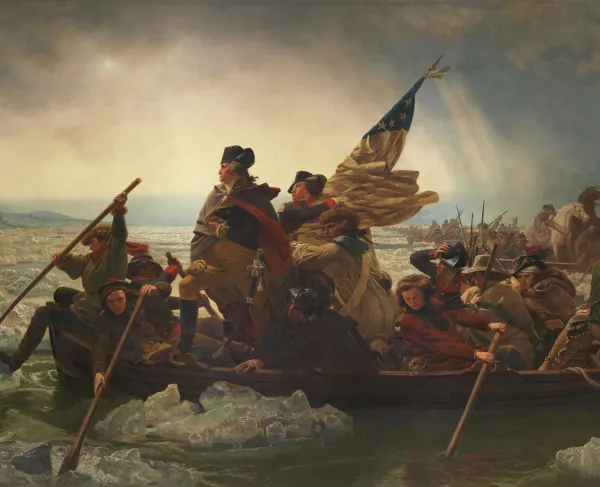
In this moment of despair, Washington made one of the boldest military moves in the war. He crossed the Delaware River that Christmas night and attacked a Hessian garrison in Trenton the next day. A winter military campaign that only lasted 10 days turned the tide of the war and drove the British back to New York. The cause was saved, but the war would drag on for another seven years.
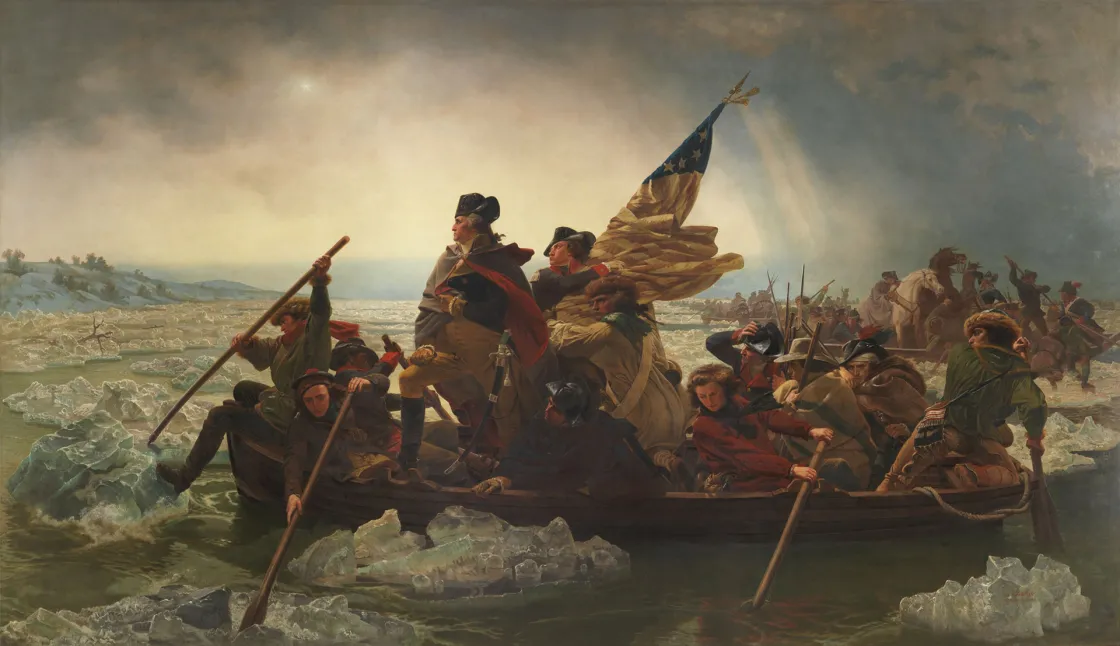
Emanuel Leutze's "Washington Crossing the Delaware" depicts the crossing of Washington's army just prior to the attack on the Hessians at Trenton on December 26, 1776. The man standing next to Washington holding the flag is Lieutenant James Monroe, future President of the United States, and the man leaning over the side is General Nathanael Greene.
The MetWithout success on the battlefield, the Declaration of Independence meant nothing. It is important we remember those soldiers who gave up everything so that “unborn millions” would be able to benefit from the blessings of liberty.
This summer, hundreds of thousands of visitors will travel to Independence Hall to be in the room where the Declaration of Independence was passed and signed 250 years ago. It is a moving experience to think of the brilliant minds and selfless individuals who came together that summer and declared independence. But a far more moving experience is to walk one block behind Independence Hall to Washington Square. This park was a potter’s field before the Revolutionary War. During the war, it was used as a mass burial location of hundreds of British and American soldiers. These nameless men were casualties of battle or disease. They were also husbands, sons, fathers and brothers.
The burial ground was later turned into a park, but thousands of dead still lie beneath the ground. In the 1950s, the body of an unknown soldier was disinterred and placed in a sarcophagus in the park’s center. This is the Tomb of the Unknown Revolutionary War Solider. On a wall behind the grave is the sobering statement: “Freedom is a light for which many men have died in darkness.” On the sarcophagus is the inscription: “Beneath this stone rests a soldier of Washington’s army who died to give you liberty.” A statue of George Washington watches of the grave and an eternal flame burns next to it.
Here in this quiet park, in the shadow of Independence Hall, is the true price of the Declaration. It is emblematic of the thousands who died so that we could be free and independent. Many of these honored dead still lie in unmarked graves on battlefields across the country. The battlefields of the Revolution are often unmarked cemeteries.
In April 1777, John Adams walked through this tragic burial ground and witnessed the burial of some of these men. A few weeks later in a letter to his wife, he wrote a note to us, the “posterity,” the “unborn millions” many of the founders often thought about. His words continue to reverberate 250 years later:
“Posterity! You will never know how much it cost the present generation to preserve your freedom! I hope you will make a good use of it. If you do not, I shall repent in heaven, that I ever took half the pains to preserve it.”