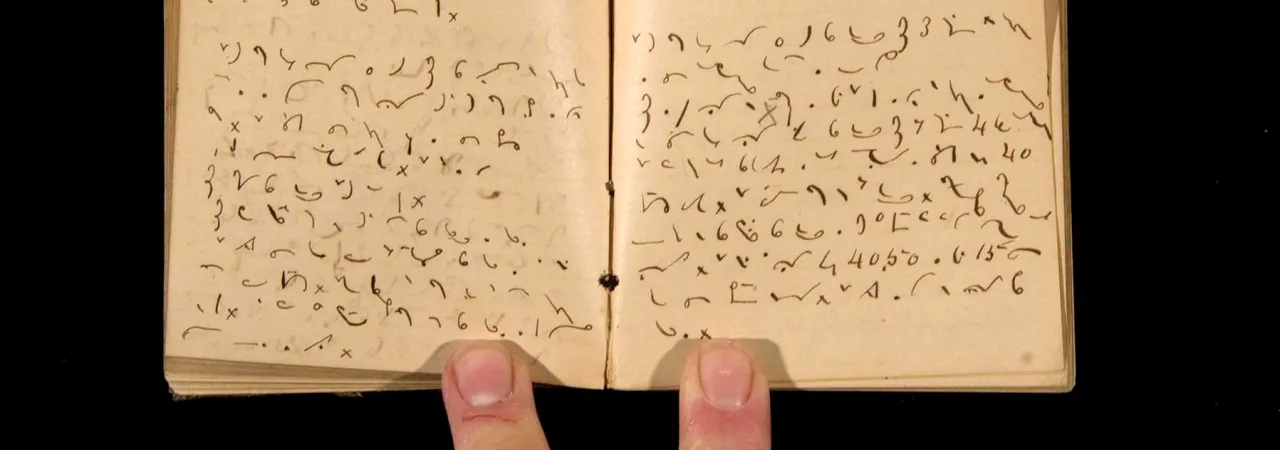
Ferdinand Kilbourne's Civil War diary in Pitman shorthand
Ancestry and Fold3 have been helping people understand their ancestors and why they fought for causes large and small for decades. Now, Ancestry and Fold3 have joined forces with the American Battlefield Trust, so that you can find the veterans in your family's past and understand their stories and the impact on the generations that followed. You can learn more at https: www.fold3.com/projectregiment.
In addition to this recurring Hallowed Ground column, this partnership has resulted in an exclusive discount for Trust members to subscribe to Ancestry and Fold3! Check your email for this exclusive offer.
When Secretary of the Interior Doug Burgum travelled to Gettysburg National Military Park for Memorial Day, it was about more than paying tribute to all of the brave soldiers who sacrificed on behalf of their nation. Laying a wreath at the monument of the 42nd Pennsylvania was an act of personal remembrance and honor.
Ferdinand Kilbourne, Burgum’s great-grandfather, was a private in the famous “Bucktails” regiment and fought at Gettysburg, among other legendary engagements. Thanks to the survival of two wartime diaries, Kilbourne’s service is uniquely well documented — with one critical catch: They are recorded entirely in Pittman shorthand.
Born in 1836 in New Hampshire and raised in Tioga County, Pennsylvania, Kilbourne enlisted as a bugler in Company I. The Bucktails were famed as marksmen, woodsmen and hunters who pinned deer tails to their caps as proof of deadly precision.
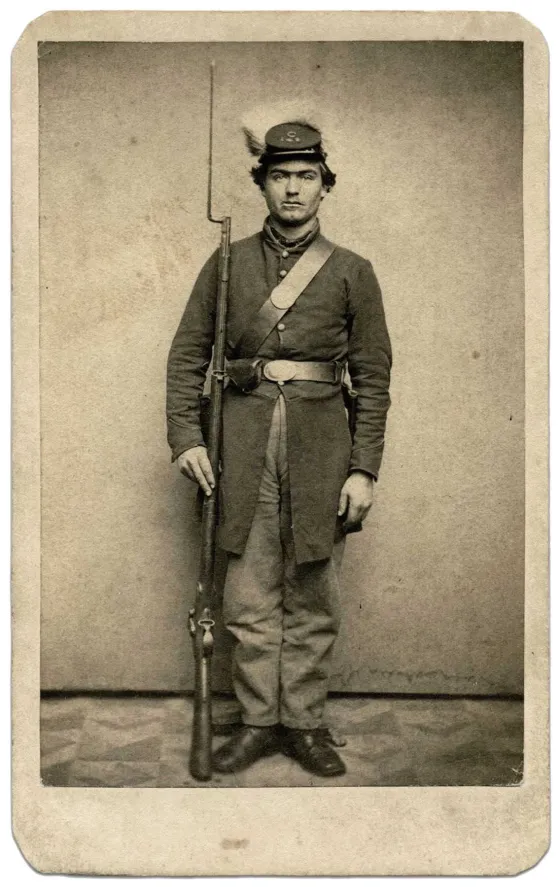
Classic Bucktail uniform
Rick Carlile CollectionKilbourne’s path through the war was harrowing. In the summer of 1862, he was wounded at Harrisonburg, Va., and captured at Cross Keys, spending time as a prisoner of war. While the wartime diary covering the Battle of Gettysburg does not survive, his 1864 account of the Overland Campaign is powerful and poignant — and places him directly in areas that have been touched by the Trust’s preservation work.
Of the intense fighting at the Wilderness on May 6, 1864, he wrote, in that curious shorthand: “Thick smoke again — could not see more than 10 yards. Shells burst overhead — trees shattered — men fell beside me,” and “Fire broke out in the woods — cries of the wounded dreadful.”
And of the aftermath, he noted the decision that meant the beginning of the end of the Civil War. “Rumor: we are to march south — not return. If true, this war is turning. Grant will not back away. We hope for rest, but the general says the campaign presses on.”
Kilbourne and his regiment were part of the horrific assault on the Bloody Angle at Spotsylvania on May 12. “Charged enemy works near the salient — storm of musketry and shell. Fighting hand-to-hand over breastworks — mud slick with blood.... We held the position by dusk. No man who saw it will forget this day.”
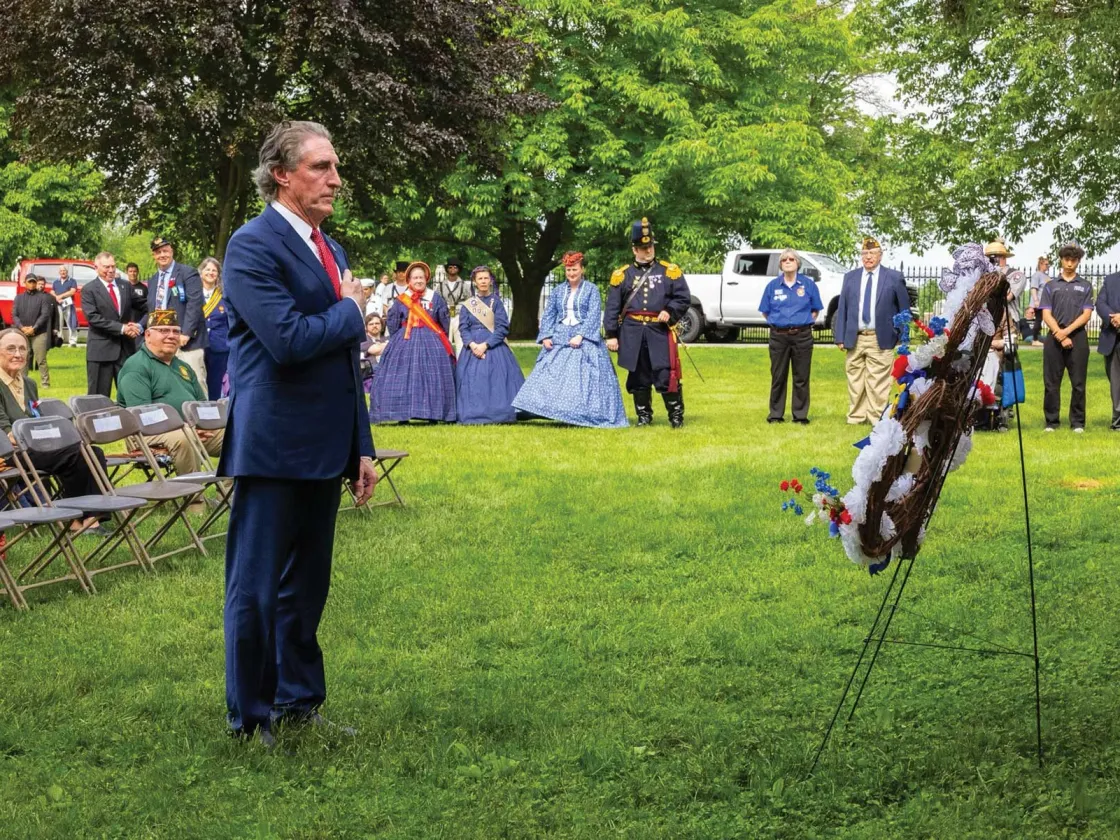
Secretary Burgum lays a wreath at the 42nd Pennsylvania Monument.
Kilbourne was among those haunted. “I keep thinking of May 12. I wake to bayonet screams,” he wrote on the 16th. “None of us sleep much now. The woods still stink of blood” the next day.
By the time Kilbourne was moving from North Anna to Cold Harbor, he painted a bleak picture: “Burned what we couldn’t carry.... We are shadows now. Thin and tired. But still we march.”
At Cold Harbor, like Spotsylvania, the Bucktails were part of a massive and bloody attack — some 7,000 Union casualties in just an hour. “Charged at 4:30. Met with slaughter.... Men screamed for help, pinned by fire. Could do nothing. Sunset came. Bodies lay thick. We gained nothing. No more words. Just silence.”
The aftermath of the attack was brutal (June 5: “We prayed for rain. Or mercy. Neither came.”), but the Army of the Potomac pressed on. When they reached the outer defenses of Petersburg, the unit was disbanded, its three years of service concluded.
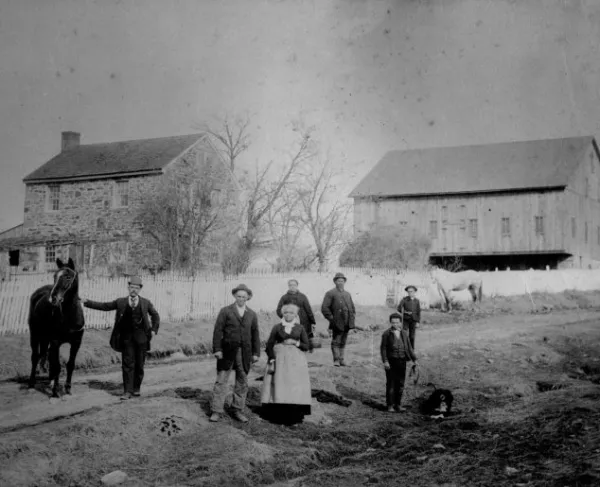
Ferdinand Kilbourne was mustered out of service and returned to Pennsylvania before moving to Kansas in the 1870s. He built a life as a furniture maker and, later, a farmer. His son, Burton, became a physician and served on the State Board of Health before moving to North Dakota. His youngest child and only daughter, Katherine, was an outstanding educator for whom a building is named on the campus of North Dakota State University. Her son, Douglas, served as the 33rd governor of North Dakota and is now the 55th Secretary of the Interior of the United States.


Related Battles
23,049
28,063
684
288
18,399
12,687
2,600
1,600
12,737
4,595