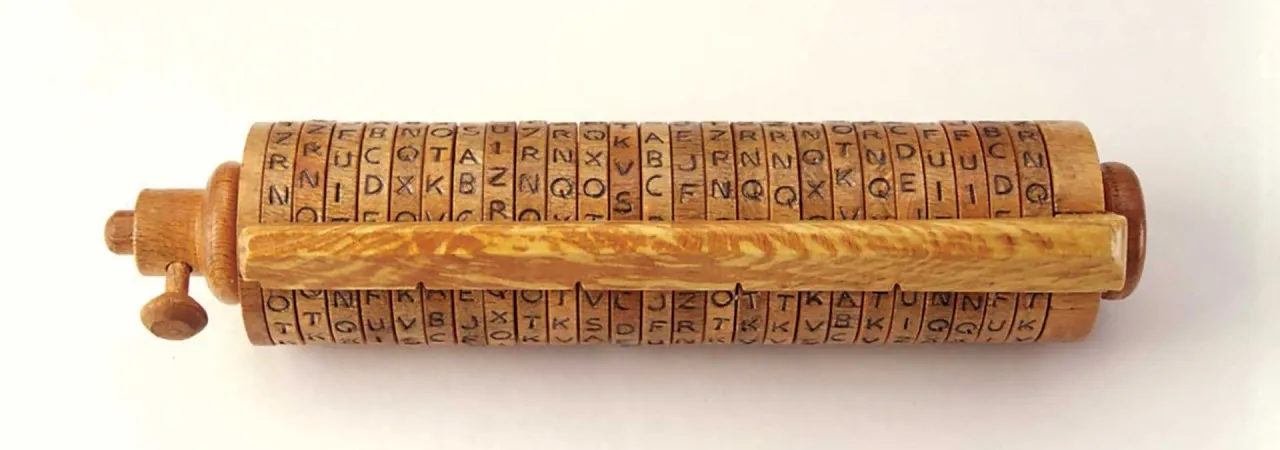
Invented by Thomas Jefferson, this wheel decipher was a way to transfer messages between allies using a special code. The ingenious cylindrical cipher was a secure method to encode and decode messages.
Intelligence gathering in the military is a practice almost as old as warfare itself. Techniques evolve alongside technologies, but the principles have remained fairly steady across the centuries.
Messages can be delivered in a variety of ways. A short note can be concealed within a variety of objects. For example, British agent John André, Benedict Arnold’s point of contact, famously concealed documents within his boots. According to legend, a Pennsylvania tavern keeper named Molly Rinker would eavesdrop on her British clientele and conceal notes within balls of yarn that she would later “accidentally” where she most enjoyed doing her knitting - which just happened to be above an American camp. Lydia Darragh, a Patriot informant in Philadelphia, slipped intelligence onto papers concealed beneath the cloth covers of the buttons of her young son’s coat. When the lad went to visit his older brother serving in the Continental Army, the messages were extracted and buttons reattached.
A simple letter can hide messages in plain sight using a variety of techniques. One particularly visually elegant method is the mask letter, which has a custom template delivered separately from the main communication. When placed over the correspondence, it obscures the nonessential words, letting the hidden meaning be readily seen by anyone in possession of both elements. Typically, the two pieces are delivered separately, an especially important countermeasure since both sides could successfully place agents in position to courier their opponent’s mail. During the American Revolution, letters were carefully opened, copied and, sometimes with the assistance of a counterfeit stamp, resealed.
Chemistry provides another secret way of including hidden meaning in plain sight. Informants can write in the margins of a letter or even between the lines of visible text using a clear-drying substance revealed by exposure to either heat (like a candle flame) or an acid. Although Patriots had a proprietary two-chemical combination created by James Jay, brother of the more famous founder John Jay, a similar effect can be created at home using lemon or grape juice and baking soda.
Other correspondence can be enhanced through cyphers to obscure their meaning. Individual letters can be replaced within words, and the recipient uses a key tied to a predetermined, well-known book — sometimes a dictionary — to find the proper reference point.
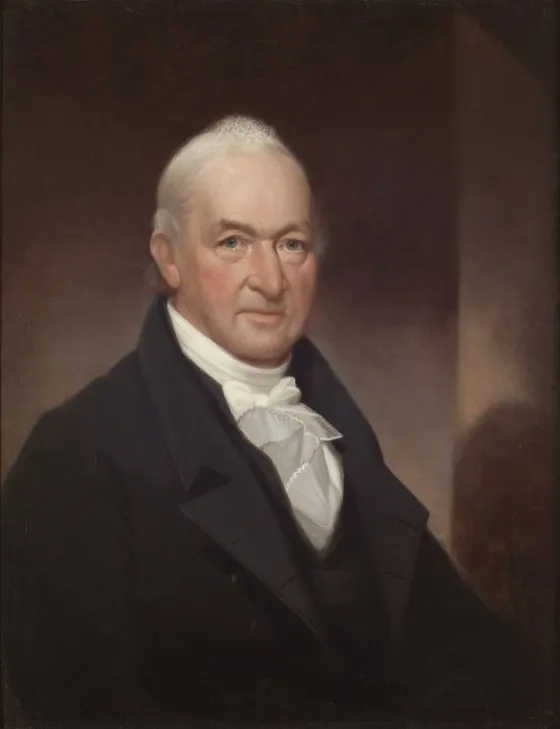
Portrait of Benjamin Tallmadge by Ezra Ames, circa 1800.
Public DomainSome groups of spies create their own elaborate internal codes. In the Culper Ring code book, hundreds of specific words were assigned numbers — from “47” for ammunition to “659” for victory. Three codebooks and the ring itself were created by Major Benjamin Tallmadge, who Washington (represented in the code as 711) appointed as director of military intelligence in late 1778. Tallmadge enlisted several childhood friends and neighbors still living behind British lines on Long Island to gather intelligence, signal a message drop via how laundry was arranged to dry on the line and courier the report to Patriot lines.