“At the last day, when the martyrs who have with their blood sealed their devotion to liberty shall stand together firm witnesses that truth is stronger than death, foremost among the shinning throng, coequal with the Rolands and Joan d’Arcs of history will appear the Confederate heroine, Rose A. Greenhow,” proclaimed the Wilmington (N.C.) Sentinel in early October 1864, shortly after the death of the renowned Washington socialite turned Confederate spy.
Greenhow drowned in the turbulent waters of the Atlantic Ocean on October 1, 1864, in the dark of night. The Confederate blockade runner Condor was ferrying Greenhow and other dignitaries, along with a load of uniforms and supplies, back from Europe. Its aim was to run the Union blockade to safety in Wilmington, where the cargo could be ferried to Confederate troops and Greenhow could resume her life in America.
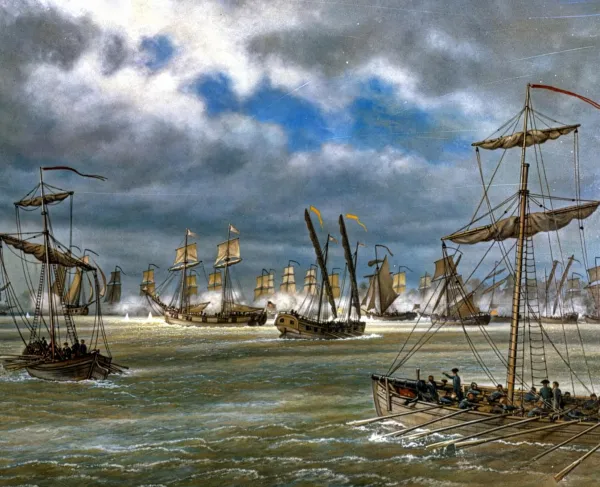
The ship came within 800 yards of Fort Fisher, the Gibraltar of the South, almost enabling the Cape Fear River to carry the ship and its exhausted crew into the Port City. But the Condor’s captain, William Nathan Wrighte Hewett, came to suspect that a U.S. warship had his vessel in its sights. He swerved, attempting to save the ship and its crew. Instead of veering to safety, the Condor slammed into shoals, the very feature that inspired early mariners to dub the region the “Cape of Fear.” Panicked, and willing to do anything to avoid another stint in a U.S. military prison, Greenhow and two Confederate agents secured a rowboat and furiously paddled toward shore. A swell on the unpredictable seas capsized Greenhow’s last hope at freedom.
The Atlantic swallowed Greenhow, as well as dispatches from Europe that she carried for the Confederate government and about $2,000 in gold secured within her heavy, flowing dress. The sum of gold was royalties from Greenhow’s recent memoir, My Imprisonment and the First Year of Abolition Rule at Washington, which was published in London in 1863. In it, Greenhow detailed her work as a Confederate spy, her arrest at the behest of Union detective Allan Pinkerton, and her imprisonment at the hands of the U.S. government, first on house arrest in her own home and then in Washington, D.C.’s Old Capitol Prison.
U.S. authorities transformed the dilapidated Old Capitol building, on the corner of First and A Streets, into a prison designed to hold men and women suspected of disloyalty, defined loosely as providing aid or comfort to the enemy through actions, speech or writing. Given President Abraham Lincoln’s suspension of habeas corpus, U.S. officials were not obligated to afford prisoners a trial. These dynamics inspired critics, like the Democratic Cincinnati Enquirer, to denounce the Lincoln administration’s use of the Old Capitol on Christmas Day 1863. Critics decried the fact that prisoners “languished for long months in loathsome cells, for speaking out the prompting of their conscience.” The Enquirer’s description accurately reflected how Greenhow felt about her time in U.S. detention, which she shared with her youngest daughter, Little Rose.
Several factors, including Greenhow acting on her Confederate sympathies, elicited attention from U.S. authorities and eventually landed her and Little Rose in prison. Yet Greenhow was, perhaps, an unlikely individual to become a celebrated Confederate spy. Maria Rosetta O’Neale was born of low status in Montgomery County, Maryland, in 1815. As a teenager, she moved to the nation’s capital to live with her aunt, who operated a boarding house that entertained high-profile individuals and prominent politicians. Rose, despite her humble stature, caught the attention of Robert Greenhow, a doctor and federal librarian who boasted degrees in medicine and law. They married on May 26, 1835. The couple moved to the West Coast, but Robert died in California, and Rose returned to Washington. There she bought a house four blocks north of the Executive Mansion, on 16th Street between I and K Streets. She began rubbing elbows with such luminaries as Stephen Douglas, William Seward, Chief Justice Roger Taney, Jefferson Davis, Pierre Beauregard and former presidents Martin Van Buren, John Tyler, James Polk and James Buchanan.
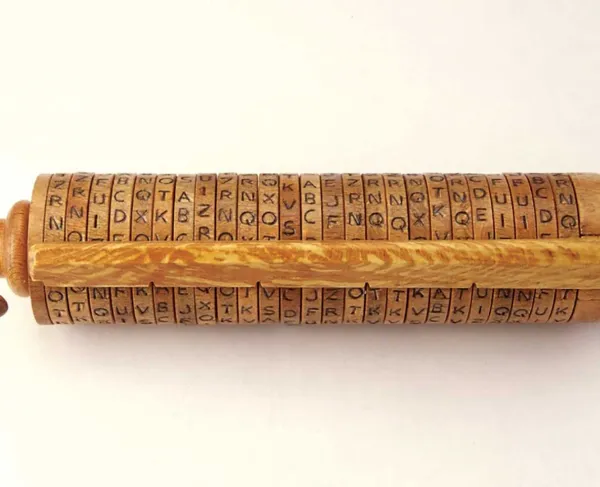
When the Civil War broke out, it was easy for Rose, an anti-abolitionist from a slave-owning family, to choose sides. Her Catholic faith may also have colored Unionists’ views of her, since many of the faithful became associated with the anti-war Copperhead movement later in the war. In 1861, Greenhow acted on her Confederate sympathies by providing information, which she likely gleaned from the chairman of the Senate Military Affairs Committee, regarding the movement of Union Gen. Irvin McDowell’s troops toward Manassas Junction, Virginia. Soon, Greenhow was part of a spy network that spanned several states and included about 50 people, with women vastly outnumbering men. Members of the intricate web used ciphers to code and decode messages, and some of Greenhow’s actions caught the attention of the Union Intelligence Service.
At the behest of U.S. officials, detective Allan Pinkerton put Greenhow under surveillance, and Union soldiers arrested her on August 21, 1861. Confined to her own home, dubbed “Fort Greenhow,” Rose continued her espionage, using smuggled colored handkerchiefs to relay messages. Seeing that house arrest could not contain Greenhow, U.S. authorities ordered her moved to the Old Capitol Prison after she, unsuccessfully, petitioned Secretary of State William Seward for release. Upon her arrival at the Old Capitol on January 18, 1862, Greenhow, according to the New York Times, tauntingly thanked the guards for their courtesy and wished that they might in the future “have a nobler employment than that of guarding defenseless women and children,” and mocked the “whole guard under arms” sent to receive her. Greenhow did not limit her lampooning to prison guards. She also lambasted Old Capitol Prison superintendent Willim Wood in her memoir, noting that he received her “with great empressment” and “appeared fully sensible to the honour of being the custodian of ‘so noted a rebel.’”
While in prison, Greenhow reflected on the building that detained her, Little Rose and other dissidents, both suspected and actual. She recorded these thoughts in her memoir, showcasing her persistent Confederate sympathy. The Old Capitol building, according to Greenhow, was significant since the first Congress of the United States had held sessions there. But to her, it was “far more hallowed” for being the “spot where the illustrious statesman John C. Calhoun breathed his last” in the very room in which she waited to be escorted to her cell.
Greenhow believed wholeheartedly in Calhoun’s profession that states’ rights were the only means of preserving the government under the Constitution and in his warning against the centralizing power of the federal government, which she experienced most acutely in prison.
Greenhow’s reputation for Confederate sympathy preceded her, and officials at the Old Capitol placed her under a guard of six men ordered to keep her under close confinement and prohibit her from communicating with anyone. She heaped criticism on this measure, complaining that detective police scrutinized all her letters, subjecting them to a chemical process to “extract the treason” from them before they left the prison. Her close confinement in Old Capitol Prison lasted from January to the end of May 1862. In that time, she managed to smuggle a Confederate flag into the prison and wave it from a prison window. She also drew the ire of at least one guard, who threatened to shoot her for standing close to the window to find relief from the dust that covered her unventilated detention room.
The War Department finally investigated Greenhow in March 1862 and exiled her to the South, with a warning not to leave that region lest she risk arrest. Greenhow departed Washington at the end of May and received a hero’s welcome in Virginia, where she met with Jefferson Davis. Trusting Greenhow, Davis sent her on a diplomatic mission to Britain and France on behalf of the Confederate government to try to curry support and funds for the Confederacy. On August 5, 1863, Greenhow set sail out of Wilmington, North Carolina. She visited British and French dignitaries and secured a publisher for her memoir prior to fatefully boarding the Condor in the fall of 1864 and ultimately drowning in the Atlantic.
After Greenhow’s body washed ashore at Fort Fisher, it was sent into Wilmington for internment. According to the Wilmington Sentinel, hundreds of ladies gathered to greet her remains at the wharf. St. Thomas Catholic Church became the site of Greenhow’s funeral, which the Soldiers’ Aid Society planned. The service included an oration delivered by the Rev. Dr. Corcoran, whose words constituted a “touching tribute to the heroism and patriotic devotion of the deceased.” Corcoran also warned of the “uncertainty of all human projects and ambition, even though of the most laudable character.” After the service, Greenhow’s coffin, wrapped in a Confederate flag, the likes of which she waved from the Old Capitol Prison’s window, was taken to Oakdale Cemetery. An immense funeral procession followed in pouring rain — that is, according to the Sentinel, until Greenhow’s casket was lowered into the ground. At that point, the sun burst through the clouds, bringing with it a rainbow.
Fantasized or exaggerated as the Sentinel’s account may have been, Greenhow’s exploits in espionage were hailed by the strangers who witnessed her burial in Wilmington and by individuals throughout the Confederacy. In her memoir, Greenhow expressed uncertainty about whether her imprisonment would garner public interest and admitted that “it is natural for those who have suffered captivity to exaggerate the importance and interest of their own experiences.” She did not, however, want the memoir to serve as a narrative of the indignities that she suffered as an individual. Rather, she intended it to highlight the “intolerant spirit” with which the U.S. government crusaded against the “liberties of sovereign States.” Greenhow believed that her punishment for espionage during the nation’s internecine conflict communicated that very “injustice” to Confederate sympathizers, and she’s since been remembered as a traitor in the North and martyr in the South.