The American Revolution impacted the lives of women, whether they sided with the Americans, the British or tried to stay neutral. As North Carolina made its transformation from British colony to state in the new United States, politics and society were strained and changed by the war. Women navigated the changing scene and the hardships it added to their daily lives. War skirmishes and battles shattered peace around towns and remote homes. Sometimes, women fled the scenes of war or journeyed with an army, hoping for safety. Sometimes, they made stands in their own homes, holding to their own hopes or political beliefs as soldiers arrived at their doorsteps. North Carolina has some remarkable accounts and traditional stories about women during the Revolutionary War.
Some women organized small rebellions even before the Revolutionary War began. At least two towns in North Carolina witnessed “Tea Parties” (protests against the Tea Act) led by women. Wilmington women burned their tea in a “solemn procession” sometime in March or April 1774. Better recorded in history, the Edenton Tea Party took place in a coastal town in the northern part of the state. There, Penelope Barker organized 51 women to sign a statement, declaring their resistance to taxes and tea. She then sent the document to London for newspaper publication. “I send it to you to shew your fair countrywomen, how zealously and faithfully, American ladies follow the laudable example of their husbands, and what opposition your matchless Ministers may expect to receive from a people thus firmly united against them.”
Not all women supported the Whig (Patriot) cause, though. For example, according to traditional stories Flora MacDonald appears to have helped rally Loyal Scottish Highlanders to respond to the royal governors call for troops in January 1776. Already legendary for her role helping Charles Edward Stuart escape after the Battle of Culloden in 1746 during the Jacobite Uprising in Scotland, MacDonald had arrived in North Carolina in 1773. Her husband and sons took part in the Battle of Moores Creek Bridge and were captured. The family’s property was seized after the battle, leaving MacDonald to rely on her community friends for shelter and assistance. She eventually left North Carolina, reunited with her husband, and went to Nova Scotia before returning to Scotland.
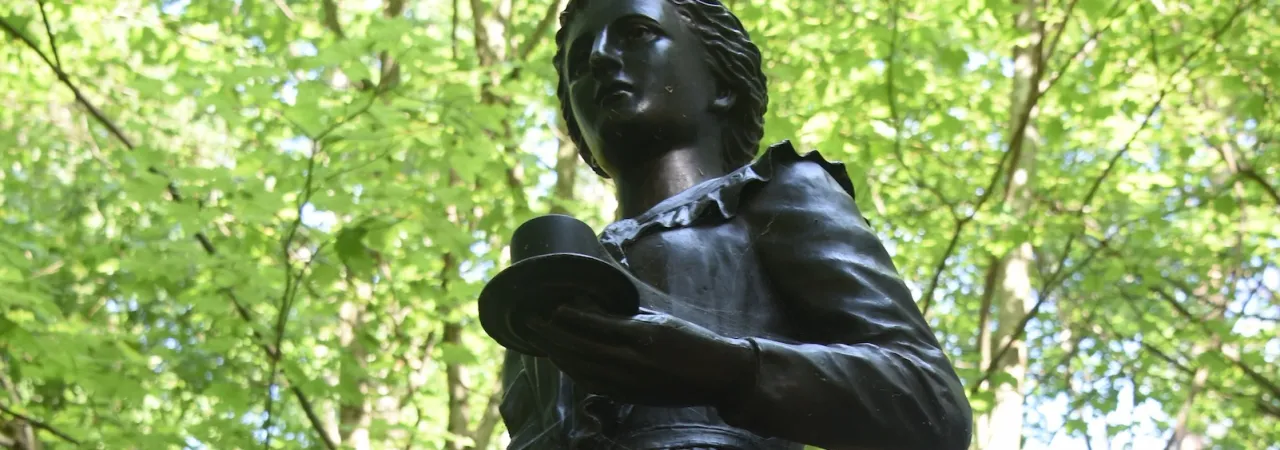
Mary Slocumb’s name and story are also associated with the Battle of Moores Creek Bridge, fought on February 27, 1776. According to legend, she went to the battlefield and tending to wounded soldiers. The story does not match known facts in the historic record, and it is more likely that Slocumb took care of wounded at a different battle or skirmish later in the war. However, her legend has been celebrated with an early 20th century monument and reflects the reality of women searching for loved ones on battlefields and caring for injured or sick soldiers.
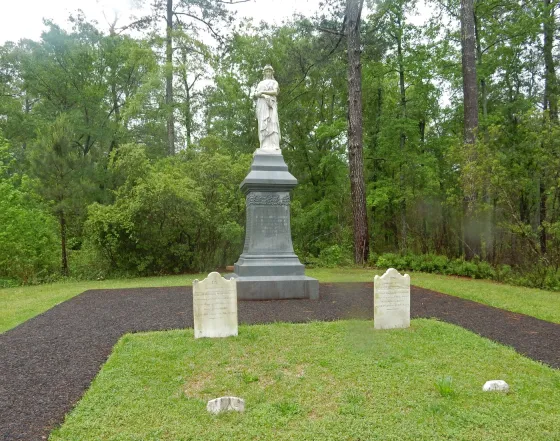
Women's Monument at Moores Creek Bridge Battlefield
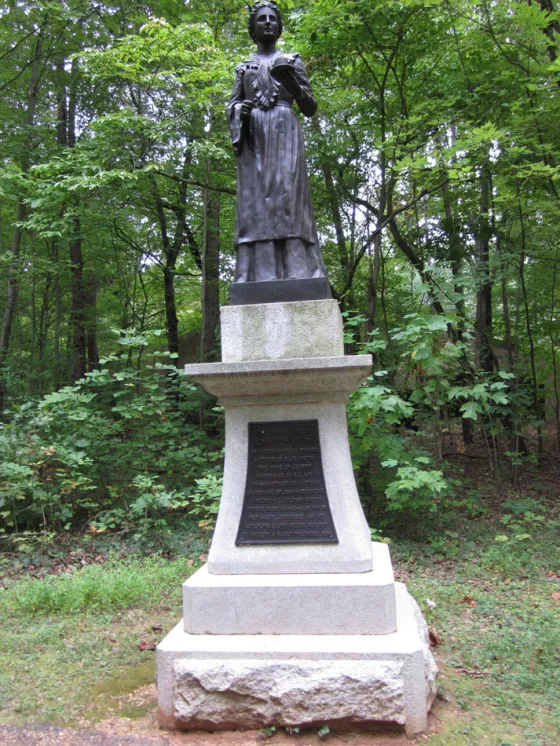
Clio: Your Guide to HistoryWith similarities to Slocumb’s story, Kerenhappuch Norman Turner entered North Carolina Revolutionary War history. She reportedly traveled on horseback from Maryland to North Carolina after receiving word that her son had been wounded at the Battle of Guilford Court House in March 1781. She is also memorialized with a statue at Guildford Court House Battlefield.
The war years offered opportunity for enslaved women to seek freedom. Some enslaved families ran to the British Army, hoping they would keep promises for freedom. Some created communities of self-emancipated women, men, and children in the swamps—like the Great Dismal Swamp in North Carolina and Virginia. Stories and records are more limited about Black women and their experiences, but sourcing that does exist points to the fact that many tried to escape bondage and create their own freedom in the 1770s and 1780s.
Between 1776 and 1780, North Carolina was spared large scale military operations or uprisings. However, that did not mean it was a peaceful, homefront scene. Whig and Loyalist neighbors squabbled and sometimes words turned to violence. Partisan groups on both sides roamed the countryside, sometimes involved in the national conflict, sometimes carrying out private feuds. Women were often caught in the middle of this local violence. Some women were killed or injured, others had their farms or homes plundered. For example, Tories (Loyalists) robbed Elizabeth Forbis of her “horses, except perhaps a colt that was unfit for work, her provisions, grain, cattle, and almost every thing on the plantation.” Later, other Tories came and tried to seize a horse she had gotten as a replacement. Forbis “moved up right in front of him, with her hoe raised over her head; and, with a firm countenance and an earnest manner, told him if he touched the horse she would split his head with the hoe.” The Tories left, and Forbis kept her horse and lived to tell her tale.
The arrival of larger armies during the Southern Campaigns (1780-1781) brought more soldiers and plundering to North Carolina farms. The Ketner farm was an example, and Elizabeth Ketner later explained: “the British Army passed by her house coming from the Shallow ford on the Yadkin River to Houser Town & Rob’d her of all her corn, & small grain meat and every thing almost that her & family had to live on, even her Ducks & Chickens some of them asked her if she had a husband she said yes: Where is he they asked, She told them he was gone with a waggon to haul a load of Ammunition to the American Army to shoot you red coats that have rob’d me & my living.”
Some women like Sallie Salter and Besty Dowdy carried information to American soldiers. Betsy Dowdy’s story appeared in print in the 19th Century, drawing from oral traditions. She had heard that Lord Dunmore, the royal governor in Virginia, was advancing Loyalist troops at Great Bridge, Virginia, in December 1775. Living somewhere near Currituck Banks, Dowdy knew that could result in British Loyalists heading into North Carolina next. She saddled a horse and rode more than 50 miles, bringing the news to General William Skinner and a unit of North Carolina militia. Before the Battle of Elizabethtown on August 27, 1781, Sallie Salter walked into the Loyalist camp to sell eggs. She then reported her observations of the camp to Colonels Thomas Robeson Jr. and Thomas Brown would commanded the Bladen County Militia. Salter’s information was credited with leading to the Patriot attack which resulted in short fight and a Patriot victory.
Twice widowed by 1775, Elizabeth Maxwell Steel owned a middling size estate and increased her wealth through land speculation. She devotedly supported the Patriot cause. According to local tradition, she provided lodging to General Nathanael Greene and his officers at some point during the Southern Campaigns. Additionally, Widow Steel legendarily gave Greene three bags of coin money to help fund the American fight for independence.
Whether they gave their resources, carried information, endured or fought off partisans, cared for wounded soldiers or saw their loved ones volunteer for military service, women in North Carolina had active roles in the American Revolution. Their experiences were not always by choice, and more often through the circumstances of war surging through their home towns and counties. Many of the individual stories exist in oral history passed generation to generation until written down or have been preserved in local legends. These stories consistently point to the hardships women faced during the war and their courage in danger.
Further Reading: