Stagville Plantation and Horton Grove
North Carolina
5828 Old Oxford Highway
Durham, NC 27712
United States
This heritage site is a part of the American Battlefield Trust's Road to Freedom: North Tour Guide app, which showcases sites integral to the Black experience during the Civil War era. Download the FREE app now.
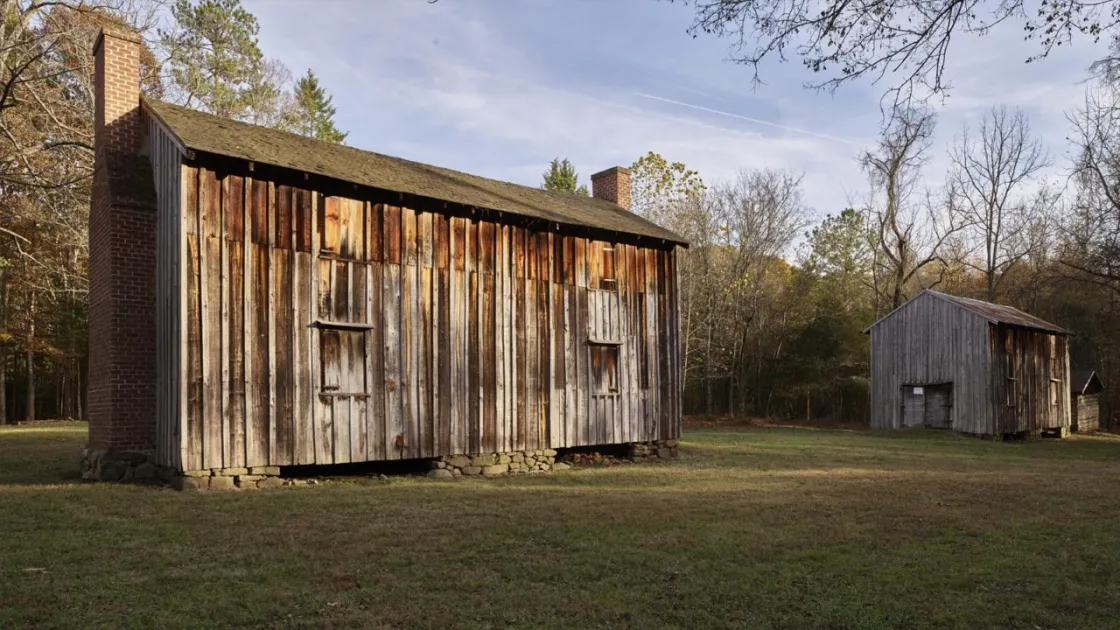
Original 1851 slave dwellings at Horton Grove, Stagville State Historic Site
Carol M. Highsmith/ Library of CongressFrom the late 18th to the mid-20th centuries, Durham’s Stagville plantation was owned by the Bennehan and Cameron families, who controlled over 30,000 acres of land by the 1860s. The family also enslaved over 900 people on their property, making them among the largest slaveholders in the state of North Carolina by the time of the Civil War.
After U.S. troops liberated Stagville and surrounding plantations in 1865, many enslaved African Americans took as full advantage of their freedom as they could. They reconnected with family when possible, attended schools for freed people and eventually came to purchase their own land. Most experienced the hardships of the postwar era, including racial violence and the oppressive sharecropping system, often encountered on the plantations where they were once enslaved.
Among those who remained on the plantation following emancipation was Abner Jordan, who was born into slavery in the early 1830s. During an interview with the Works Progress Administration in the late 1930s, Jordan recalled his enslaver, Paul Cameron, owned a “heap” of people at Stagville until their emancipation following the end of the Civil War. Even with his freedom, Jordan admitted he had “never been out of North Carolina eighteen months.”
Reverend Morgan L. Latta, who was born on the plantation in 1853, later recalled going “out in the field as a slave before General Lee surrendered,” but had hoped, “praying for twenty-five or thirty years that we should be free, and God has answered our prayers at His own appointed time; He has bursted the bonds of slavery and set us all free.” After emancipation, Latta taught his fellow freedmen on the plantation and later attended Shaw University. During the last decade of the 19th century, Latta founded a university in his name with the intent of providing Raleigh’s Black community with educational opportunities.
Today, Stagville Plantation and Horton Grove are managed by North Carolina Historic Sites, who, along with descendants, continue to explore and interpret the stories of the enslaved people whose tangible legacy remains on the grounds to this day.
Know Before You Go
Find more information about planning your visit, by checking out the official Stagville State Historic Site webpage, managed by North Carolina Historic Sites.
Explore the Road the Freedom
Road to Freedom: NC Tour Guide