Camden | August 16, 1780
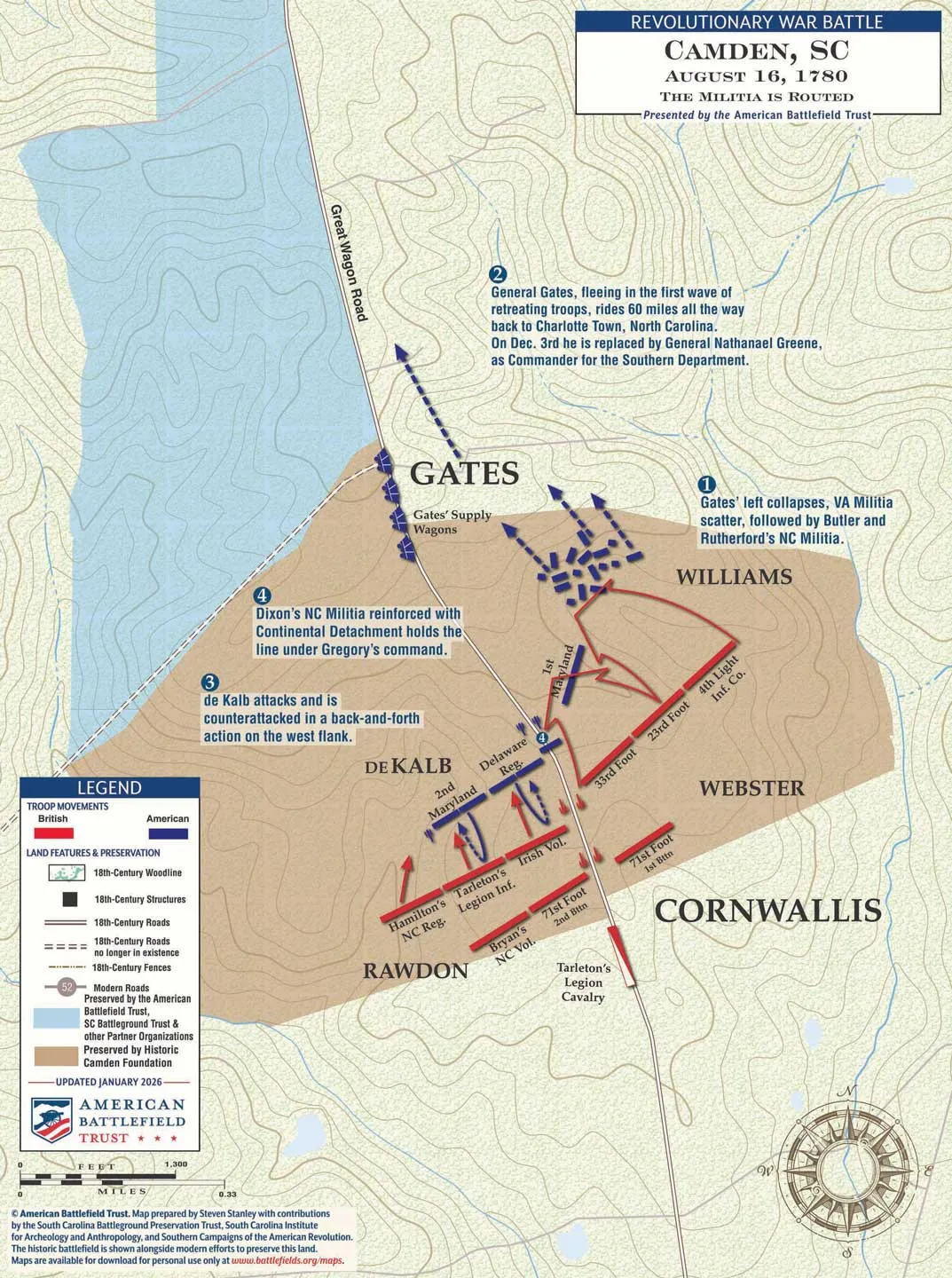
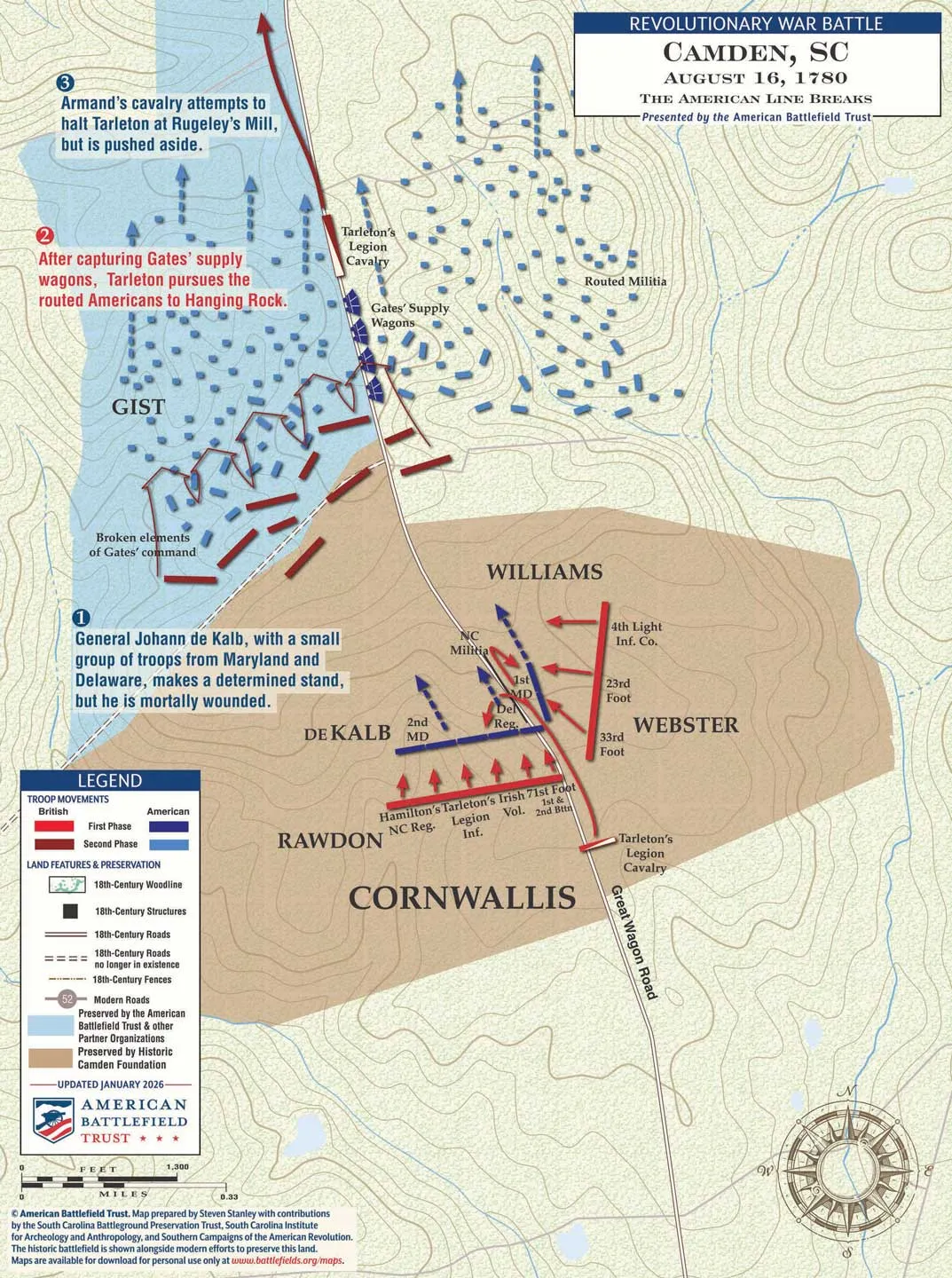
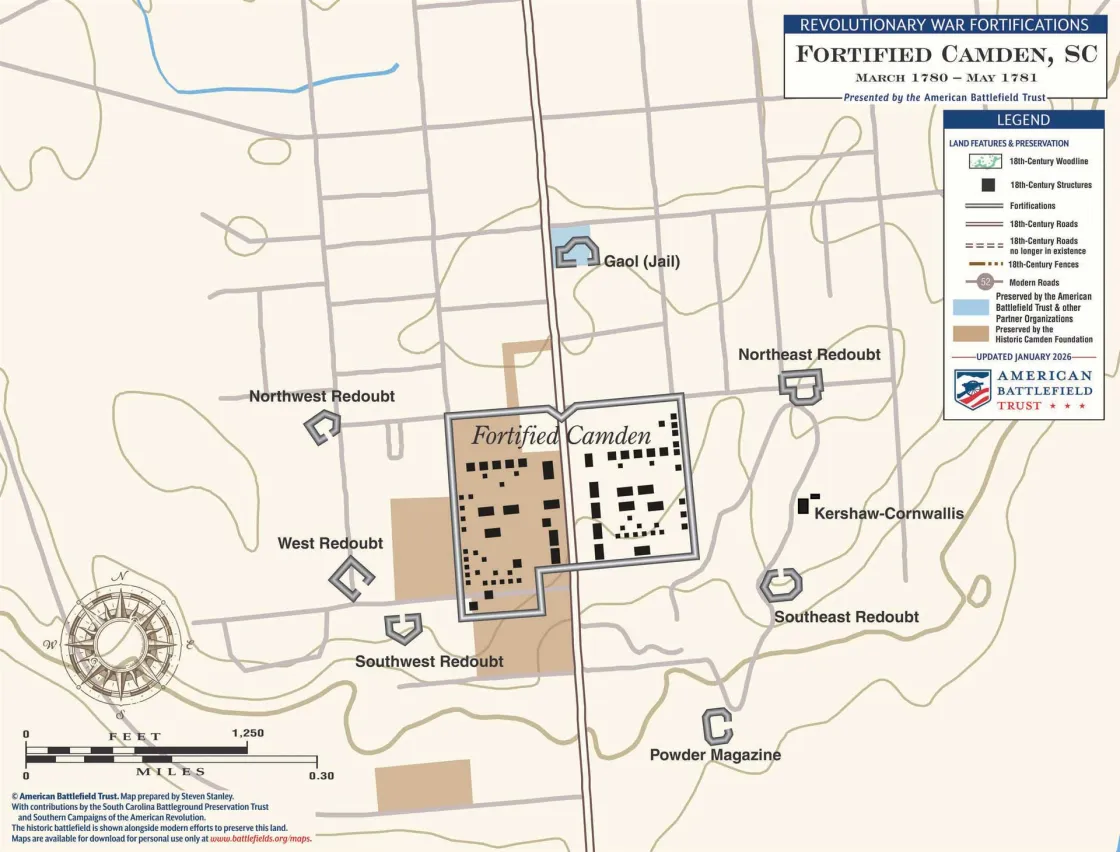
In the wake of Charleston, the Continental Congress sought a new leader for the Southern Department of the Continental Army. George Washington wanted to appoint one of his protégés, Nathanael Greene, to this vital command. Instead, Congress tapped Horatio Gates—the victor of the Battles of Saratoga. In late July Gates arrived in the Southern Theater.
Meanwhile, the British Army under Charles Cornwallis pressed deeper into the back country, establishing outposts and supply depots along the way. This outpost war depleted the number of effectives that Cornwallis could bring to battle because his army had to man each of the newly established garrisons. Still, Cornwallis was confident that even an undersized British Army could easily defeat a large Rebel force. He was soon proven correct.
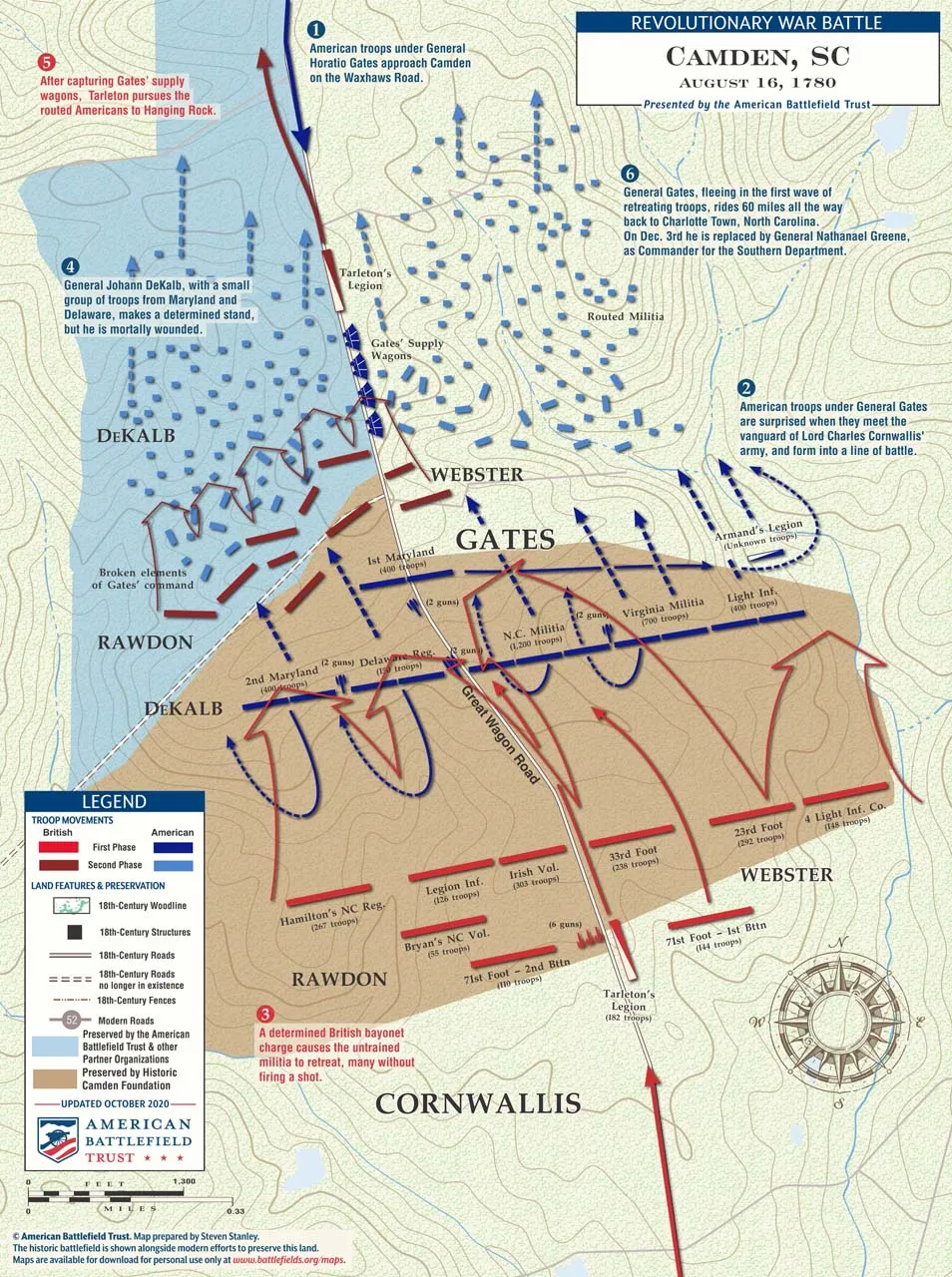
Gates amassed an army of more than 5,000 men and, against the wishes of the majority of his officers, moved south from North Carolina into South Carolina, with Camden as the army’s destination. The Patriot force consisted largely of North Carolina and Virginia militia. A core of Continentals from Delaware and Maryland formed the backbone of Gates’s army. The march south during the hot summer and through inhospitable territory depleted the ranks of the army with each passing day. By mid-August, Gates could muster perhaps 3,700 effectives.
Alerted to the Rebel movement by the garrison commander, Lord Rawdon, Cornwallis personally led a relief column to Camden. While Gates claimed that he did not wish to attack the garrison, he dangled his army in the open as unsuspecting bait for the aggressive Cornwallis.
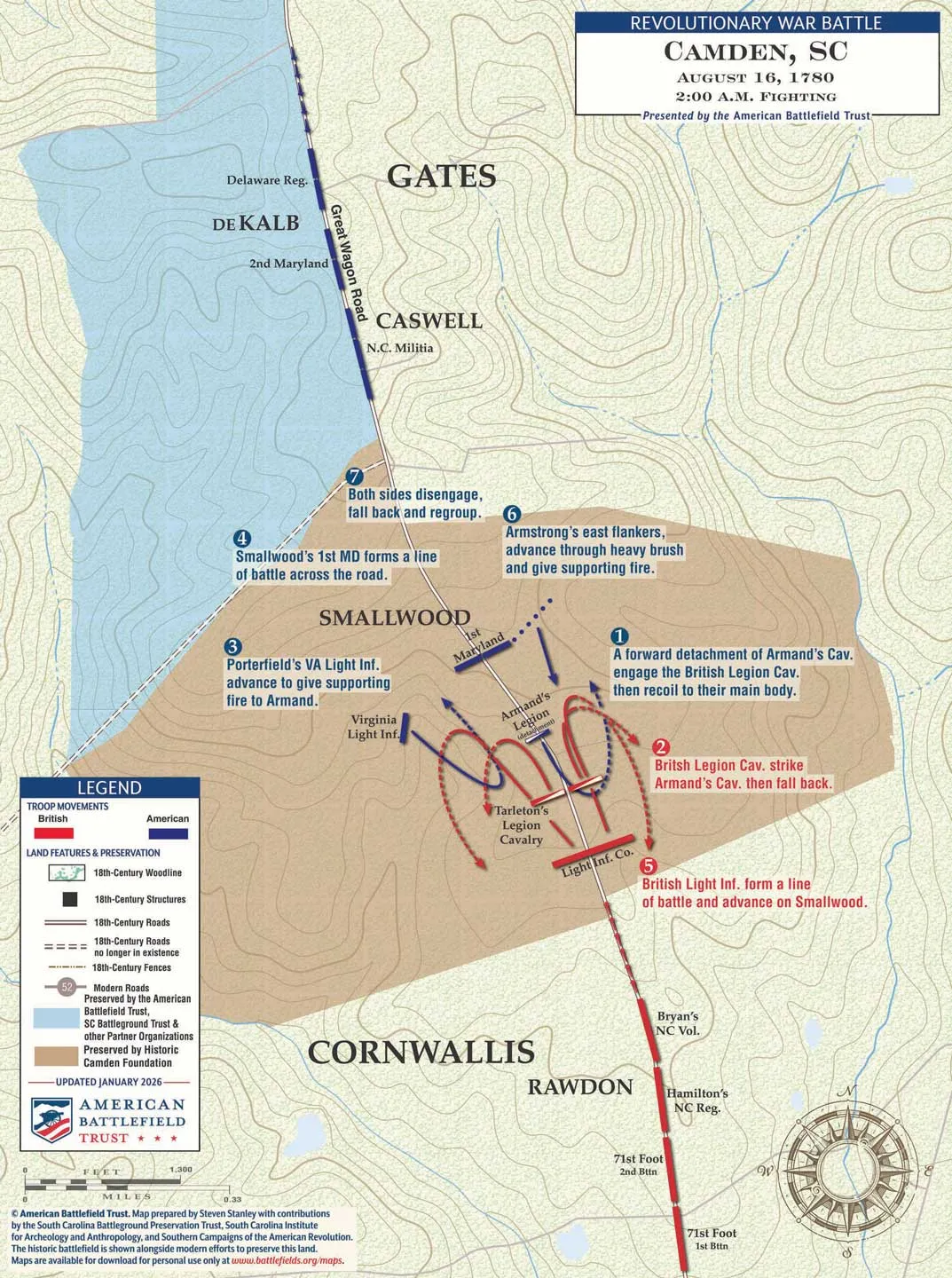
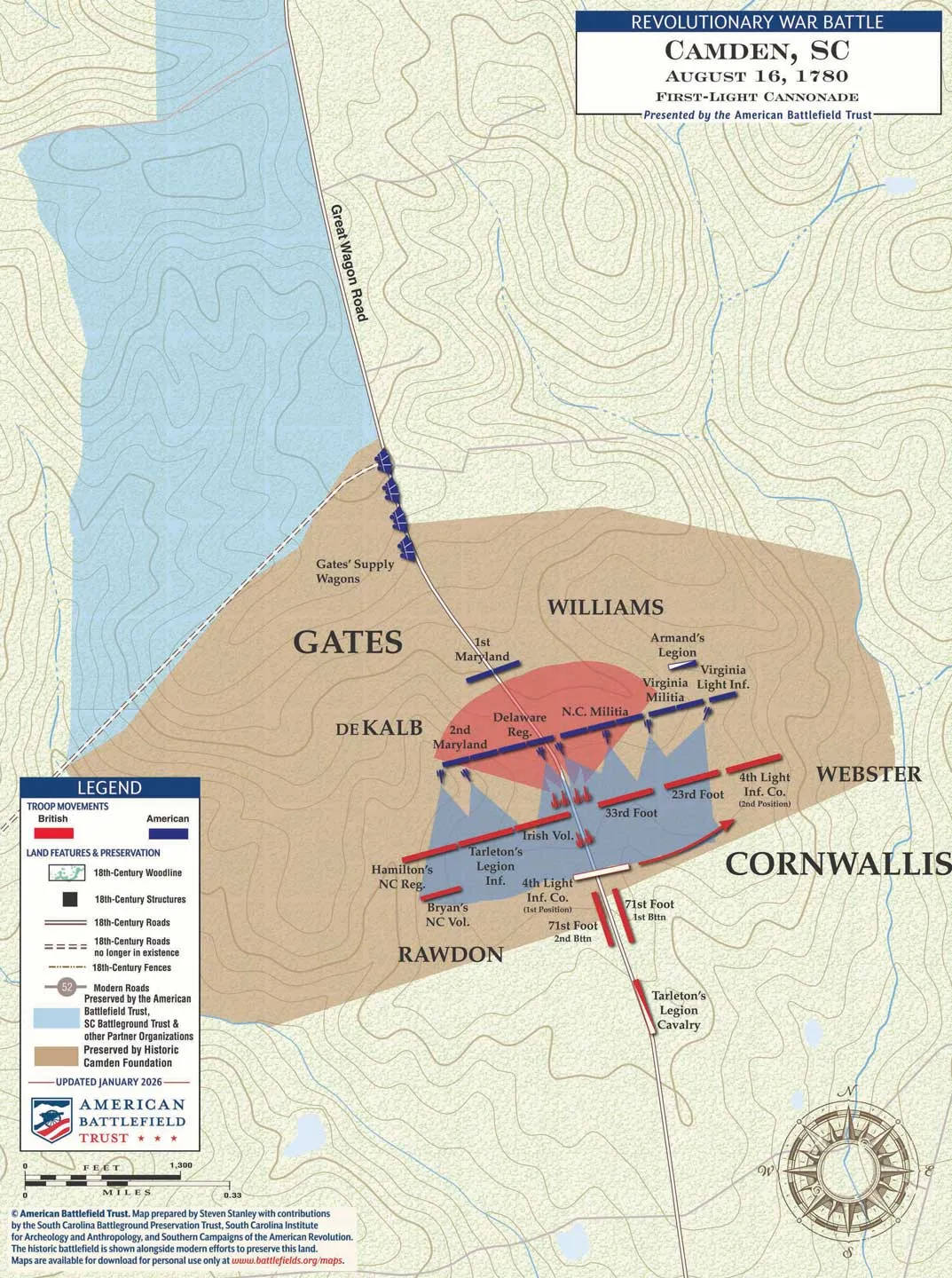
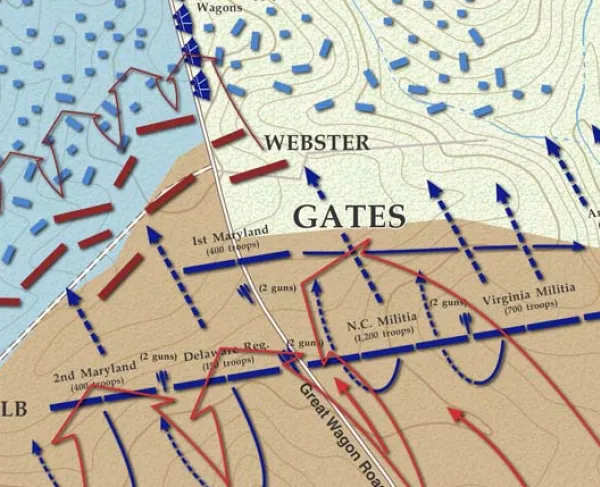
After a taxing march to Camden, the two sides made contact with one another in the early morning hours of August 16, 1780. Gates and Cornwallis deployed their troops for battle in traditional European linear formations. This formation called for the best troops of each army to be placed on the right flanks of their respective lines—a formation that doomed the Americans from the start.
Gates deployed his experienced Maryland and Delaware regiments on his right, and militia from North Carolina in the center. On the American left were green militiamen from Virginia. British regulars under Gen. James Webster met Gates’s Virginians who, upon seeing the first gleam of British bayonets, ran off the field in a panic. North Carolina militiamen holding the center line similarly fled despite the best efforts of American officers to hold them in line.
With the American left and center running, the British concentrated on the American right flank. These Americans, unlike their counterparts to the left, fought valiantly, but could not stand in the face of overwhelming firepower. In the midst of the action, Gen. Johann DeKalb fell mortally wounded, and Gates’s reputation was ruined as rumors of him riding hell for leather back to North Carolina plagued him (and do to this day). For the third time in 20 months, an American Army in the South was no more.

Related Battles
1,050
324