Siege of Fort William Henry
Lake George, NY | Aug 3 - 9, 1757
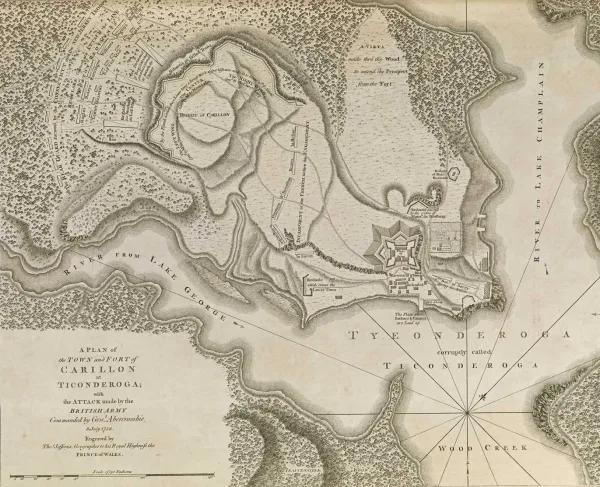
The British called it Lake George after their reigning monarch; the French knew it as Lac Saint-Sacrement. Lake George served as the elusive wilderness border between New France and the British colonies. In late 1755, the 45-square-mile lake on the natural path between the Hudson River and St. Lawrence River gained greater significance as both countries bolstered their frontline defenses. On the lake’s northwestern coastline, the French constructed Fort Carillon; on the southwestern coastline, the British built Fort William Henry.
As the French and Indian War heated up, both countries planned to capture their rival’s outpost. The French acted first, and in March 1757, a 1,500-man force contemplated a siege—but lacking heavy artillery, withdrew to fight another day. However, the Frenchmen destroyed most of the fort’s bateaux, which compromised future British actions.
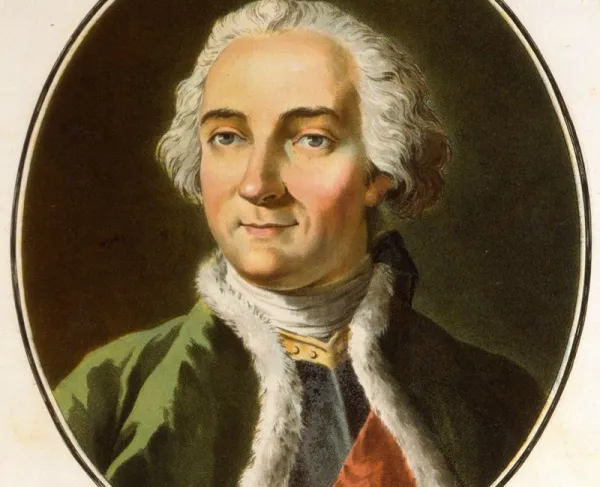
In the Spring of 1757, the French added almost two thousand Native Americans to a force of six thousand French regulars, troupes de la marine and Canadian militia. Understandably pleased, French commander General Louis-Joseph de Montcalm noted, “In the midst of the woods of America one can no more do without [Indians] than without cavalry in open country.” Aware of French activity, General Daniel Webb, commander of British forces in New York, reinforced William Henry with 200 regulars and 800 colonial militia but, fearful of stripping his Albany defenses, he refused to send more troops.
On August 3, William Henry’s Redcoats awoke to a daunting sight—a French flotilla of nearly 250 bateaux, accompanied by another 150 Indian canoes. At least 60 of the boats had been joined together catamaran-style by platforms and planks and were riding low in the water—a clear indication they carried cannon.
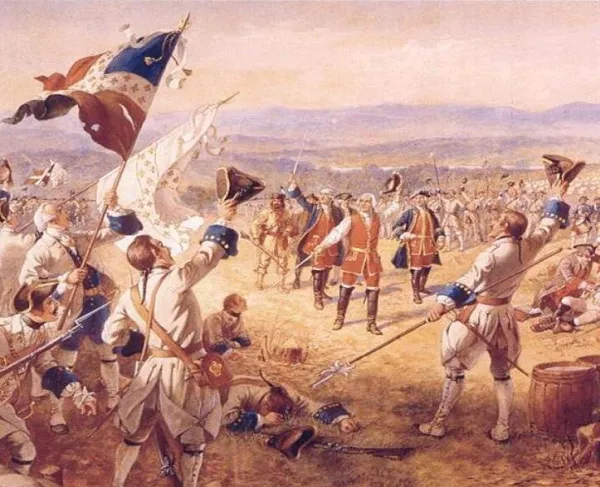
As the French blocked British escape routes, their gunners prepared for a siege. Montcalm demanded the fort’s surrender, reminding Colonel George Munro, once the fighting started “perhaps there would not be time, more would it be in [his] power to restrain the cruelties of a mob of Indians of so many different nations.” Monro promised to resist “to the last extremity” and sent runners to Webb requesting reinforcements. In the meantime, French guns opened fire and moved closer each day. Within a few days, French shells—fired at 250 yards—had breached the fort’s walls and disabled many British guns. Montcalm also shared with Monro a captured communique from Webb suggesting he surrender the fort. With little choice, Monro capitulated. The French allowed their enemy the full honors, even allowing them to take their muskets—but no ammunition.
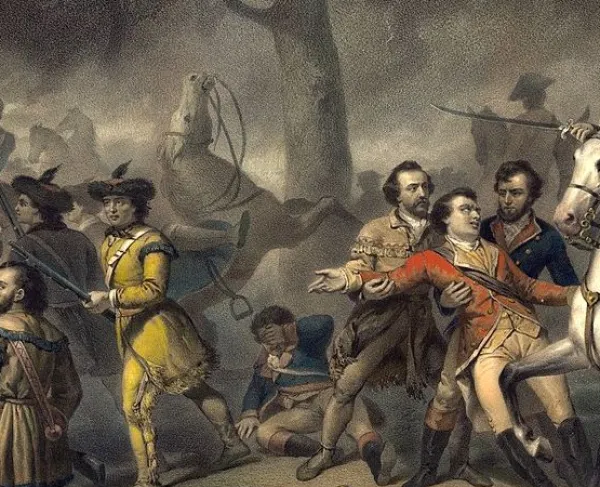
As Monro’s men withdrew, Montcalm’s Indian allies plundered the fort, killing and scalping the sick and wounded. Eager for war prizes denied them by the surrender, the Indians also attacked the defenseless British column as it left the fort. Estimates of British losses widely varied. The role French officers played in what the British understandably labeled a “massacre” was equally controversial. Montcalm secured the release of five hundred British captives, but the Indians kept another two hundred.
The departure of his Indian allies, as well as the Canadian militia who needed to return home for the harvest, explain Montcalm’s decision not to follow up his victory by attacking Fort Edward. Shortly before Fort William Henry’s surrender, influential British Indian agent William Johnson arrived at Fort Edward with 1,500 militiamen and 150 Indians. Fearing a French army rumored at more than 11,000 men, General Webb denied Johnson’s request to go to Monro’s aid. A disgusted Johnson later labeled Webb a “coward.”
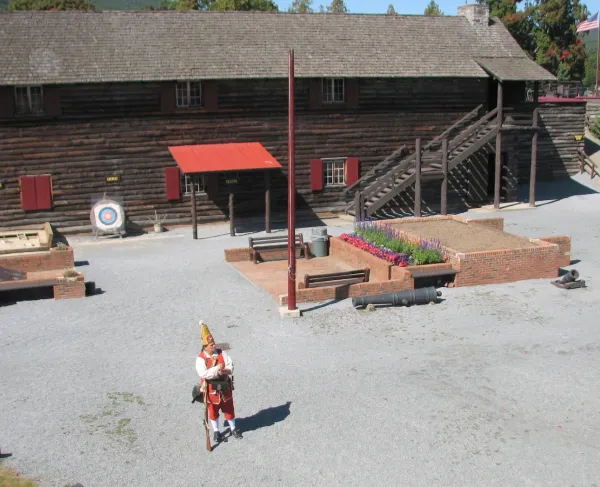
The British never rebuilt Fort William Henry. However, post-World War II tourism led to its reconstruction. The fort also served as the backdrop for James Fenimore Cooper’s 1826 classic The Last of the Mohicans, as well as film adaptions that contained numerous inaccuracies influencing later-day historical interpretations.
Siege of Fort William Henry: Featured Resources

Related Battles
2,500
8,000
199
0