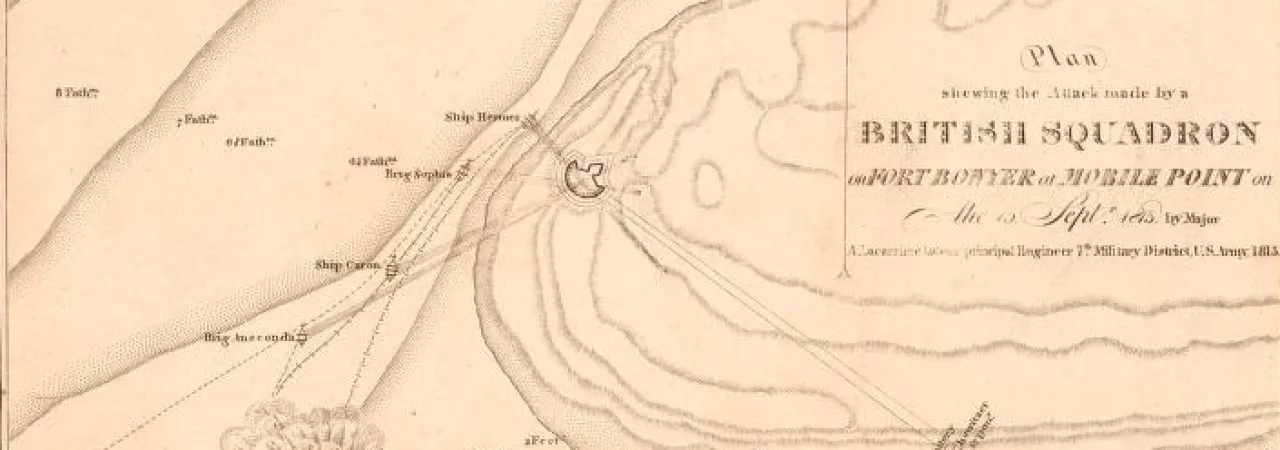
On September 15, 1814, a flotilla of five British warships arrived in Fort Bowyer on the eastern edge of Mobile Bay. Outnumbered by the American garrison, the British fleet was repulsed after the sinking of the HMS Hermes. A year later, after fighting in New Orleans, British soldiers moved east to Fort Bowyer again. On February 8, 1815, just five months after the First Battle of Fort Bowyer, the fort saw action again as the British began a land attack, and the ensuing four-day siege and artillery barrage forced the Americans to surrender on February 12. Days after the British took control of the fort, news arrived that the Treaty of Ghent had been signed, and the fort soon returned to American hands.
Following the War of 1812, Congress authorized the building of a more permanent structure. This structure eventually became Fort Morgan, which stood as a protector of Mobile Bay during the Civil War. Visitors to Fort Morgan can find an interpretive marker by the visitor center that highlights the history of Fort Bowyer and its role in the War of 1812.
Fort Bowyer: What's Nearby
Related Battles
8
302
11
31