Jeff McKinney
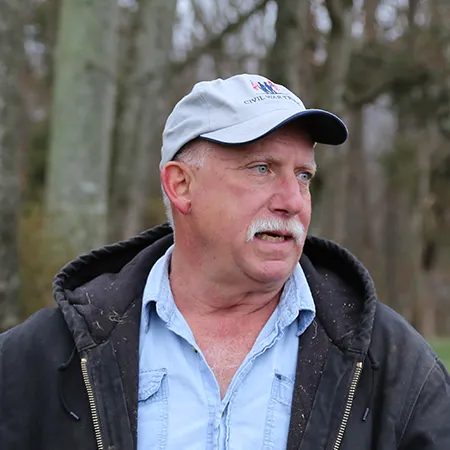
Jeff McKinney
Jeffrey T. McKinney played a pivotal role in preserving 665 acres of historic battlefield land at Jericho Mills along Virginia's North Anna River. A lifelong steward of the property, McKinney worked to ensure that land held by his family for generations would remain protected, preserving an exceptionally intact Civil War landscape for future generations.
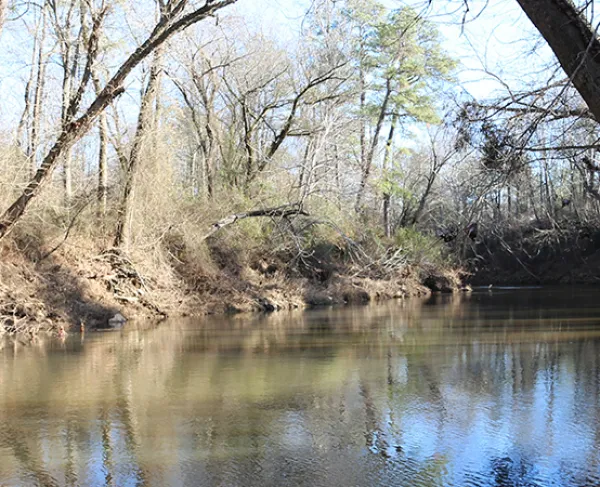
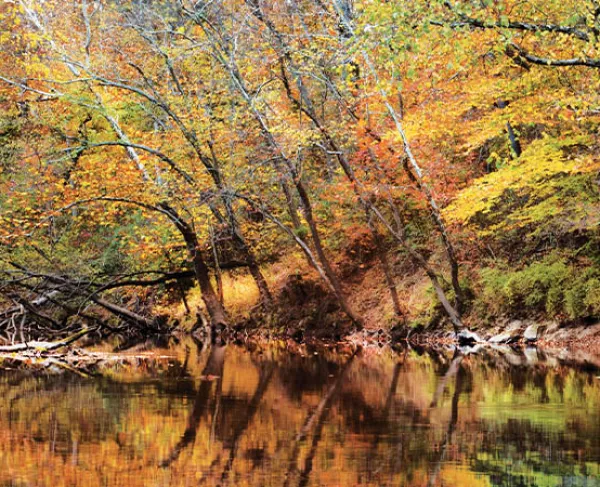
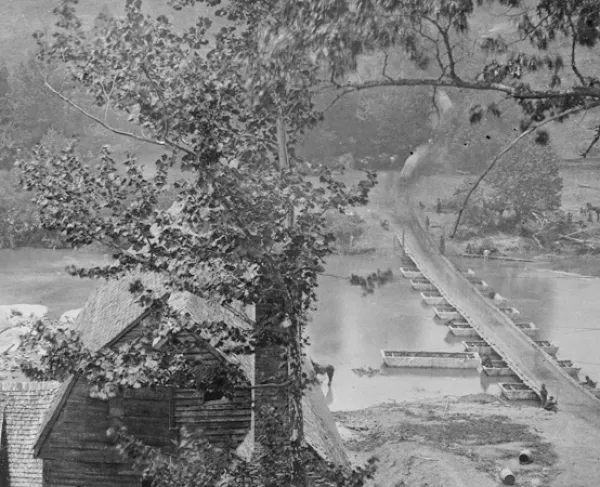
In the spring of 2014, the Civil War Trust, a predecessor of the American Battlefield Trust, announced a fundraising campaign to acquire the 665-acre property. The landmark acquisition would eventually help push the organization past 40,000 acres protected. Beyond its size, the property was remarkable for its condition. Although surrounding woods had thickened since the May 1864 Overland Campaign, the battlefield's topography remained largely unchanged, with archaeological traces ranging from the foundations of antebellum buildings to remnants of military roads and artillery emplacements.
Such remarkable continuity across a century and a half requires a measure of luck. More importantly, it requires generations of thoughtful owners and stewards who recognize the historic significance of the land and remain committed to its protection.
At Jericho Mills, that legacy of stewardship culminated with McKinney, whose family connections to the property stretched back generations.
“I grew up on this land from birth. I have experienced almost my entire life cycle on this land. My grandparents lived and died here, my parents raised our family and, when it became time for someone to take the helm, I was eager to carry on the legacy. This land is me, and I am it.”
Although modest about his accomplishments, McKinney spent decades caring for the property's landscape and historic structures. Respect for its history and natural beauty was instilled in him from childhood.
“My parents and grandparents believed the intended purpose of the property was agricultural in the most natural state possible and never to be sold for any other reason — a vision for stewardship of the property I shared,” said McKinney. “A property can live on in its most natural state when generations agree on the goal.”
In college, McKinney studied real estate and urban planning, developing an understanding of property as a resource with value beyond financial returns. With this perspective, he and his brother Philip structured their farming operations to suit the character of the land rather than forcing the property to accommodate a particular business model.
His expertise in agricultural conservation led him to serve nine consecutive terms on the Hanover-Caroline Soil and Water Conservation District Board.
Respect for military service was also deeply ingrained in the McKinney family. Jeff is a third-generation U.S. Navy veteran, and an uncle belonged to the Society of the Cincinnati, the hereditary organization established by American and French officers following the Revolutionary War.
“Our family has a deep appreciation and participation in historic preservation from this country's early beginnings,” McKinney said. “This property is historic through connections to families that were part of the colonization of Virginia, as well as the rebellion against the British throne. Its role as a battlefield in the Civil War only further highlights its need to be preserved as ‘hallowed ground.’”
McKinney's grandfather, Capt. Cecil McKinney (USN, Ret.), purchased the property along the North Anna River in 1947. However, research conducted by Jeff's father, Charles, traced the property's history much further back.
During the mid-18th century, the area was known as Rock Castle and was associated with the Fontaine family, one of colonial Virginia's prominent families.
“The earliest structure on our property (constructed around 1823) was at one time the dwelling of Col. John Fontaine (1750–1792) and his wife Martha — who was Virginia governor Patrick Henry's oldest daughter. This site has been authenticated by archaeological digs involving VCU [Virginia Commonwealth University] students over a span of 20 years that finally yielded a piece of a wine bottle with the Fontaine seal. Our property was not the primary residence but a summer house for the Fontaine family.”
Despite the property's historical significance, securing its permanent protection was a lengthy process. As often happens with land held by extended families, multiple interests and considerations had to be addressed.
McKinney and his relatives spent years attending seminars, consulting attorneys, examining conservation easements, monitoring legislation and evaluating proposals from conservation organizations and developers. Eventually, with a controlling interest in the property, McKinney was positioned to move forward with preservation.
“It was clear from the beginning that the Civil War Trust approached the land with a similar type of reverence and understood our end goals. They had the talent and resources to forge the coalition it would take to get the deal done,” said McKinney. “We are very grateful for the Civil War Trust and their partner organizations who value and continue to ensure history endures.”
The enthusiastic public response to the Trust's campaign to acquire the North Anna property was especially meaningful to McKinney. While grateful to the donors and preservation partners who made the acquisition possible, he reserved particular praise for two people whose support proved essential: his twin daughters.
“I've always known in my heart that the property would need to be preserved,” he said. “But the real heroes are my twin daughters, who gave the sale a thumbs-up — eliminating any possibility of inheriting their home. It is not possible for me to express the depth of my admiration and respect for them.”
Through his family's commitment to responsible stewardship and his determination to protect the historic landscape, McKinney helped ensure that an important part of the North Anna Battlefield would endure. His story demonstrates the extraordinary role private landowners can play in safeguarding America's historic battlefields.