Winslow Homer
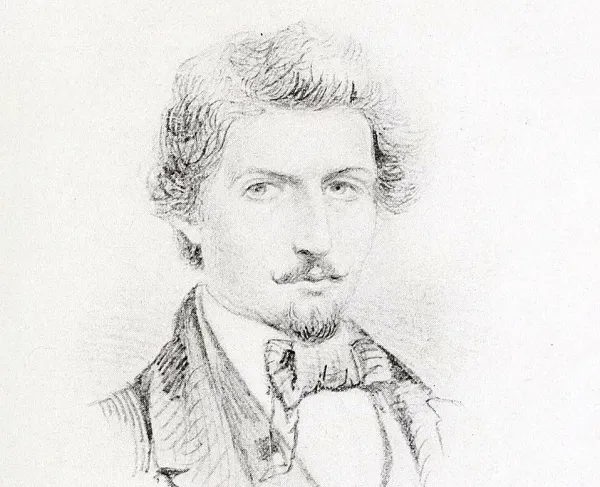
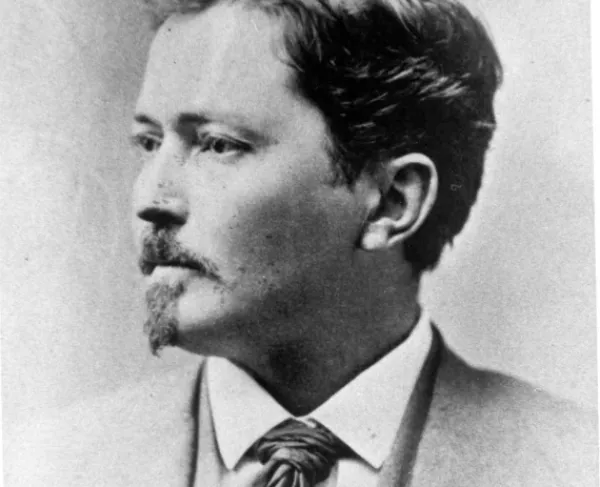
Winslow Homer was born in Boston, Massachusetts, on February 24, 1836. Homer’s middle-class family struggled because of his father’s failed business ventures. His mother was a watercolor artist, which was the only art instruction he received in his youth. By the age 17, Homer worked at a lithography shop in Boston, although he did not enjoy his time there. He left six years later to pursue his passion for painting in New York City. He settled in Greenwich Village, living in the same building as other well-known artists like Eastman Johnson. New York City had more artistic opportunities for Homer than Boston because he could take life-drawing classes, learn painting techniques from a French teacher, and make magazine illustrations as a freelance artist.
When the Civil War began, the trajectory of Homer’s life—much like his country—changed. At just 25 years old, he was sent to Alexandria, Virginia, as an artist-correspondent for Harper’s Weekly. He travelled with various parts of the Army of the Potomac, including the 6th Pennsylvania Cavalry, the 1st New York Infantry, and then the 5th New York Infantry. Homer’s sketches of wartime scenes are a mix of his own observations and what he imagined battle scenes looked like (he likely never got close enough to a battle to observe himself). Most of his drawings were of everyday camp life.
As an artist, he experienced many of the same hardships as the soldiers around him, although it is unclear how many times he visited the front. Sometimes he had to go for days without food. He was constantly in a dangerous position and some of his friends and acquaintances died from disease. Most of their time was spent anticipating battle, which was nerve-wracking for soldiers and artists alike. Waiting time could be even more dangerous than the battles, because, throughout the war, soldiers and those accompanying them were more likely to die from disease, rather than from battle wounds. Homer related to the soldiers in many ways, but his privileged position also put him in a difficult middle ground, especially because officers did not trust his depictions of camp life.
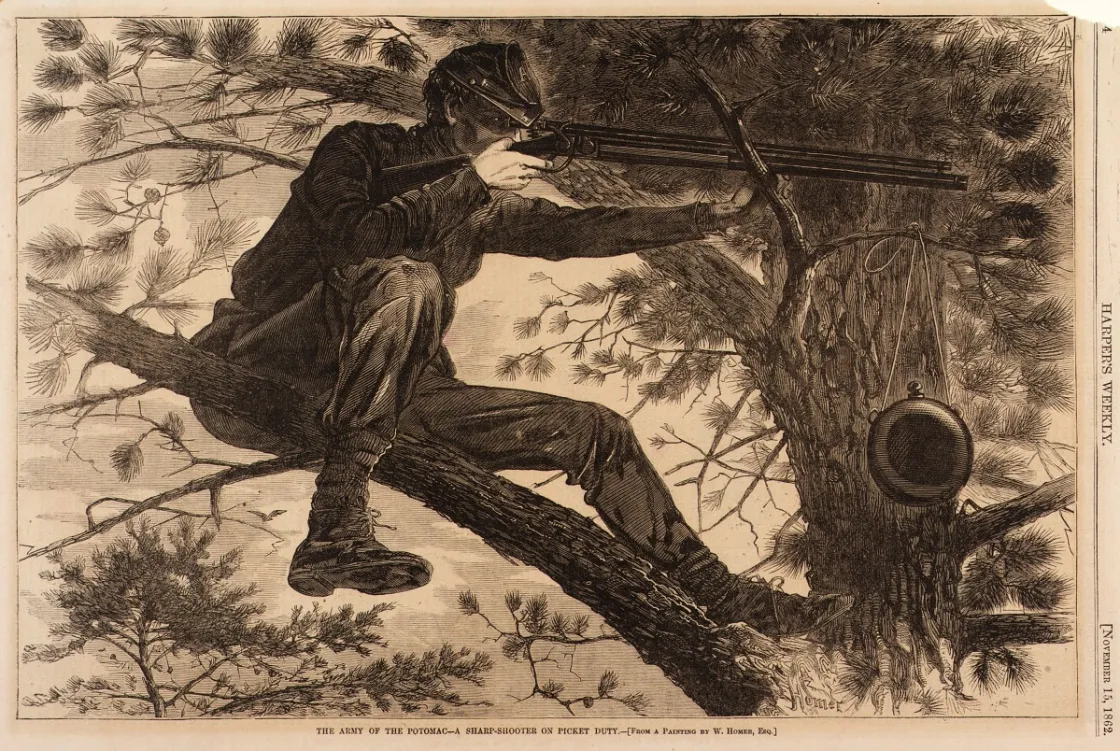
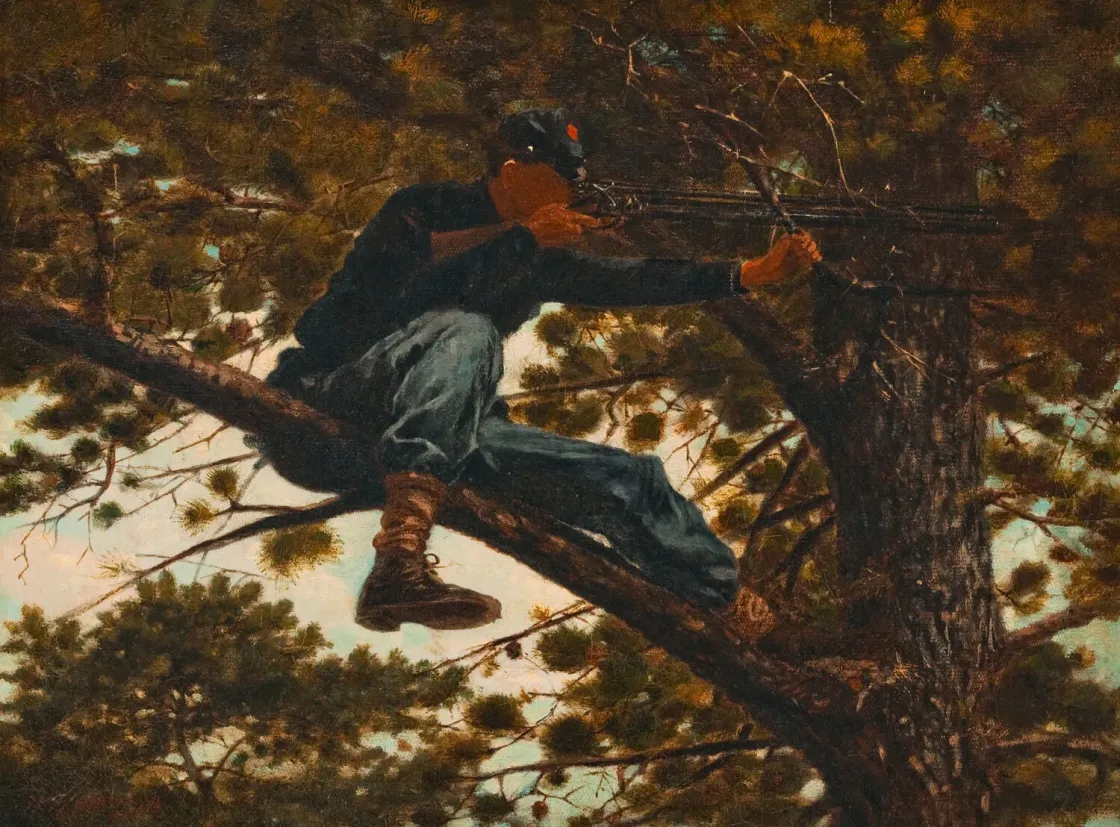
The work of artist-correspondents was very important during the Civil War. At the time, it was not possible to reproduce photographs of action moments, so artists recorded what they saw as they travelled with the armies. They sent their sketches back to their newspaper to be engraved and then printed for the public to see. Harper’s Weekly was the most popular illustrated newspaper during this time period, with approximately 200,000 subscribers. Possibly Homer’s most well-known sketch from the Civil War is The Army of the Potomac – A Sharpshooter on Picket Duty (1862). He later created his first oil painting based on this sketch after the war ended. Both the sketch and the painting were part of the new phenomenon of sharpshooters that captured the public’s imagination during the war. The Civil War was one of the first conflicts that employed telescopic sights, which allowed sharpshooters to hit targets up to 200 yards away.
The Civil War propelled Homer into popularity, but not without consequence. In a letter his mother wrote to his younger brother, she describes that, “He [Homer] came home so changed that his best friends did not know him.” Not much is known about his personal life because he actively did not want to be a public figure. What is known is that he remained close to his parents and older brother. He briefly moved to Paris from 1866-67, where he painted. However, his work was not notably influenced by French artistic styles.
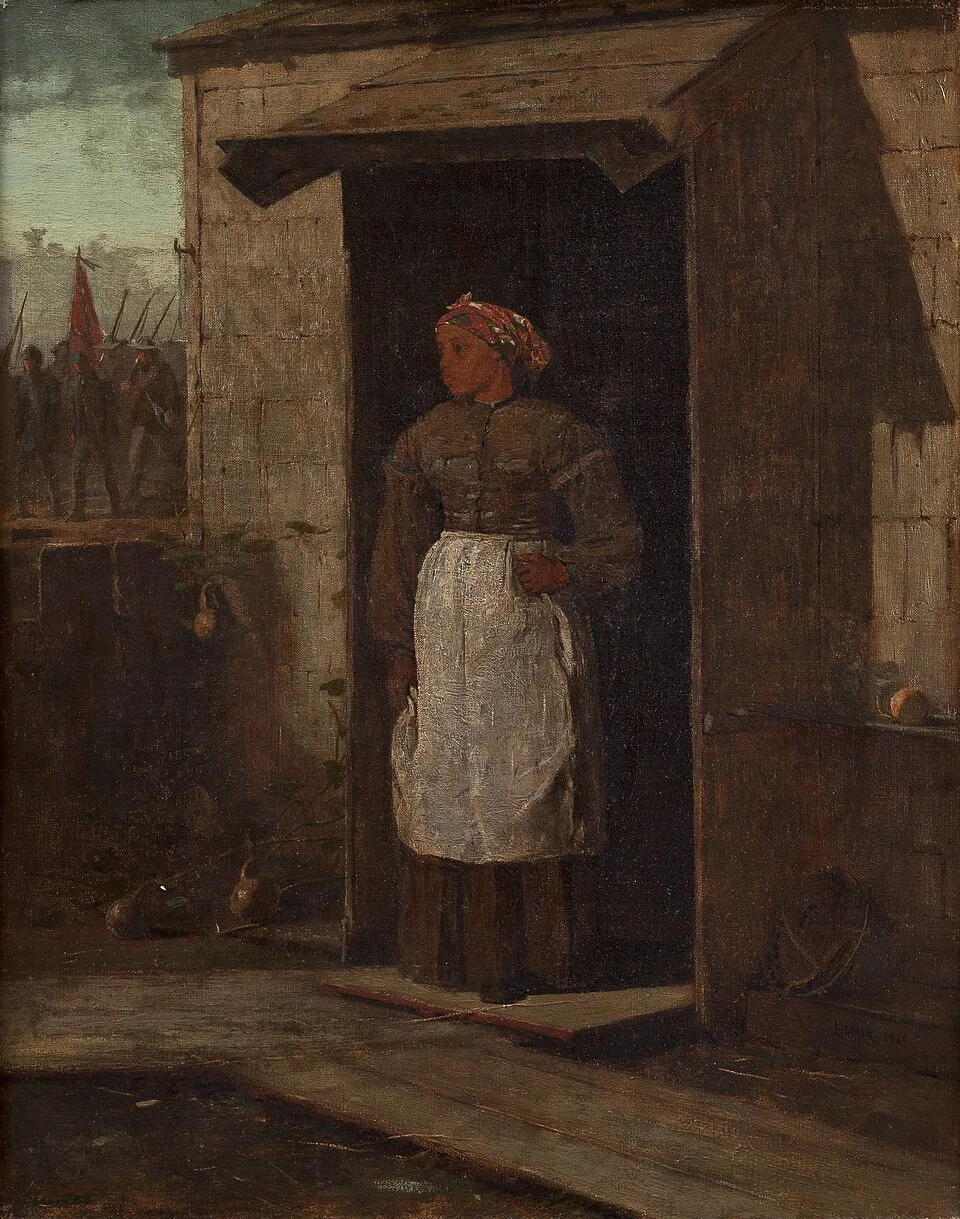
One such painting that has gained popularity in recent years because of its rediscovery is titled Near Andersonville (1865-1866). It depicts an enslaved woman standing in the doorway of a cabin, with victorious Confederate soldiers marching surrendered Union soldiers towards the Andersonville prison. The painting was politically significant at the time of its making because Andersonville prison and cemetery came under scrutiny in the postwar years.
Unlike other Civil War era artists, Homer often depicted African Americans at the center of his paintings, which was unusual at the time. He grew up in abolitionist Boston, although he did not come from a family of activists. In fact, his parents had attended a church that believed abolitionism would “fill the land with violence and blood.” The respect he afforded to African Americans in his paintings is part of a larger theme of his artistic style: Homer focused on outsiders of American society, whether they be women, children, sailors, etc.
In his later years, Homer lived as a hermit, content out of the public eye. He briefly returned to the South as Reconstruction was ending in 1877 to record the lives of African Americans through his paintings. He settled in Prout’s Neck, Maine, in 1883, where he created many paintings of the ocean, inspired by Maine’s coast and his trips to the Caribbean. These later works, particularly those based in the Bahamas, are notably affected by the colonial environment of the island. Some art historians have described these paintings as uncritical of the colonized Bahamas, while others note that the paintings are aware of the racial status quo and commenting on it. Other than his ocean paintings, Homer focused primarily on landscape paintings in his final years. He died in Prout’s Neck, Maine, on September 29, 1910, at the age of 74.