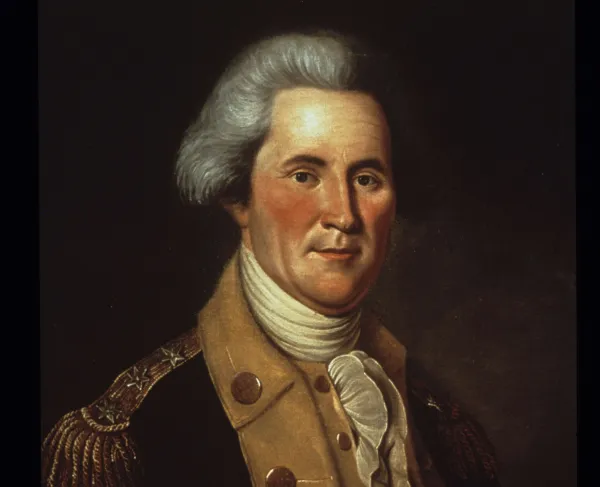
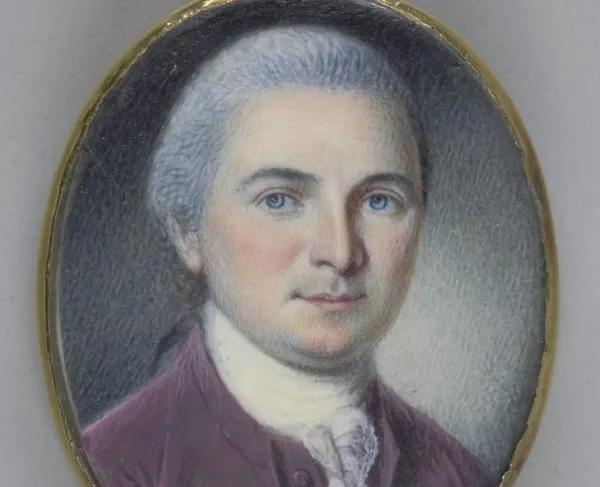
William Cocke

William Cocke was born in 1748 in Amelia County, Virginia. He became a prosperous landowner, owning multiple plantations worked by enslaved people. He studied law and was admitted to the bar, but he also accompanied Daniel Boone on at least one expedition exploring what would later become parts of the states of Kentucky and Tennessee.
As the British-allied Cherokee began attacks on frontier settlements in 1776, Cocke was commanding the militia at Eaton’s Station, which was on an island in the Holston River in what is now Tennessee. Cocke persuaded the other militia leaders to march out and meet the Cherokee in battle, rather than remaining behind the walls of the fort. On July 20, 1776, during the Battle of Long Island Flats, Cocke was accused of cowardice after fleeing back to the fort while his militia fought off an ambush. Cocke insisted that he had not fled, but had been cut off from the rest of his men and had to fight his way back to the fort. Despite the accusation, he was elected to the Virginia state legislature in 1777.
In 1779, Cocke moved from Virginia into modern-day Tennessee. Some accounts place him with the Overmountain Men at the Battle of Kings Mountain in 1780, but he does not appear on the list of commanders present at the battle. After the war, Cocke was one of the main figures trying to establish the state of Franklin, and helped to convince John Sevier to join the movement. This attempt to create a new state west of the Appalachians failed, but a few years later the territory was organized into the state of Tennessee. He served as a delegate to the state’s constitutional convention, and then he served as one of the state’s first representatives to the United States Senate. He was a Senator from 1796-1797, and again from 1799-1805. He ran for governor of Tennessee but lost to John Sevier. In 1809 he was appointed as a judge, and three years later in 1812 he became the first judge in Tennessee to be impeached for using his position for personal gain. He was subsequently removed from office.
In an attempt to finally silence the accusations of cowardice from 1776, which had continued to follow him through his political career, in 1813 Cocke, who was 65, volunteered to join the army of Andrew Jackson – despite the fact that the two men had nearly fought a duel when they were both serving in the Senate. He fought in the Creek War, and after the war served as an agent to the Chickasaw nation. William Cocke died in August 22, 1828, having served in the state legislatures of Virginia, North Carolina, Tennessee, and Mississippi as well as the United States Senate.
Further Reading
- Kevin Barksdale, The Lost State of Franklin: America's First Secession (University Press of Kentucky, 2009).
- Phillip Langsdon, Tennessee: A Political History (Hillsboro Press, 2000).
- Journal of the American Revolution: William Cocke at the Battle of Long Island Flats, 1776 [link]