George Walton
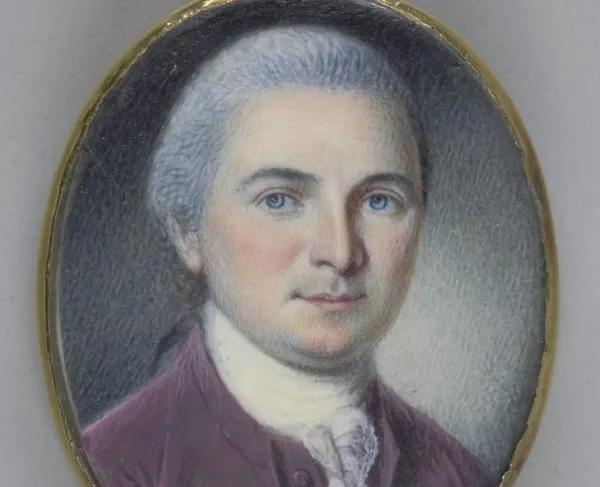
Historians are unsure exactly when George Walton was born in Virginia--possibly in late 1749 or early 1750. Both of his parents died during his childhood, leaving him in the care of an aunt and uncle. George apprenticed with a carpenter and learned the trade, but he also desired to further his education. In 1769 he moved to Georgia where he studied law, passing the bar in 1774 and becoming a successful lawyer.
During the American Revolution Walton became a patriot, serving as secretary of Georgia’s Provincial Congress in 1775. He went on to serve on the Council of Safety, the executive body of the new state government. During his tenure as president, the Council issued orders for the arrest of James Wright, the royal Governor of Georgia.
Walton served as one of three delegates representing Georgia at the Continental Congress in Philadelphia in 1776. Alongside fellow Georgians Button Gwinnett and Lyman Hall, George Walton signed the Declaration of Independence. While his exact date of birth is unknown, George was one of the youngest men to sign the Declaration.
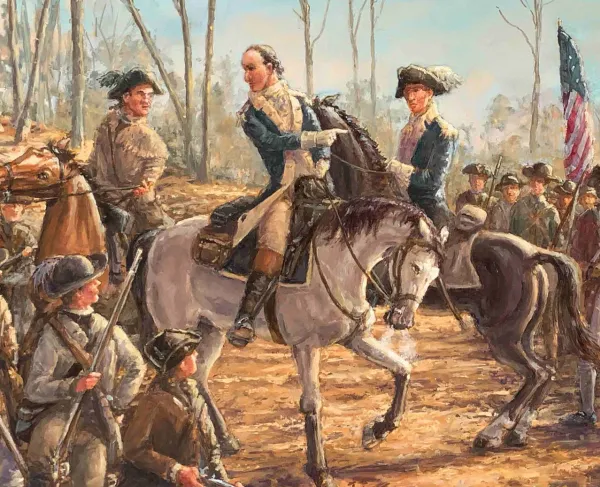
He returned to Georgia in 1778 and assumed command of the militia as the British threatened Savannah. During the short battle outside the city on December 29, 1778, a musket ball struck Walton in the thigh, resulting in his capture. The British held Walton as a prisoner of war until his exchange for a British officer in the fall of 1779. After his release, he was appointed to the position of governor, but he served in that role for only a few months before returning to the Continental Congress in 1780.
In 1783, the state legislature censured Walton for his supposed role in inciting a duel between Button Gwinnett and Lachlan McIntosh in 1777 that resulted in Gwinnett’s death. Despite this controversy, Walton was appointed as the chief justice of Georgia that same year. He was selected as a delegate for the 1787 Constitutional Convention in Philadelphia, but he did not attend. He served another single year term as governor in 1789, and a single year as a Senator from 1795-96. He died on February 2, 1804.
Further Reading
- Kenneth Coleman, The American Revolution in Georgia, 1763–1789 (University of Georgia Press, 2021)
- Journal of the American Revolution: The Dark and Heroic Histories of Georgia’s Signers [link]

Related Battles
948
155