Edwin Forbes
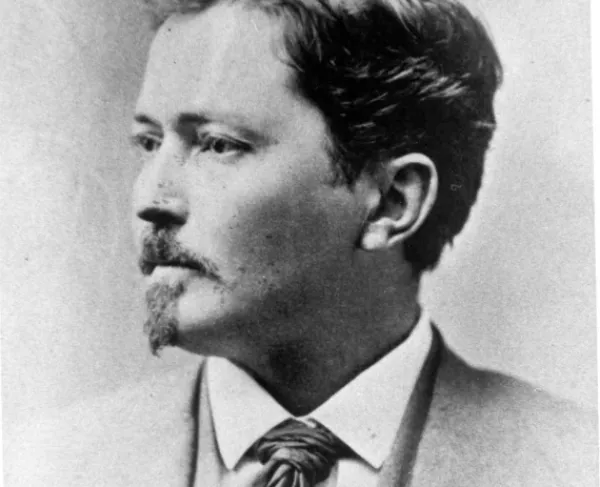
Edwin Forbes was born in New York City in 1839. In 1857, Forbes started studying art under Arthur Fitzwilliams Tait, a British born artist known for his paintings of wildlife as well as scenes of the Western American Plains. Tait tutored Forbes in painting action scenes of Indian scouts and warriors, which would come useful during the American Civil War.
At the age of 23, young Forbes’ career as an illustrator began in 1861 when he became a staff artist for Frank Leslie’s Illustrated Newspaper. He was sent to cover the Army of the Potomac’s campaigns, following them from the Shenandoah Valley, the battles at Manassas in 1862 to the Siege of Petersburg in 1864/65. Forbes would make quick sketches on the battlefield and refine them later when there was more time and in easier circumstances. At the Battle of Gettysburg, Forbes had an excellent viewing spot that allowed him to observe Pickett’s Charge. He was the first of the battlefield artists to produce such a drawing and send it back to Leslie’s in New York.
During the war, Leslie’s Newspaper published 178 of Forbes’ wartime drawings (he was most interested in capturing scenes of life in camp) before he resigned from the company in 1864. Though he resigned from Leslie’s, he continued to produce images of the war. Many of the drawings he created were made into copper plate etchings and Forbes published his book Life Studies of the Great Army in 1876. This book was also well awarded as Forbes received a medal at the Philadelphia Centennial that same year. It went as far as General William T. Sherman purchasing the first proof of the copper etchings and donated it to the United States government. This, along with other of Forbes’ etchings were on display in the Secretary of War’s building.
Along with the Great Army, Edwin Forbes produced illustrations for several other publications such as Beyond the Mississppi in 1869 which included works from other Civil War artists such as Joseph Becker and Alfred Waud, Specimen Pages and Illustrations from Appleton’s Journal in 1870 and School Days at Mount Pleasant in 1872. Forbes’ international reputation reached its peak as a graphic artist in 1877 when he was made an honorary member of the London Etching Club, a distinction given to very few Americans.
In 1878, Forbes opened a studio in Brooklyn where he continued his work as well as sell his drawings and services. In 1890 he published his final book, Thirty Years After: An Artist’s Story of the Great War, which gave a summary of his time depicting the war. Edwin Forbes died on March 6, 1895 and was buried at the Green-Wood Cemetery in Brooklyn.