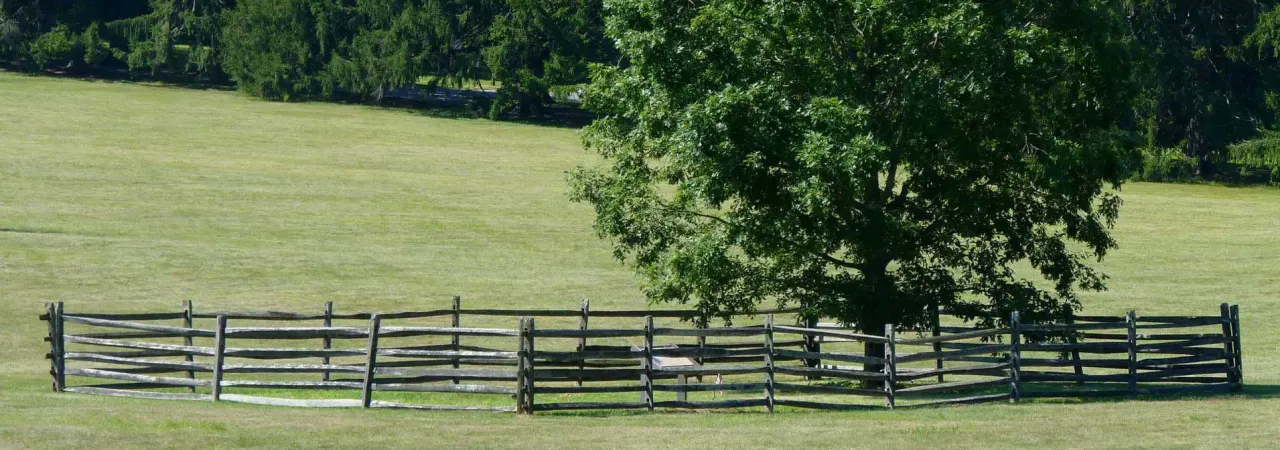
Mercer Sapling, Princeton Battlefield State Park, N.J.
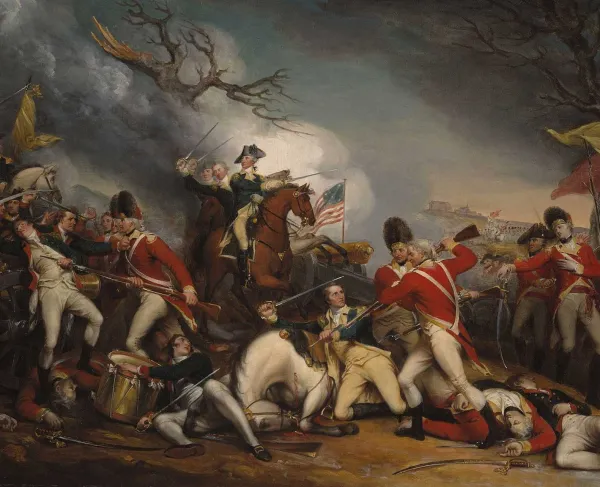
Study a map or read an account of a historic battle and you’re likely to spy at least one orchard. Pretty soon, the apple will again fall not far from the tree on the battlefield that saved the American Revolution.
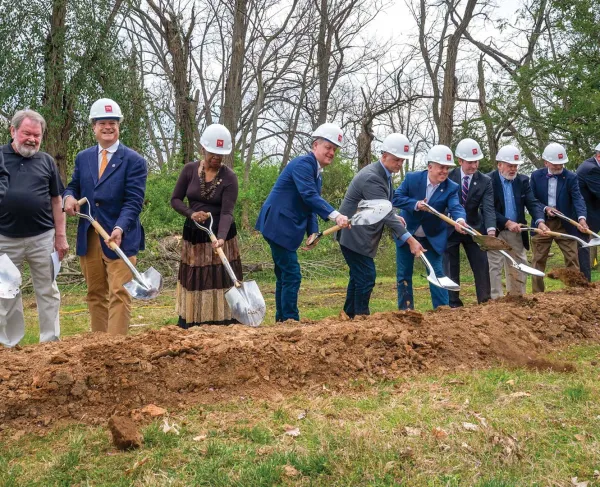
Late last month, the American Battlefield Trust joined its partners at the Princeton Battlefield Society and the New Jersey Department of Environmental Protection to host “Preservation & Pomology,” a summit focused on reestablishing the William Clarke Orchard at its original location on the Princeton Battlefield. Timed to build momentum toward the 250th anniversary of the Battle of Princeton in January 2027, the summit convened historians, pomologists — botanists who study the cultivation of fruit trees, from the Latin pomum (fruit) and Greek logos (subject matter, stemming from the verb “to speak”) — stewardship partners and state park leaders for a daylong work session dedicated to the orchard’s future.
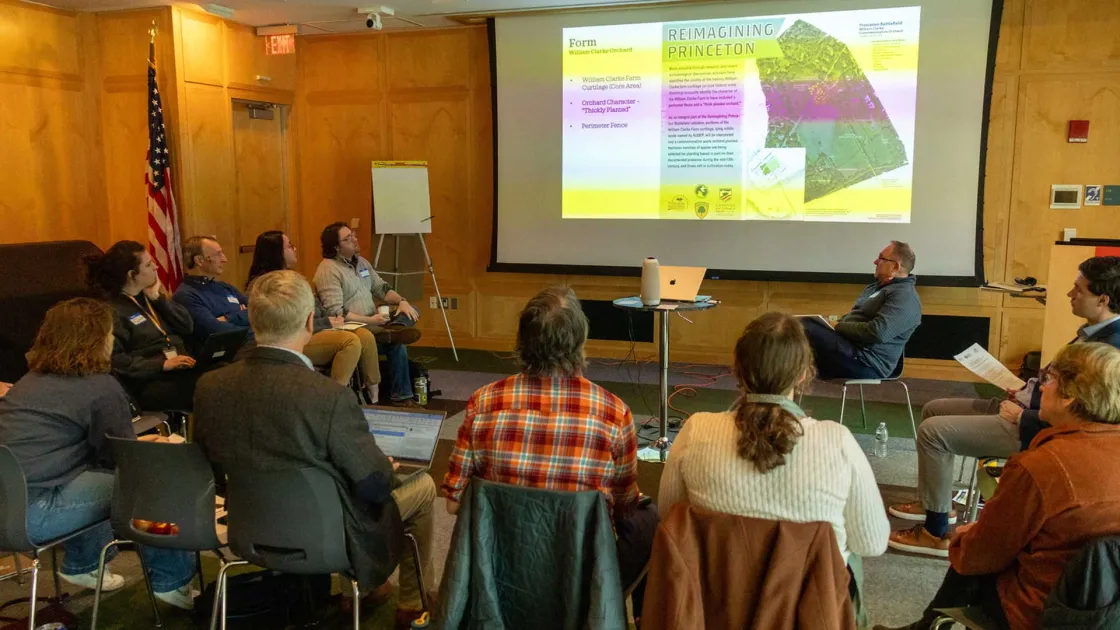
Historians, scientists, and stewards gather during the “Preservation & Pomology” summit at Princeton Battlefield, where they explored how to reestablish the historic William Clarke Orchard ahead of the nation’s 250th anniversary.
Scott ArmstrongIn the mid-1700s, orchards were not industrial operations, but diverse, locally adapted ecosystems. Trees were grown from a mix of grafting and seed propagation, arranged in spacious rows or five-part “quincunx patterns” to promote circulation, and protected by fencing rather than modern chemicals. These orchards supported biodiversity, providing habitat for insects, birds and other wildlife, while producing fruit primarily for local use, especially making cider.

The morning session brought subject matter experts together to examine documentation of the orchard’s form and layout, rooted in history. The new orchard will cover half an acre and will feature four apple varieties believed to have been cultivated in colonial-era New Jersey: Harrison, Winesap, Red Russet and Yellow Bellflower. Since records indicate William Clarke’s orchard was fenced in, the trees will be protected behind a period-appropriate rail fence. In the afternoon, the focus shifted to stewardship, management, and community partnership. For the orchard to survive, thrive and be the community asset organizers envision, local participation will be key.
Summit participants emphasized that the orchard should not mimic modern high-yield agriculture, which often relies on intensive pesticide use and uniform varieties. Instead, the goal is to cultivate a healthier, more resilient landscape where tree vitality, soil health and ecological diversity take precedence over maximum production. As discussed, high yields often come at an environmental cost, and the orchard’s purpose is not commercial output but sustainability and education.
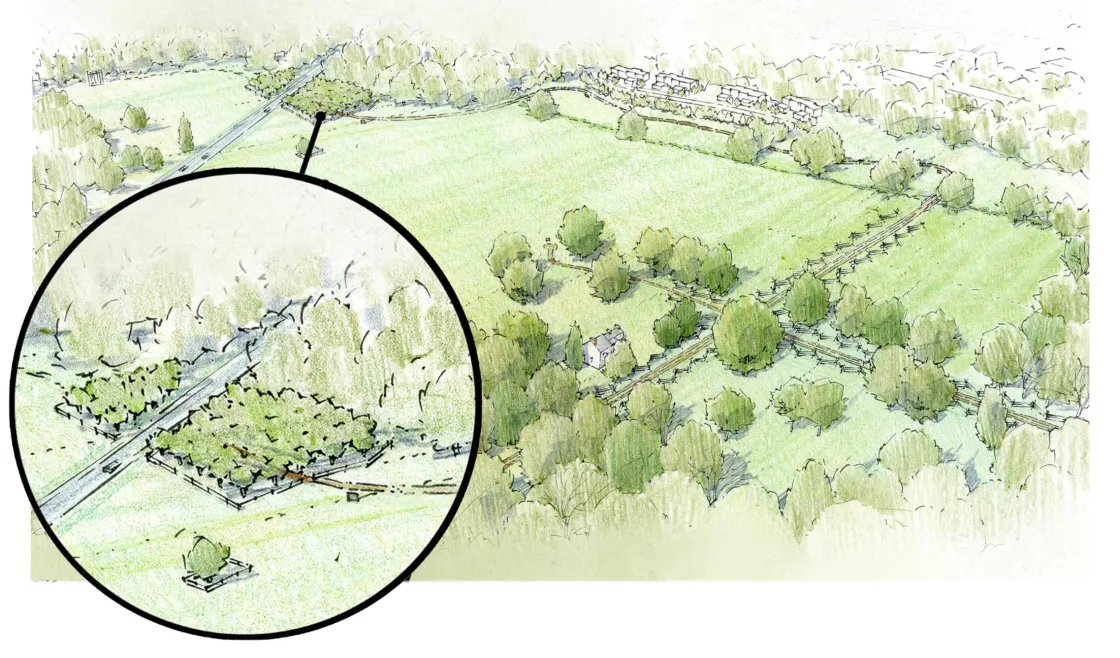
Artist’s illustration depicting the contributions of recent archaeology and research to the rehabilitation of this national historic landmark battlefield. The planting of the commemorative orchard will add an important layer of interpretation and experience to the battlefield, marking the vicinity of the historic William Clarke farm.
Peter GiraudeauThe William Clarke Commemorative Orchard is just one aspect of the broader Reimagining Princeton initiative, an ambitious effort to rehabilitate, restore and interpret the battlefield’s historic landscape and honor the heroic efforts of General George Washington and the Continental Army on January 3, 1777. Visitors can already experience these improved amenities, including more than a dozen new interpretive signs and a topographic map on the battlefield, which interacts with augmented reality to bring the battle to life. By reintroducing agricultural features that defined the 1777 terrain, planners hope to clarify the battle’s geography and deepen visitors’ understanding of how environment and history intertwine. Much work has already been done on this ambitious plan, but important steps are still to come, for which the Trust is currently seeking donations.
The new vision for Princeton will only come to fruition with public support. The Trust and its partners are urging the public to voice their support for the project, including a state-of-the-art visitor and education center as part of the upcoming FY 2027 state budget.

Related Battles
75
270