The Liberty Bell, Philadelphia, Pa.
A beloved symbol connected to American Revolution history, "The Liberty Bell” is one of the most visited artifacts in historic Philadelphia, Pennsylvania. It is currently protected and preserved by the National Park Service, and the large bell is displayed within view of Independence Hall. The Liberty Bell’s facts and legends are part of the United States history for more than 250 years.
Originally known as the State House Bell, it was cast at Whitechapel Foundry in London. The bell made a journey from England, across the Atlantic, to the colony of Pennsylvania and city of Philadelphia. Isaac Norris, Speaker of the Pennsylvania Assembly, had ordered the bell in 1751 to commemorate the 50th anniversary of the colony’s Charter of Privileges. It arrived in North America in 1752. Most likely, the bell cracked during a test sounding around the time the Philadelphians received it.
John Pass and John Stowe, local metalworkers in Philadelphia, undertook the task of recasting the bell. They melted the original bell and created a new one. With hindsight of history, this is sometimes seen as symbolic—creating something new from originally British materials, like the 13 British colonies eventually declared independence and formed a new nation. Pass and Stowe recast the bell for the State House in 1753.
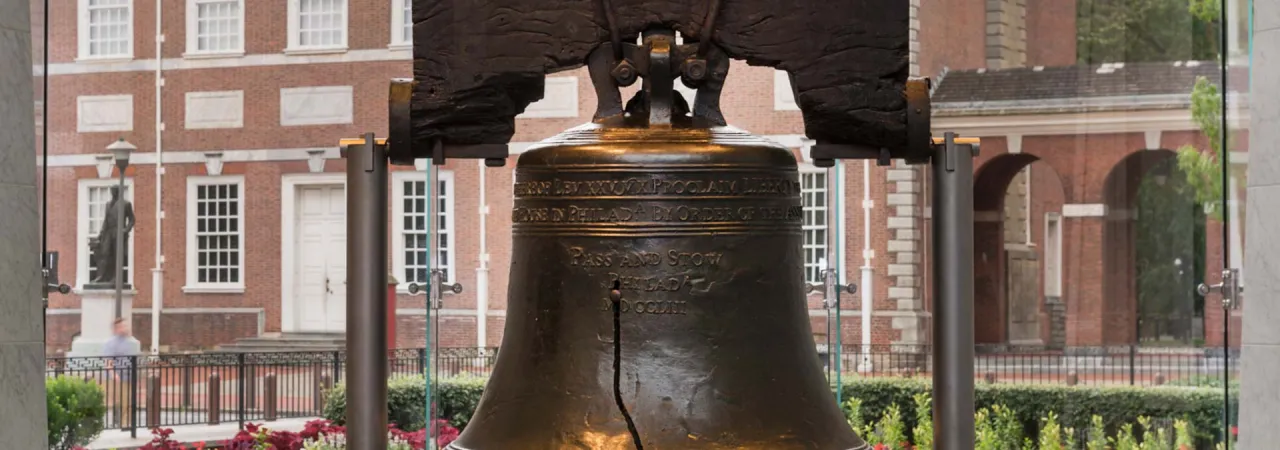
The newly-crafted bell weighs 2,080 pounds and is a compound of about 70% copper, 25% tin and small elements of lead, gold, arsenic, silver and zinc. The bell included its recasters’ names, location, and year: “Pass and Stow, Philada, MDCCLIII” (1753). A scripture verse and details about the bell’s commissioning encircle the top: “Proclaim LIBERTY throughout all the Land unto all the Inhabitants thereof Lev. XXV X By Order of the ASSEMBLY of the Province of PENSYLVANIA for the State House in Philada.” The scripture verse from the Book of Leviticus in the Bible evoked themes of fifty-year jubilee and Isaac Norris likely selected it to reflect the anniversary of William Penn’s Charter of Privileges.
Unfortunately for the Philadelphians, the new bell—though beautiful—did not sound pleasant, and too much copper was believed to be the culprit. Norris thought about returning the whole project to England to have the bell melted, remixed, and re-casted. Ultimately, the Assembly kept the Pass and Stowe Bell, but ordered and paid for an entirely new bell from England. The saga continued when the new bell completed its transatlantic journey. The new bell did not sound any better. The Pass and Stowe Bell stayed in the Pennsylvania State House’s tower.
Over the next decades, the Pass and Stowe Bell, also called the State House Bell, clanged warnings and summoned the civic assemblies. The bell also sounded at times of news and protest associated with the Stamp Act in 1765 and may have rung at other moments on the road to revolution.
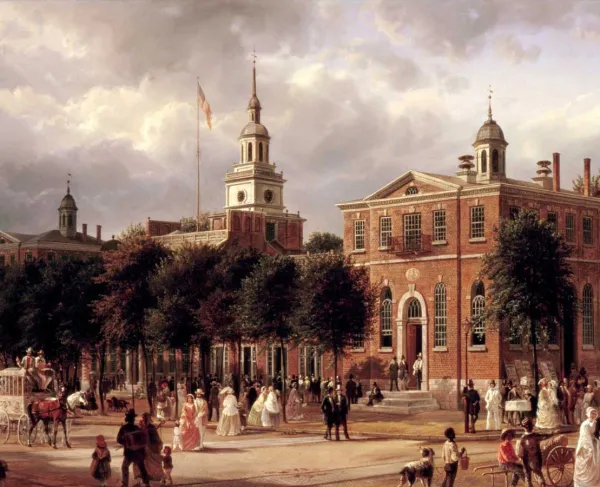
The Second Continental Congress met in Philadelphia in the Pennsylvania State House. Underneath the weighty bell’s tower, delegates from the 13 Colonies received news of Lexington and Concord, voted to form an army and adopted the Olive Branch Petition. Debated turned to the subject of independence from Great Britain by June 1776. On July 2, 1776, delegates voted in favor of independence, and two days later, adopted the Declaration of Independence. The nation-founding document was publicly read in Philadelphia on July 8. According to tradition, the State House Bell rang to summon people to the reading. However, there is not clear documentation mentioning that bell ringing around July 4-8, though accounts mention other bells or chimes in the city. Also, some historians speculate whether the Pass and Stowe Bell even hung in the tower at that time which had major disrepair and may not have been able to hold the weight of the bell.
By 1777, British troops advanced on Philadelphia, and local citizens worried that the British would seize the city’s bells and recast them as cannons. Colonel Thomas Polk and about 200 North Carolina militiamen transported the Pass and Stowe Bell and many other valuables out of the city. In Allentown, Pennsylvania, the bell was stashed in the basement of Zion Reformed Church—safe from British searches. The following year the bell returned to Philadelphia but stayed in storage until 1785. The State House’s tower had to be rebuilt after destructive wood rot, but the bell was back in the repaired tower by the time the Constitutional Convention met in 1787.
Associated with both the Declaration of Independence and the drafting of the United States Constitution, the bell pealed for memorials or commemorations in the early days of the republic. Joyous occasions included John Adam’s inauguration, Lafayette’s tour in 1824, the anniversary of Washington’s birthday each February 22, and, of course, on July 4. The bell tolled with the news of founders’ deaths, including Benjamin Franklin, George Washington, Alexander Hamilton, John Adams and Thomas Jefferson. In 1835, the bell’s tone changed. At either the ringing for Washington’s birthday or Chief Justice John Marshall’s death (or may both occasions), a crack or fracture started. The fatal crack for the bell occurred on February 22, 1846, and left a zig-zagging fracture which ruined the sound completely.
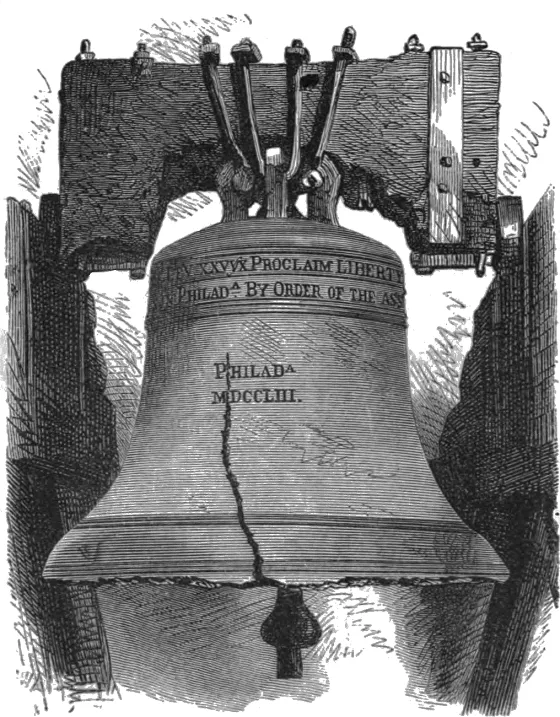
Although fractured like the growing United States, the Pass and Stowe Bell started to acquire new meanings and symbolism during the 1830s and beyond. The New York Anti-Slavery Society printed an edition of “Liberty” in 1837 and included an illustration of the famous Philadelphia Bell on its cover. In 1839, abolitionist William Lloyd Garrison printed a poem about the bell in his newspaper, The Liberator. For the first time, the Pass and Stowe Bell was called “The Liberty Bell” and became associated with the anti-slavery cause. The new name coincided with the timing of American’s renewed interest in preserving or memorializing places, artifacts and stories from the Revolutionary era. In 1852, the bell was taken from the State House tower for the final time and put on display in the room where the Declaration of Independence had been adopted. Legends and stories about The Liberty Bell continued to emerge.
Following the Civil War, the bell continued as a symbol – a reminder of the Revolution and founding the country. It was displayed at the Centennial Exposition in Philadelphia in 1876. In the next decades, The Liberty Bell made several journeys, including:
- New Orleans’s World Industrial and Cotton Exposition (1885)
- Chicago for the World’s Fair (1893)
- Atlanta for the Cotton States and Atlantic Exposition (1895)
- Charleston’s Interstate and West Indian Exposition (1902)
- Boston’s commemoration of the Battle of Bunker Hill (1903)
- St. Louis’s Louisiana Purchase Exposition (1904)
- San Francisco for the Panama-Pacific Exposition (1915)
1915 marked the last year of road tripping for The Liberty Bell. Concern about the bell’s condition has kept it in Philadelphia ever since, still visited by millions of people each year. On certain occasions and historic anniversaries, the bell is ceremonially tapped to let its sound echo. It is displayed at the Liberty Bell Center, within sight of Independence Hall in historic Philadelphia.
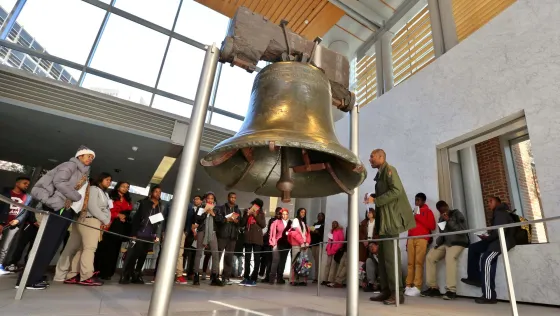
Visitors at the Liberty Bell, Philadelphia, Pa.
NPS PhotoThe Liberty Bell remains a recognizable symbol of the United States, as iconic as the Statue of Liberty and Mount Rushmore. It is associated with the quest of freedom through its proximity to founding moments and adopted symbol of the abolition movement. It reminds the nation and the world of the chance to “proclaim liberty”, and while silent from the cracked metal, it still gives that call to action to all of us.