Rep. John Culberson
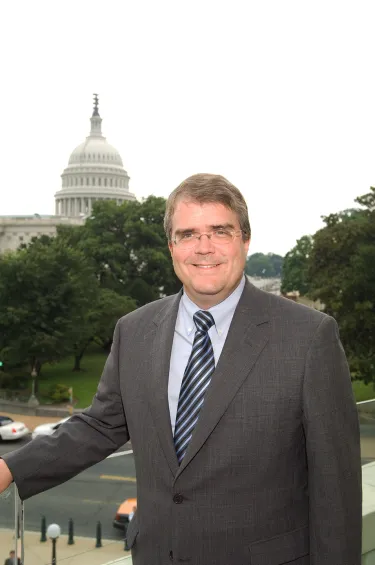
Former U.S. Rep. John Culberson (R-Texas)
Former U.S. Rep. John Culberson (R-Texas) was a dedicated supporter of battlefield preservation during his 18 years in Congress, from 2001 to 2019. Representing Texas's 7th Congressional District, he championed federal funding to protect, restore and interpret America's historic battlefields. His lifelong passion for American history made him one of the American Battlefield Trust's strongest congressional allies.
Of all the decision-makers who championed the Trust's mission in the halls of Congress or in various state houses, few could claim to believe more deeply in the cause than Culberson.
“John is not only my personal friend, but a man who believes strongly in preserving our American heritage,” reflected Trust president Jim Lighthizer. “He knows how important knowledge of our nation's history is to good citizenship and the success of our democratic republic. He is our strongest supporter in the United States Congress.”
“Since I was very little, I have had a passion for history and archaeology and paleontology. I was a mineral and fossil collector at 12 years old, a history major in college, focusing on the Revolution and Civil War in particular,” Culberson recalled, noting the way an understanding of history can inform our thinking. “As Winston Churchill said, ‘The farther we can see into the past, the farther we can see into the future.’”
Culberson represented the Lone Star State's 7th Congressional District, encompassing western portions of Houston and Harris County. He served on the House Appropriations Committee, which plays a critical role in allocating federal funding. When he first joined that powerful committee, among the questions under consideration was funding for the recovery, conservation and study of the Confederate submarine H.L. Hunley as it was raised from Charleston Harbor.
The effort held a particular interest for Culberson, who was fascinated by the Civil War era.
“I grew up with a particular interest in the War of Northern Aggression, as my grandmother called it, because it was very ‘real’ to me. My grandma on my father's side was born very late in my great grandfather's life. And I will always remember her telling me that he was so hungry walking home after the war that he had to eat uneaten corn left in the road by the horses. I said, ‘What war?’ trying to place if he could have fought in the Spanish–American War. ‘THE war,’ she said, ‘The Civil War.’ It seemed like so long ago, that I was flabbergasted! But we are a young country — and that made a real connection to me.”
After visiting the battlefield at Manassas and seeing its value as an educational tool, he became interested in supporting not just the preservation, but also the interpretation and restoration of battlefield land.
Of his work supporting preservation efforts alongside the Trust, Culberson said, “This is truly a labor of love and a shared passion. Once these battlefields are gone they're gone forever, and we can't bring them back. It has been a joy and a privilege to work with Jim Lighthizer and with the American Battlefield Protection Program to help secure the maximum funding to preserve battlefields.”
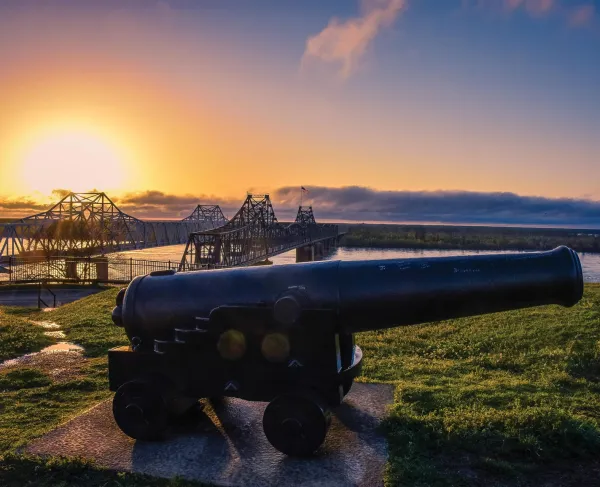
Although the overall record of success for federal battlefield acquisition matching grants was a source of pride, Culberson felt particular satisfaction that he had been part of efforts to protect, restore and showcase scenes of valor by his fellow Texans, such as the Texas redoubt at Vicksburg or the attack of the Texas Brigade against Little Round Top at Gettysburg.
Culberson's preservation passion extended beyond the Civil War. He advocated for federal funding to protect sites associated with Thomas Jefferson, his favorite Founding Father, especially Monticello. He also drew inspiration for the continued relevance of history to modern life from visits to the Library of Congress.
“They lovingly re-created down to the smallest detail the way Jefferson organized his library — according to David Hume's organization of human knowledge…. In a way, Thomas Jefferson invented Google, because he had organized his books in a way that allowed you to very rapidly pull a volume on any subject…. You could turn around and see the full expanse of human knowledge.”
Culberson's congressional service concluded in January 2019. His steadfast support for battlefield preservation, particularly through the American Battlefield Protection Program, helped advance the Trust's mission to protect and interpret America's hallowed ground. His dedication to preserving the nation's history remains an important part of his congressional legacy.