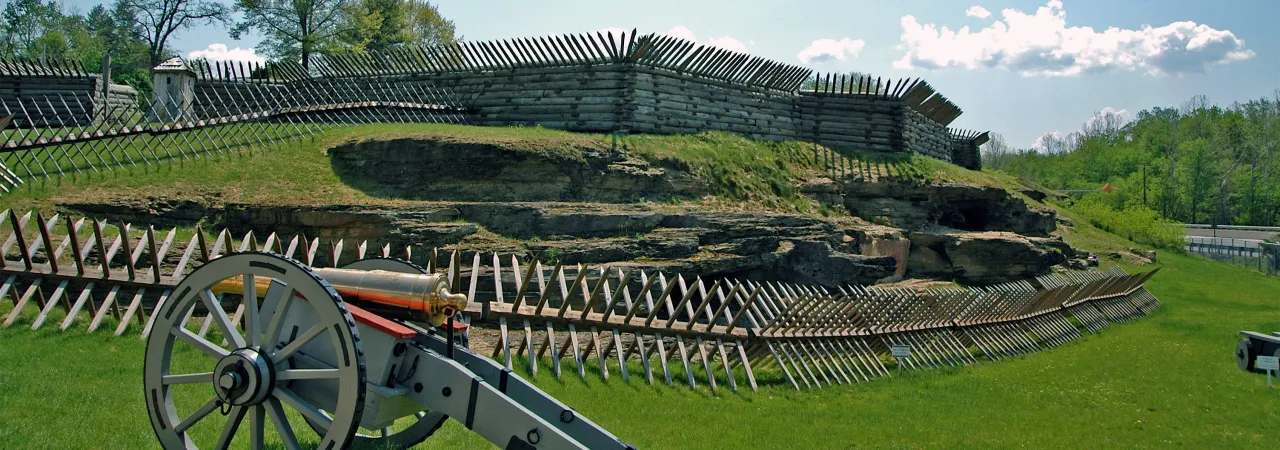
Fort Ligonier
Ligonier, PA | Oct 12, 1758
In 1758 the British mounted a second expedition to capture French-held Fort Duquesne (present-day Pittsburgh, Pennsylvania). This advance force of 1,500 men under the command of Colonel Henry Bouquet built a road across the Allegheny Mountains, stopping at Loyal Hannon (near present-day Loyalhanna Township, Pennsylvania) where they started construction of Fort Ligonier. In response to frequent French and Indian raids from Fort Duquesne, located about fifty miles to the west, Major James Grant led 750-man force from Ligonier that historian Fred Anderson characterized as a “a small-scale reprise” of Edward Braddock’s defeat in 1755. Despite this success, the French at Fort Duquesne suffered from a shortage of supplies, which led them to attack Fort Ligonier. The battle began when the French force attacked the British livestock grazing more than a mile from the fort. Ligonier’s temporary commander, Colonel Burd, responded to gunfire by sending reinforcements, who were soon driven back into fort. British artillery repulsed the French attackers on several occasions before they withdrew to Fort Duquesne. Despite the victory, Colonel Bouquet, who was away from Ligonier at the time, was disappointed with the performance of his command, who easily outnumbered the French. According to Bouquet, this “enterprise, which should have cost the enemy dearly, shows a great deal of contempt for us, and the behavior of our troops in the woods justifies their idea only too well.” Despite this less-than-satisfied victory, the British finished Fort Ligonier, which today is a site on the National Register of Historic Places.
Fort Ligonier: Featured Resources

Related Battles
2,000
590
61
9