Hoover's Gap
The Lightning Brigade Earns Their Nickname
Rutherford County, TN | Jun 24 - 26, 1863
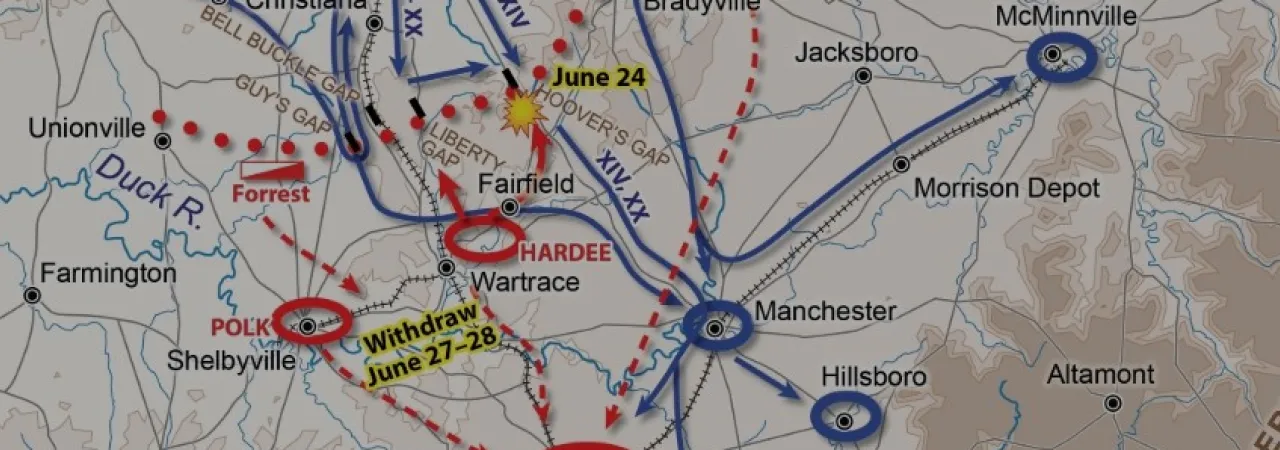
Early in the morning of June 24, 1863, the Army of the Cumberland marched out of their camps around Murfreesboro, Tennessee. Twenty-six miles south, the Confederate Army of Tennessee lay in camps near Tullahoma. Between the two armies stretched a line of hills – a part of the Highland Rim -- only passable at a few steep and narrow gaps.
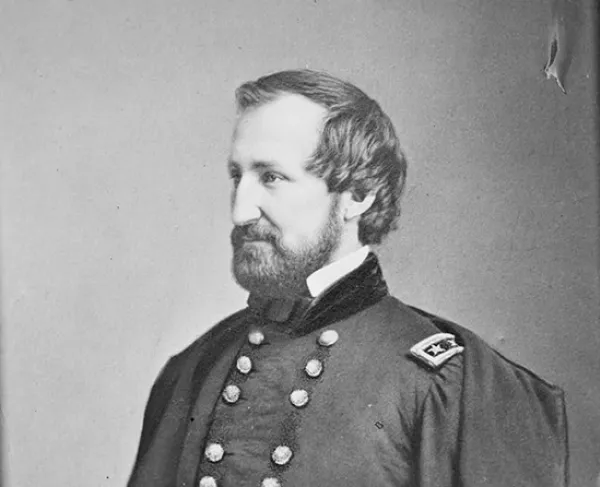
Union commander Maj. Gen. William Starke Rosecrans devised a bold plan for his first moves in the critical campaign. Using his cavalry and small detachments of infantry, he would feint westward toward Shelbyville while his main force advanced far to the east and attack both Liberty and Hoover’s Gap. Once through the gaps, his army would be in position to threaten the right flank of the entire Confederate line.
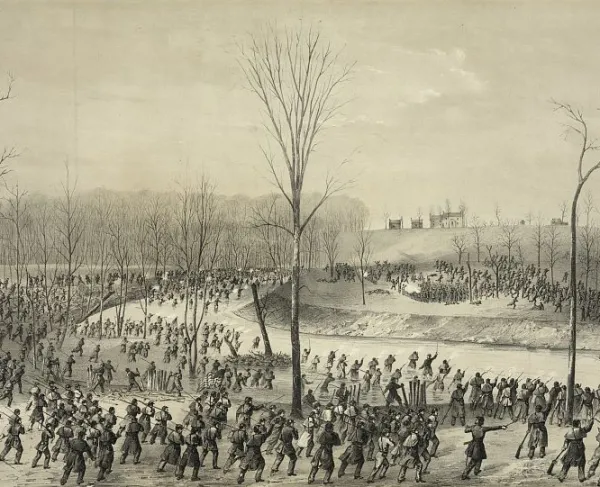
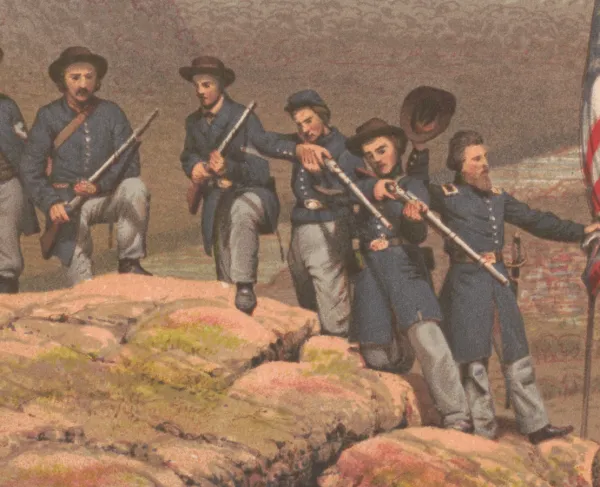
As Col. John T. Wilder’s brigade of mounted infantry, leading Maj. Gen. George Thomas’s 14th Army Corps’s advance, approached the northern end of Hoover’s Gap the drizzling rain that had begun before dawn became heavier. To Wilder’s surprise, only one Confederate cavalry regiment, the 1st [3rd] Kentucky, stood guard. The brigade approached quickly and used the overwhelming firepower of their Spencer repeating rifles to scatter the Confederate horsemen before they could man their entrenchments.
Despite orders to stop at the north end of the four-mile gap, Wilder recognized the opportunity and pressed forward. Soon, the brigade was at the south end of the gap, in a strong defensive position with supporting artillery near at hand. Word of the bold stroke began to reach the Confederates around 1:00 p. m. when “[t]wo boys muddied with hard riding” arrived at Brig. Bushrod Johnson’s brigade headquarters and “reported the enemy advancing from Hoover’s Gap.”
As the Confederate leadership tried to figure out what had happened, Johnson’s brigade fell into line and awaited orders to move forward. Around 2:00 p.m., Brig. Gen. William Bate’s brigade advanced toward the gap but with no clear idea of where the enemy was and what other threats might be emerging, he detached several regiments to guard roads that could be used by Union forces to advance. Left shorthanded for his planned counterattack, there was little he could achieve against Wilder’s troops.
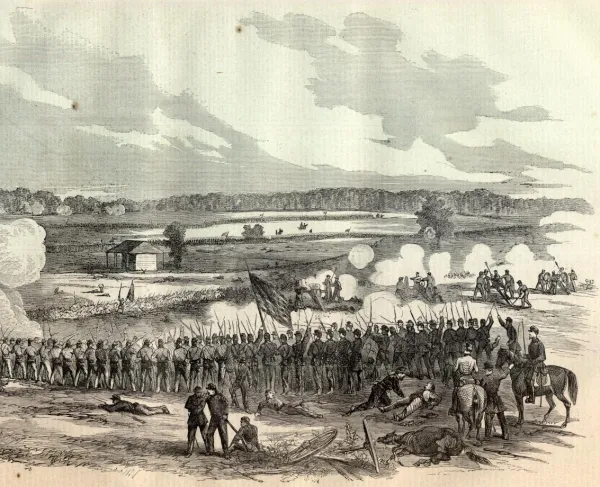
Even so, Bate attacked three times but the rapid fire from Wilder’s men and accurate artillery fire from Capt. Eli Lilly’s 18th Indiana Battery blunted every advance. While the fighting roared, the 14th Corps marched through the gap and by the time Confederate Maj. Gen. A. P. Stewart had his division ready to move in force at 4:00 p.m., Union troops had established firm control of the gap. The fighting cost Wilder 61 casualties and Bate 146. Upon arriving at the gap, Thomas congratulated Wilder saying, “Thank God for your decision. It would have cost us 2,000 lives to have taken this position if you had given it up.” For their actions, Thomas dubbed Wilder’s men the Lightning Brigade. Outflanked and in danger of being cut off from their supply line, the entire Confederate army began a sullen retreat on June 26.
Hoover's Gap: Featured Resources

All battles of the Stones River Campaign
Related Battles

61
146