Charlotte Robertson
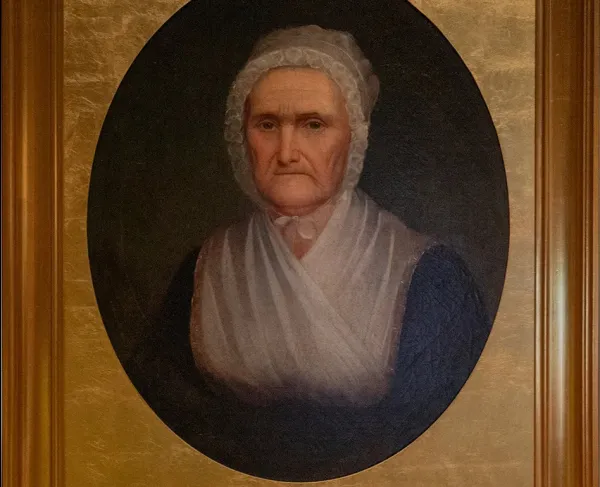
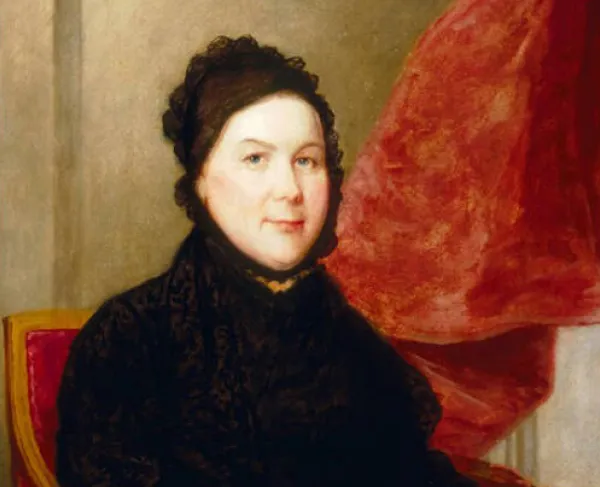
On the cutting edge of western expansion, Charlotte Reeves Robertson defied the British through both her presence and actions. She risked her life, endured great hardship, and experienced personal tragedy in the backcountry of the Revolutionary War.
Charlotte, the daughter of a Presbyterian minister, was born in 1751 in North Carolina. She married James Robertson in 1768 when she was about seventeen. The couple soon moved to the Watauga Settlements located beyond the British Proclamation Line of 1763 in present-day Carter County, Tennessee. Illegal under British law, these settlements negotiated with the Cherokee to lease their land and formed the Watauga Association.
Relations between the settlers and the Cherokee deteriorated. Warfare erupted after the highly contested 1775 meeting at Sycamore Shoals and the disputed purchase of much of present-day Kentucky and Middle Tennessee by Richard Henderson and his Transylvania Company. Charlotte Robertson’s community became a battleground, and her husband helped lead settler forces. With the advent of the American Revolution, Watauga settlers successfully requested to join North Carolina and sent representatives to North Carolina’s constitutional convention.
Charlotte’s experience of the American Revolution was largely defined by ongoing warfare between settlers and a group of the Cherokee, known as the Chickamauga, committed to resisting settler encroachment on their lands through military action, who allied with the British.
In 1779, James Robertson worked to organize a new settlement (which eventually became Nashville) in the disputed lands claimed by Henderson. He traveled with the first group of settlers overland, while Charlotte and their young children endured an extremely dangerous trip via river on flatboats. The second group traveling by water was repeatedly attacked by the Chickamauga and suffered from disease outbreaks. After arriving at Fort Nashborough, Charlotte gave birth to their son, Felix Robertson, one of the first children born in the new settlement.
In April 1781, Charlotte played a crucial role in the Battle of the Bluffs. Her quick thinking and brave actions helped to save Fort Nashborough when the Chickamauga attacked. She alerted men from the community who were in the fields outside the settlement. When she realized that the Chickamauga were blocking the settlers from reaching the fort, she released the community’s dogs. In the resulting confusion, the settlers were able to return to relative safety within the fort’s walls.
Charlotte’s son Jonathan was gravely injured in the fighting at the Battle of the Bluffs, though he later recovered. She lost two sons, Peyton Robertson and James Randolph Robertson, who were killed in conflicts with Native Americans.
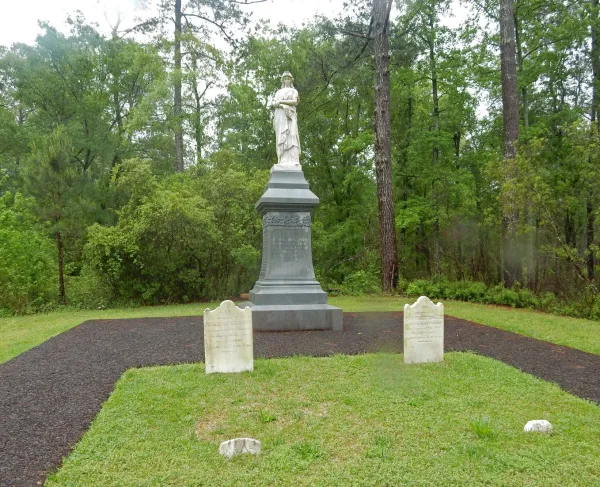
For the rest of her long life, Charlotte Robertson continued to live with her family in Nashville. As the wife of one of the community’s political and business leaders, she often managed their household, including family members and enslaved individuals, in her husband’s absence. After James’ death in 1814, Charlotte Robertson chose not to remarry. She continued to be at the center of her extended family, often residing in households including multiple generations of children and grandchildren. She died in 1843 and was interred in the Nashville City Cemetery following a funeral service at a local church.
Further Reading: