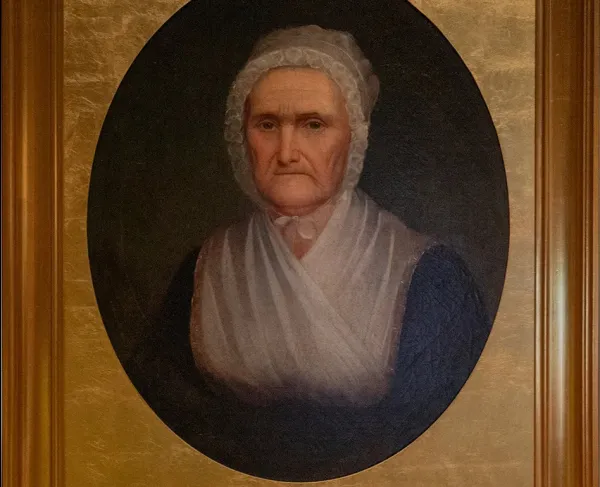
Catharine Littlefield Greene
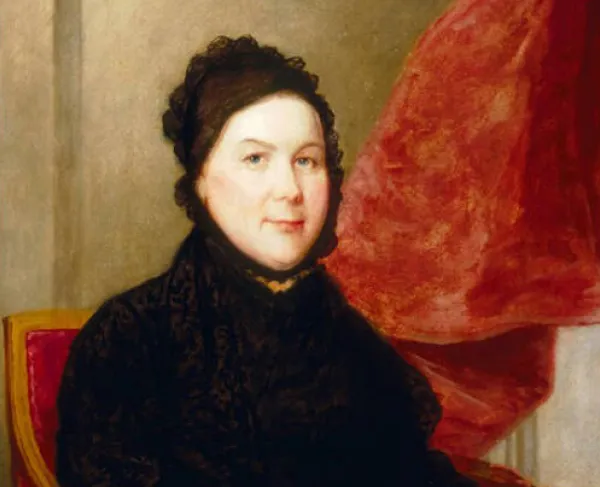
Catharine “Caty” Littlefield married Rhode Island merchant Nathanael Greene just a year before the first shots of war were fired at Lexington and Concord. When her husband was made a general in the Continental Army, Caty followed him to Patriot camps throughout the 13 colonies, becoming a popular and comforting presence to troops during the eight-year struggle for independence.
Caty was born on Block Island, a community off the coast of Rhode Island, on February 17, 1755. She was the daughter of John Littlefield, a member of the Rhode Island Legislature, and Phoebe Ray Littlefield, a descendant of Block Island’s first settlers. After her mother died when she was ten years old, Caty’s father sent her to live with her socially prominent aunt and uncle, Catharine and William Greene. The couple not only provided Caty with a formal education, but also taught her how to manage an upper-class household, serve as a welcoming hostess, and charm those in her orbit.
William Greene eventually became governor of Rhode Island, and in his home Caty was introduced to political and business leaders in the colony. One of them was a young merchant named Nathanael Greene, who was also her uncle’s distant cousin. In July 1774, she married Nathanael in her uncle's mansion on Division Street in Warwick. The bride was just 19. The groom was 32. A year later, Nathanael’s militia unit was called to fight in the rebellion against Great Britain. As war consumed the American colonies, Caty gave birth to five children.
The challenges of pregnancy and motherhood did not deter Caty from supporting her husband and serving her country. During the first winter of the Revolution, when smallpox raged in Boston, Caty opened the Greenes’ Coventry, Rhode Island, homestead as a hospital for soldiers recovering from the illness. She also stayed with Nathanael at his encampment during the winter of 1775. There, she met George and Martha Washington, who became her lifelong friends. Throughout the eight long years of war, she often left her children in the care of others to join her husband and his troops at major battlegrounds. She visited New York City during the American occupation, spent a winter at Valley Forge, and traveled to the Carolinas when Nathanael was appointed commander of the Southern Army. She was in Newport, Rhode Island in 1780-1781, when the Count de Rochambeau landed there with his expeditionary forces to aid Americans in the battle for independence.
The lives of women in army encampments were hard. Most soldiers’ wives endured the same bad weather, uncomfortable living conditions, limited rations, and long marches as their husbands. In addition, they washed the troops’ laundry, tended to the sick, wounded, and dying, and cooked meals. But as a general’s wife, Caty was given more comfortable quarters. Her contribution was organizing events for and boosting the morale of the men in her husband’s command. Her determination, welcoming nature, and warm wit were balms for the hardship of army life.
After the Treaty of Paris was signed and the war officially ended in 1783, Caty expected to return to her comfortable pre-Revolution life in Rhode Island, but things did not go as planned. During the war, her husband had taken out large loans to supply his troops with food and necessities that the Continental Congress failed to provide. Unable to repay the loans and denied help from the US government, the former Patriot officer sold his land in Rhode Island and made a new start with his family in Georgia. Just as they were adjusting to life on their plantation, Mulberry Grove, Nathanael died suddenly in 1786, leaving Caty a widow at age 30. She waged a long campaign to convince the government to repay Nathanael’s debt and was victorious, receiving full compensation in 1792. She died in Georgia on September 2, 1814.