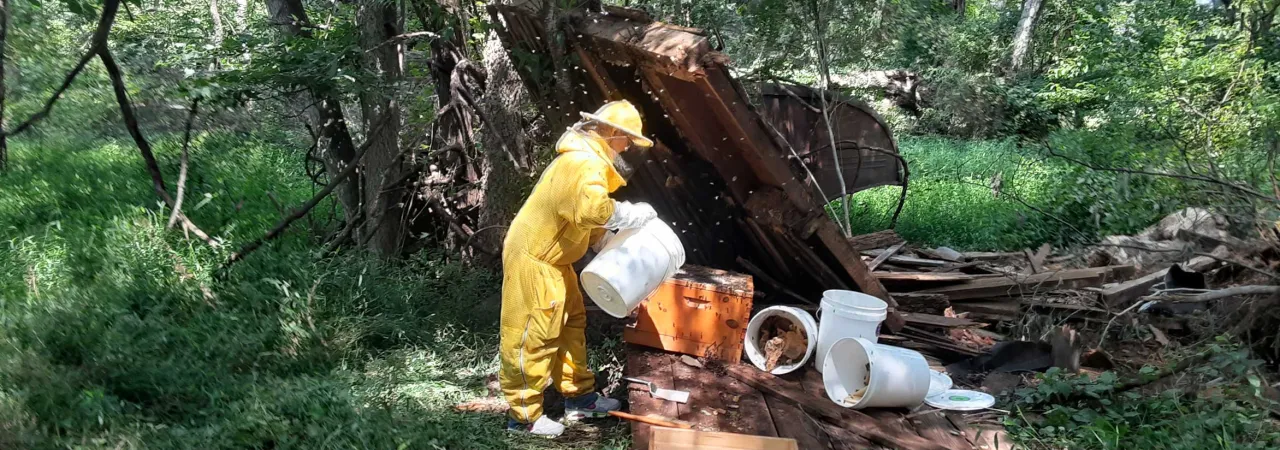
A beekeeper works to safely relocate a colony of thousands of bees discovered inside the wall of an outbuilding at the historic Wiltshire property on the Brandy Station battlefield.
Over the decades, the American Battlefield Trust has helped save 2,353 acres at Brandy Station, the site of the largest cavalry battle in North American history. Within our holdings on that historic landscape stands the Wiltshire House, a property eligible for the National Register for Historic Places once occupied by John Wiltshire, overseer for Richard Coope Cunningham. More recently, the site has been home to about 10,000 bees.
As part of the Trust’s commitment to preserve, rehabilitate, and restore the landscape before transferring it to the Culpeper Battlefields State Park, several dilapidated outbuildings on the Wiltshire property that do not contribute to the area’s historic significance were slated for demolition. During this process, a large hive of about 10,000 bees was found occupying a six-square-foot cavity in the wall of one of these sheds.
Faced with a hive-or-die situation, Tom Saielli, Land Stewardship Manager at the Trust, and Drew Gruber, Park Manager at Culpeper Battlefields State Park, contacted Cedar Mountain Battlefield Foundation (CMBF) president and park volunteer Keith Price and his wife, Felecia, who have kept bees in the past. Realizing the scope of the project, the Prices looped in an Orange County beekeeping family. “The moment we saw that hive, we knew Felecia and I couldn’t do it alone,” said Price. “We called in the Arndts – Don, Melissa, and their teenage daughters Romina and Amy – who’ve been keeping bees for years.” The two families immediately buzzed into action.
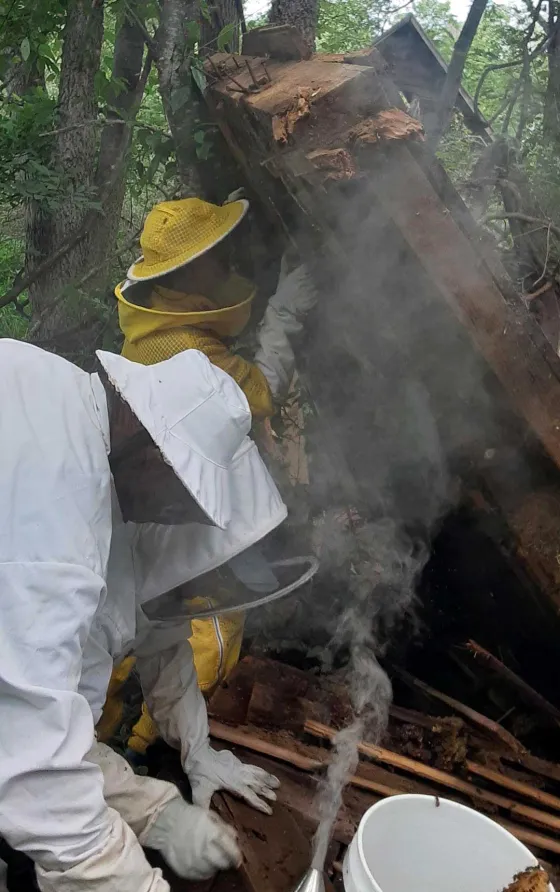
Beekeepers use smoke to calm the bees before removing the colony from a wall cavity in a shed slated for demolition at the Wiltshire property.
Courtesy of Keith & Felecia PriceArriving before dawn, the Prices and Arndts pried up the shed wall with crowbars, smoked the bees to calm them, and cut out sections of the honeycomb, letting the bees fly around and resettle. The honeycomb went into four plastic buckets, preventing the bees from returning to their old spot on the wood.
The next morning, the bee-herders brushed the remaining stragglers into the buckets to reunite them with the rest of the colony. The buckets were then loaded onto the Arndts’ pick-up truck and driven back to their farm in Orange County, where the bees and honeycomb were transferred into standard beehive boxes.
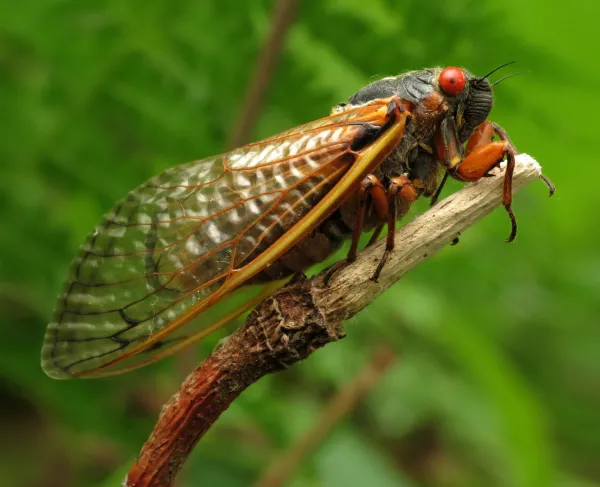
Together, the Prices and the Arndts removed thousands of bees, free of charge, from the shed wall and relocated them to a new hive, proving that when history and habitat collide, there’s no need to make a beeline for demolition. “It was a real treat to do [the bee rescue] at such a historic site,” said Price. “And it’s even better knowing the hive is thriving in its new home, with Amy and Romina taking the lead in caring for it.”
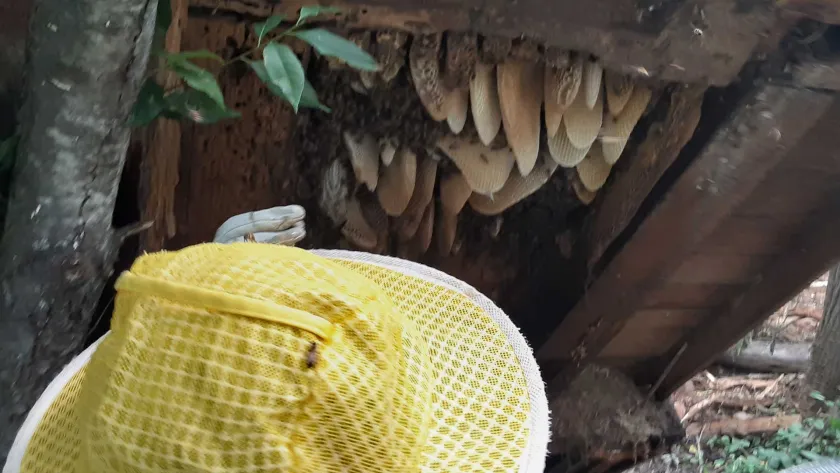
Beekeepers carefully remove sections of honeycomb from the shed wall, part of an effort to relocate the colony to a new hive in Orange County.
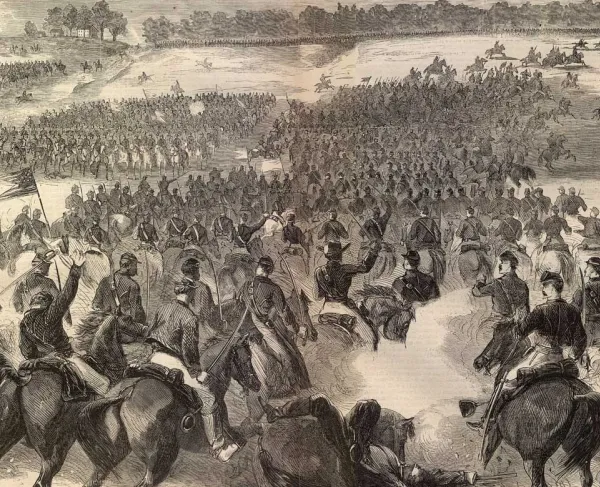
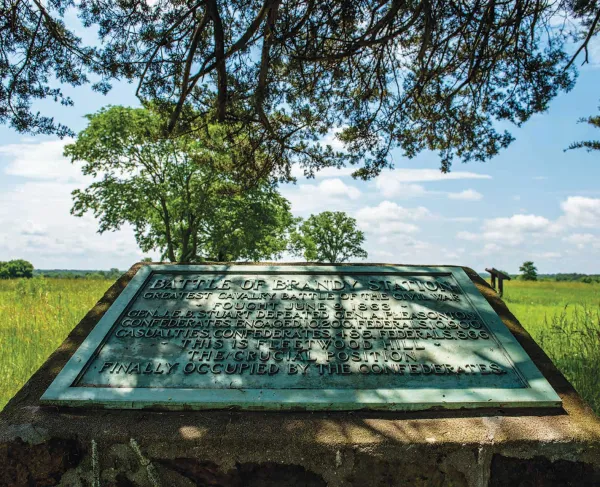
Courtesy of Keith & Felecia PriceBrandy Station Battlefield earned its place in history a little over a month after the Battle of Chancellorsville, when 18,456 horsemen engaged in fourteen hours of fighting there on June 9, 1863. While the Union ultimately withdrew from the field, the fight “made the Federal cavalry,” and became the opening engagement of the Gettysburg Campaign.
The American Battlefield Trust is now in the process of transferring much of its land to the Commonwealth of Virginia to comprise the new Culpeper Battlefields State Park.

Related Battles
866
433