Victory at Manassas! Prince William Digital Gateway Project Dead After Developer Drops Appeal
Jared Herr, jherr@battlefields.org
(Manassas, Va.) — In a major win for the Manassas Battlefield, and the wider historic preservation movement, the years-long fight to halt a colossal data center complex adjacent to Manassas National Battlefield Park has ended in victory. Data center developer QTS dropped its appeal to the Virginia Supreme Court, effectively ending the project threatening the historic landscape of Prince William County. The announcement comes just two days before America celebrates its 250th birthday, on July 4, 2026.
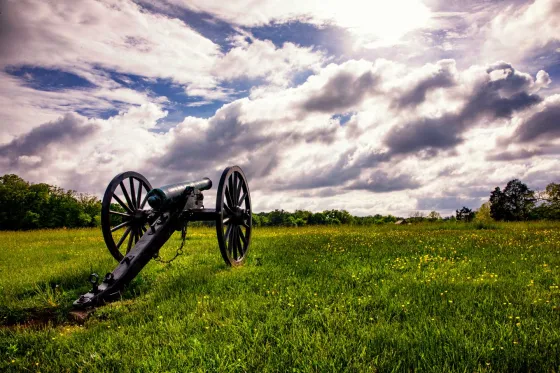
Manassas National Battlefield Park, Va.
Buddy Secor“This is a banner day for the historic preservation community. Our decision to fight an enormous and inappropriate data center project threatening one of America’s most hallowed historic places has been completely vindicated,” said American Battlefield Trust President David Duncan. “I am grateful for the stalwart determination of all who stood with us to ensure these deep-pocketed data center developers did not succeed with their plans to construct dozens of data centers next to a beloved national park and historic treasure.”
The American Battlefield Trust, Oak Valley Homeowners Association and local residents filed lawsuits against Prince William County and the two data center developers, Compass and QTS, challenging the rushed and unlawful Board of Supervisors vote to make way for what would have been the largest data center complex in the world.
“Since they opted to appeal, we have known QTS was prolonging the inevitable,” said attorney Chap Petersen, who represents the Trust and local residents in the lawsuit. “Truth and accountability prevailed today, and I am incredibly proud of these clients for their perseverance these two and a half years.”
On March 31, the Virginia Court of Appeals unanimously agreed with a lower court that the county’s consideration of the data center rezonings was fundamentally flawed, voiding the rezonings. The Prince William County Board of Supervisors publicly withdrew its defense by a unanimous vote on April 14, just two weeks later, after squandering nearly $2 million in taxpayer dollars for legal expenses to defend its actions. Compass also declined further appeal. Until today, QTS had opted to push forward with the lawsuit.
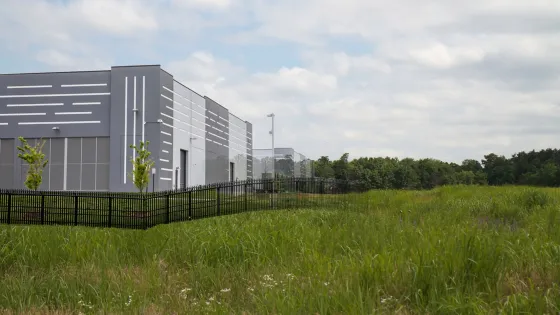
The Trust and its allies were supported by six leading national and regional conservation organizations with more than 1 million combined members and supporters through multiple amicus curiae briefs in favor of the lawsuits. Those briefs emphasized that the project “would inevitably lead to the irreversible and irreparable desecration of hallowed ground and the despoiling of the natural and cultural resources” in Prince William County.
While a new rezoning for the project could be pursued, Virginian communities that once embraced data centers have had a change of heart, now that impacts are better understood. The rising groundswell of opposition to these large-scale proposals has garnered local, national and international attention. A recent poll conducted by The Washington Post and George Mason University found that only 33% of Virginians would support a data center being built in their community, down from 69% as recently as 2023.
Duncan also remarked: “Now that the Prince William Digital Gateway is no more, we look forward to working with the county, the preservation community, and local residents and landowners to find a conservation-friendly solution that will protect Manassas National Battlefield Park and other natural and cultural resources along the historic Pageland Lane corridor.”
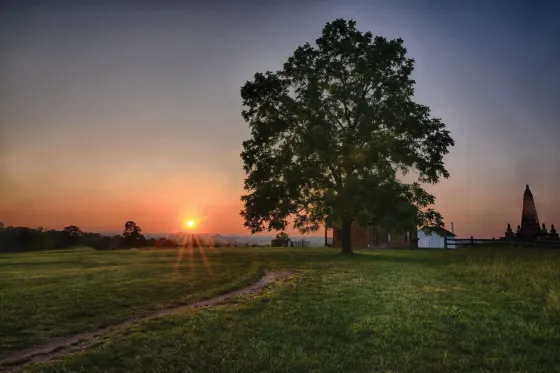
Second Manassas Battlefield, Prince William County, Va.
Melissa A. WinnThe Prince William Digital Gateway — with 37 proposed data center buildings, roughly the equivalent of 144 Walmart Supercenters — would have required 14 on-site electrical substations for operation. These data centers were expected to consume up to 9 gigawatts of electricity, enough to power over 2 million homes, and to stretch miles of high voltage transmission lines over the hallowed battlegrounds and the private homes of Prince William County.
Manassas National Battlefield Park commemorates two critical battles of the American Civil War, the Battles of First and Second Manassas (often referred to as First and Second Bull Run). Together, the two battles resulted in nearly 27,000 casualties. While the presence of a national park demonstrates the significance of these battles, important historical events occurred beyond its modern boundaries, some of which were slated to be the site of the Prince William Digital Gateway. Additionally, the proposed complex threatens the remains of those who fell and were laid to rest in unknown, unmarked graves.
The American Battlefield Trust is dedicated to preserving America’s hallowed battlegrounds and educating the public about what happened there and why it matters today. The nonprofit, nonpartisan organization has protected more than 62,000 acres associated with the Revolutionary War, War of 1812 and Civil War across 160 sites in 25 states, including 387 acres at Manassas. Learn more at www.battlefields.org.