Go Team Grant!
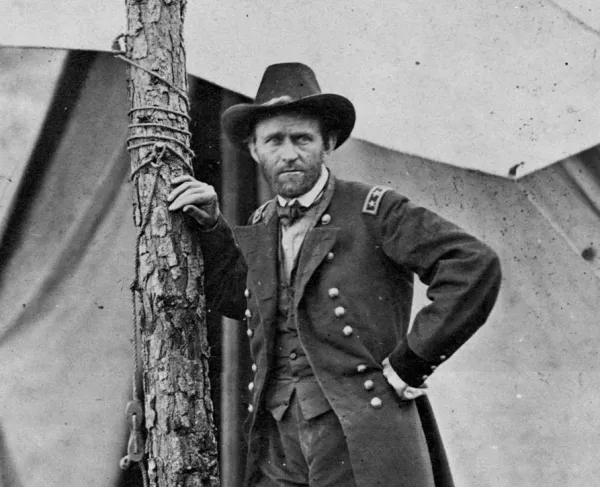
This summer, to mark the nation's 250th birthday, he U.S. Polo Association brings its Commander in Chief Cup to Virginia, and the American Battlefield Trust is thrilled to be part of the celebration. In fact, we were honored to be asked to serve as sponsor of Team Grant, one of the four contenders for the championship.
The Championship Final will be held August 16 at Liberty Hall in Culpeper County. Information on tickets for the championship may be found here. The day will also feature demonstrations by the Culpeper Minute Men, an authentic Revolutionary War living history organization, and the U.S. Naval Academy Sky Goats, a precision parachute team.
The four competing teams are named in honor of individuals who held the highest military commands in the nation as both general and president: George Washington, Zachary Taylor, Ulysses Grant and Dwight Eisenhower. All of the participating (human) athletes are active or retired members of the U.S. or allied armed services.
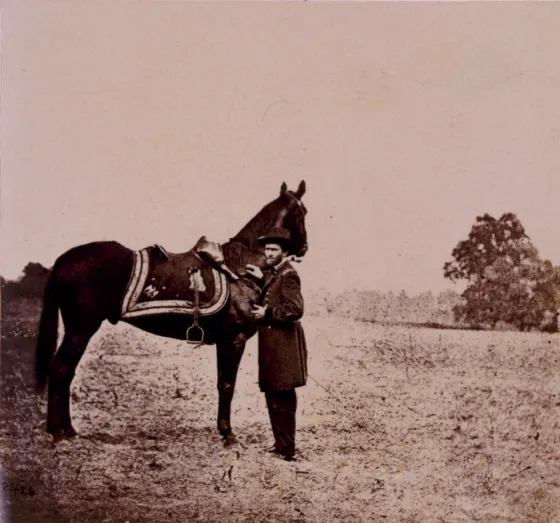
Ulysses S. Grant standing alongside his war horse, "Cincinnati"
Library of CongressThe sport of polo has a long connection to the military, with its modern, competitive incarnation credited to British Army officers who saw a version of the game played in India and codified the rules in England in the 1860s. Perhaps it gives Team Grant a philosophical advantage that it has the first namesake to witness the game.
On his post-presidency world tour, Grant stopped in Paris and took in a polo match alongside the Prince of Wales, the future King Edward VII, at the Bois de Boulogne. He is said to have enjoyed the match and mused that "the game might be introduced with great effect into the cavalry regiments and at West Point, as a good school of horsemanship for young soldiers."
According to the Association of the U.S. Army, the first forma military polo match in the U.S. was played at Fort Riley, Kansas, in 1896, and it spread quickly. With its need for precision riding while wielding a weapon (although mallet rather than saber), polo had natural and obvious benefits for training cavalrymen. But the requirements for rapid assessment, situational awareness and strategy kept the game relevant as mechanized warfare took hold. On the eve of World War II, the U.S. Polo Association had almost twice as many military personnel registered as players as civilians. That proud connection continues into the modern era.